
Everything you need to know before you buy, dab, or store it, explained the way a friend at the dispensary counter would explain it.
If you’ve stood at a dispensary counter and looked at the concentrate case, you know the problem. Shatter, crumble, live resin, sauce, badder, diamonds. Half the labels sound like dessert menu items, and none of them explain what you’re actually about to smoke.
Shatter crumble live resin sits at the spot where two worlds meet. It’s made using the live resin process (fresh, flash-frozen plant material instead of dried and cured buds), but it’s finished into a crumble texture instead of a glassy shatter or a runny sauce. That combination is why it’s become one of the most popular concentrates on dispensary shelves in 2026. You get the strong, fresh flavor that live resin is known for, in a texture that’s a lot easier to handle than a sticky sauce or a fragile sheet of shatter.
This guide walks through what live resin crumble actually is, how it compares to shatter, what temperature to dab it at, and how to tell top shelf live resin crumble apart from the mediocre stuff sitting next to it in the case. 🌿
🔍 What Is Live Resin Crumble, Exactly?
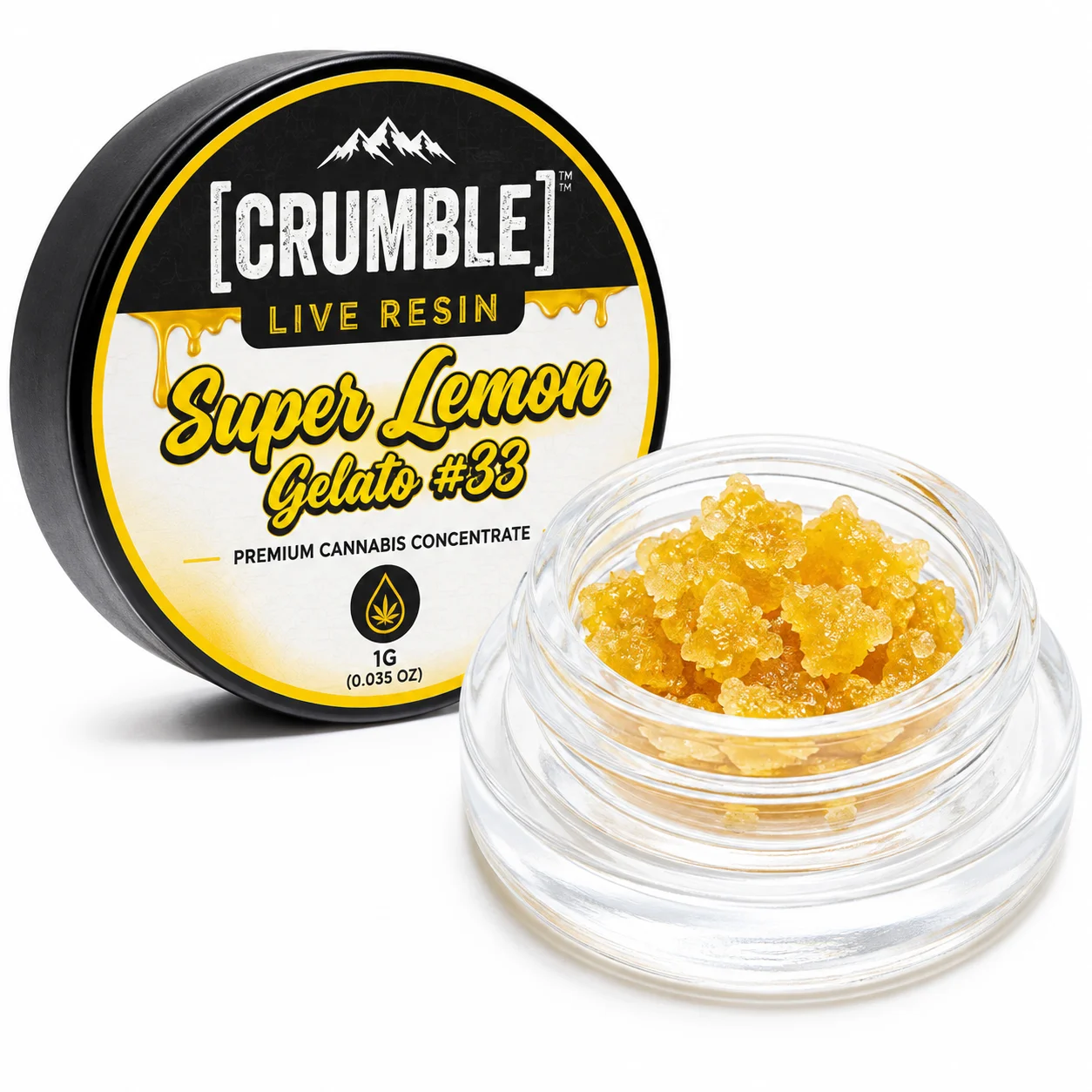
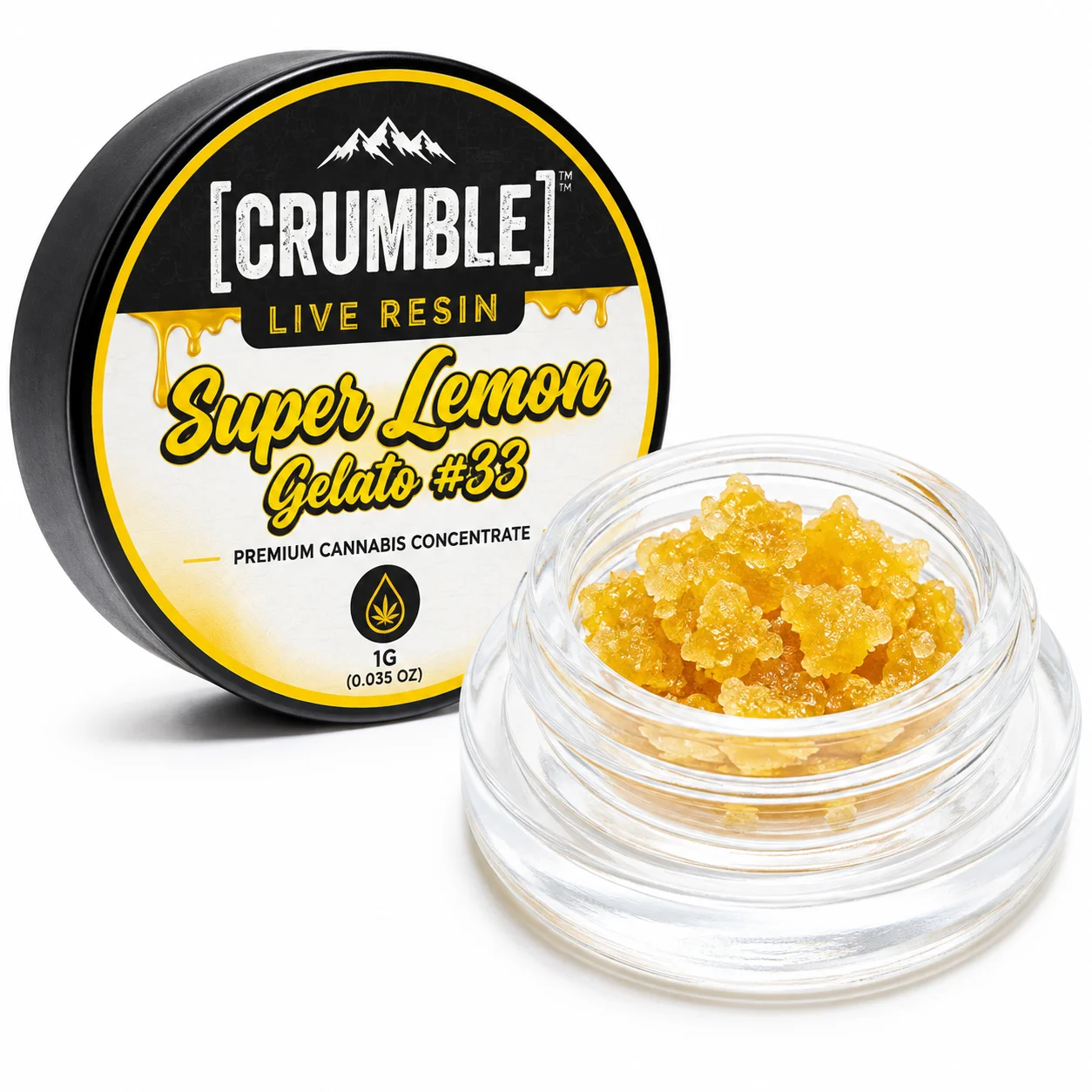
Live resin crumble is a cannabis concentrate made two ways at once. First, it starts as live resin, meaning the cannabis plant gets harvested and immediately flash-frozen, skipping the normal drying and curing steps. Freezing the plant right after it’s cut locks in terpenes that would otherwise break down or evaporate during a normal cure, which is a big part of why live resin smells and tastes so much stronger than concentrates made from dried flower.
Second, once that frozen material gets extracted (almost always with butane or a butane and propane blend), the resulting oil gets purged in a vacuum oven. How long it sits in that oven, and at what temperature, decides whether it ends up as shatter, crumble, badder, or sauce. Crumble specifically comes from a longer purge at a lower temperature, which pulls out more moisture and leaves behind a dry, crumbly, almost honeycomb-like texture instead of the glass-like snap of shatter.
🧠 Quick definition
Live resin crumble is a butane hash oil (BHO) concentrate made from flash-frozen cannabis and finished with a longer, lower-heat purge, giving it a dry, crumbly texture with a strong, strain-true flavor.
You’ll sometimes see it called “live crumble” or “live resin badder crumble” depending on the brand. It’s basically the same family of product, just marketed a little differently. What matters more than the name is the process behind it and what the lab report says.
What Is Shatter, Really?
Let’s start with shatter, since it’s probably the concentrate you’ve seen the most. Shatter is that thin, glass-like sheet you see in dispensary photos, the kind that looks like a piece of amber candy. It’s translucent, sometimes almost see-through, and it snaps or “shatters” when you break it, which is exactly where the name comes from.
Shatter gets made through hydrocarbon extraction, usually butane or propane, run through cured cannabis flower. After the extraction pulls the resin out of the plant, the mixture goes through a purge process under heat and vacuum that removes the leftover solvent, according to Mimea’s concentrate breakdown. The key thing about shatter’s purge is that the material sits still the whole time. No agitation, no whipping. That stillness is what gives shatter its glassy, stable structure instead of the crumbly or waxy textures you see in other concentrates.
One thing a lot of people don’t realize: shatter tends to run on the higher end for potency. Some batches test up to the high 90s percent in cannabinoid content, according to Doobie’s concentrate comparison. That’s a big number, and it’s part of why shatter built its reputation as one of the strongest concentrates on the shelf. But high potency doesn’t always mean better flavor, and that’s where the conversation starts to shift toward live resin.
⚖️ Live Resin Crumble vs. Shatter: What’s Actually Different
People ask this constantly, so let’s clear it up. Shatter and live resin crumble can both start from the exact same fresh-frozen material. Both are typically extracted using butane hash oil (BHO) methods, and both are dabbed the same way. The difference comes down to texture and how that texture happens.
- Shatter is purged for a shorter time at a higher, steadier temperature, without being disturbed. That’s what gives it the hard, glass-like, amber sheet that snaps when you break it.
- Crumble gets purged longer at a lower temperature. It pulls more residual moisture and butane out slowly, leaving a dry, honeycomb-textured product that falls apart in your hand instead of shattering.
- Live resin sauce skips the aggressive purge altogether, keeping a syrupy consistency with visible THCA crystals sitting in liquid terpenes.
So when you’re comparing shatter to live resin crumble, you’re not really comparing two different extraction methods. You’re comparing two different finishing techniques applied to concentrate that could have started from the same batch of flash-frozen flower. The texture changes how easy the product is to handle. It doesn’t automatically change potency, though flavor can shift a little between the two, since a longer purge can knock out a small amount of the more delicate terpenes.
🍬 If you like a strong snap and don’t mind a slightly stickier product on your dab tool, shatter is a solid pick. If you want something that scoops easily, doesn’t stick to your fingers, and portions cleanly, crumble usually wins.
How live resin crumble compares to regular (cured) crumble
Not all crumble is live resin. A lot of crumble on dispensary shelves is made from dried and cured flower, the same starting material used for most wax, budder, and shatter. Cured resin crumble reflects the terpene changes that happen during the curing process, which gives it a smoother, more classic strain flavor that some people actually prefer. Live resin crumble skips curing entirely, so it tastes closer to the living plant, brighter, sharper, and sometimes a little more “green” or citrusy depending on the strain. Neither one is objectively better. It’s a flavor preference more than anything.
🧊 How Live Resin Crumble Gets Made
Here’s the process in plain terms, no chemistry degree needed:
- Harvest and freeze. Growers cut the plant at peak ripeness and immediately flash-freeze it, often within an hour or two, well before it ever dries out.
- Extraction. The frozen plant material goes into a closed-loop system where butane (sometimes blended with propane) strips the cannabinoids and terpenes out of the plant matter.
- Purging. The raw oil goes into a vacuum oven to pull out the leftover solvent. This step is where crumble gets its identity. A longer, lower-heat purge dries the oil out slowly, which whips air and moisture out of it and leaves a crumbly, less sticky final product.
- Lab testing. Legit producers send a sample to a third-party lab to test for potency, residual solvents, pesticides, and heavy metals before it ever reaches a shelf.
That purging step is really the whole story. Crumble spends more time in the vacuum chamber at lower temperatures compared to shatter, which is purged faster at higher heat. Same starting oil, different finishing technique, different texture on the other end.
🧾 Concentrate Comparison Chart
Once you understand how crumble fits into the bigger concentrate family, the whole wall of jars at the dispensary starts making a lot more sense. Here’s how it stacks up against the other textures you’ll see most often.
| Concentrate | Texture | Made From | Typical THC |
|---|---|---|---|
| Shatter | Hard, glass-like, snaps when broken | Cured or fresh-frozen flower, BHO | 70%–90% |
| Live resin crumble | Dry, crumbly, honeycomb-like | Fresh-frozen flower, BHO | 65%–85% |
| Badder/budder | Soft, creamy, whipped | Cured or fresh-frozen flower, BHO | 70%–90% |
| Live resin sauce | Syrupy liquid with visible crystals | Fresh-frozen flower, BHO | 60%–80% (varies by layer) |
| Live rosin | Sappy to crumbly, solventless | Fresh-frozen flower, heat and pressure only | 50%–75% |
| THCA diamonds | Crystalline, often paired with sauce | Isolated cannabinoid crystallization | 90%+ |
Notice that live resin crumble doesn’t actually top the THC charts. Diamonds win on raw potency every time. What crumble wins on is the balance between flavor, potency, and ease of use, which is exactly why so many experienced dabbers keep coming back to it instead of chasing the highest number on the label.
🍋 Flavor and Terpene Profiles
Terpenes are the aromatic compounds that give cannabis its smell and a lot of its flavor. They’re also fragile. Heat, light, and time all break them down, which is why dried and cured concentrates often taste flatter than live resin, even when the THC numbers look similar on paper.
Because live resin crumble starts from flash-frozen plant material, it holds onto a wider range of terpenes than most cured concentrates. That’s why you’ll often see tasting notes on live resin crumble that sound closer to describing a fresh piece of fruit or a pine forest than a typical “weed” smell. A few common terpene-driven flavor lanes you’ll run into:
- Citrus and fuel: driven by limonene and caryophyllene, common in gassy, diesel-leaning strains
- Sweet and candy-like: often linked to myrcene and linalool, common in dessert and fruit-named strains
- Earthy and pine: driven by pinene and humulene, common in classic OG and Kush lineages
The terpene percentage on your COA gives you a rough idea of how strong that flavor will hit. Anything above 3% is solid. Above 5% is where you start getting into genuinely loud, strain-true live resin crumble.
Concentrates in general run way higher in THC than flower. Regular flower usually tests somewhere between 15% and 25% THC. Concentrates routinely blow past that, and live resin crumble is no exception.
📊 What to expect on the lab report
- THC: generally 65% to 85%, depending on the strain and the starting flower quality
- Terpenes: often 3% to 8% by weight, noticeably higher than most cured concentrates because of the flash-freeze step
- Residual solvents: should show as “non-detect” or well under your state’s legal limit
Because live resin crumble holds onto more terpenes than a lot of other concentrates, it tends to smell and taste stronger even at a similar THC percentage. That’s the whole appeal for a lot of experienced dabbers. It’s not just about getting higher THC numbers, it’s about getting a hit that actually tastes like the strain it came from instead of a generic, flattened flavor.
🔥 Best Dab Temperature for Live Resin Crumble
Temperature makes or breaks the experience with any concentrate, and crumble is no different. Go too low and it won’t fully vaporize. Go too high and you’ll torch the terpenes that make live resin worth buying in the first place.
| Style | Temp Range | What You Get |
|---|---|---|
| Low temp | 400°F–450°F | Maximum flavor, smaller vapor clouds, gentler on the throat |
| Medium temp (sweet spot) | 450°F–525°F | Good balance of flavor and effect, most people land here |
| High temp | 525°F–570°F | Bigger clouds, stronger hit, noticeably less flavor |
Crumble is dry enough that it tends to vaporize efficiently even at the lower end of this range, which makes it a good option if you’re chasing flavor. If you’re using an e-rig or e-nail with a digital readout, most dabbers land in the 450°F to 500°F window for live resin crumble specifically. That’s low enough to protect the terpenes but hot enough to fully melt the material instead of leaving residue behind in your banger.
🌡️ Quick tip: if your crumble isn’t bubbling on the nail, bump the heat up slowly instead of jumping way higher. Overshooting the temperature is the most common way people accidentally burn off the flavor they paid extra for.
🏆 How to Spot Top Shelf Live Resin Crumble
Not all live resin crumble is created equal, and the packaging alone won’t tell you much. Here’s what actually separates top shelf live resin crumble from the mid-tier stuff sitting next to it.
1. Color and consistency
Good crumble is usually light gold to amber, with a dry, slightly powdery texture that still holds together in small chunks. If it looks dark brown, oily, or wet, that can point to lower quality starting material or a rushed purge.
2. Smell
This one’s simple. Top shelf live resin crumble should smell strong and specific to the strain it’s from, not just generically “weedy.” If you can’t smell much through the jar, or it smells flat and chemical, keep looking.
3. The lab report (Certificate of Analysis)
Every legit batch should come with a COA you can scan or look up online. Check for:
- THC percentage in the 65% to 85% range (higher isn’t automatically better if terpenes are low)
- Terpene percentage, ideally 3% or higher
- “Non-detect” on residual solvents, pesticides, and heavy metals
4. Batch and harvest info
Brands that are proud of their process will tell you which strain, which harvest, and often which farm the crumble came from. Vague labeling with no strain name or batch number is usually a sign of a mass-produced, lower-effort product.
5. Price relative to the market
Top shelf live resin crumble almost never sits at the bottom of the price list. It costs more to flash-freeze fresh plant material, extract it carefully, and purge it slowly. If a jar is priced way below everything else in the case, ask why before you buy it.
✅ Quick top shelf checklist
- Strong, strain-specific smell
- Light to golden color, dry but not powdery or dusty
- COA showing high terpenes, non-detect solvents
- Clear strain, harvest, and batch information on the label
- Priced in line with (or above) other premium concentrates in the case
💰 Why It Costs What It Costs
Live resin crumble usually sits in the mid-to-upper price range compared to other concentrates, and there’s a real reason for that. Flash-freezing plant material right after harvest requires equipment and cold storage that dried flower processing doesn’t need. Growers also have to move fast, since fresh-frozen material can’t just sit around waiting for a convenient extraction slot the way dried flower can.
On top of that, a slow, low-temperature purge takes longer than the quicker purge used for shatter, which ties up equipment and labor for more hours per batch. All of that adds cost before the product ever reaches a shelf. When you see a big price gap between a bargain-bin concentrate and top shelf live resin crumble, that gap is usually explained by the extra time, equipment, and quality control that went into the second one.
💵 As a rough guide, expect to pay noticeably more per gram for live resin crumble than for standard cured wax or shatter. If the price looks too good to be true for a “live resin” label, double check the COA before you trust the claim.
🛠️ Equipment You’ll Need
Getting the most out of live resin crumble comes down to having the right setup, and it doesn’t have to be complicated.
- Dab rig or e-rig: a small glass water pipe with a banger (a heat-safe bowl, usually quartz or titanium) works fine. E-rigs and e-nails add digital temperature control, which makes it a lot easier to stay in that 450°F to 525°F sweet spot.
- Torch (for traditional rigs): a butane torch heats the banger before you place your dab on it. Give it time to cool slightly after heating so you don’t overshoot your target temperature.
- Carb cap: this little cap seals airflow over the banger, which lowers the pressure so your dab vaporizes fully even at a lower temperature. It’s one of the easiest upgrades for better flavor.
- Dab tool: a small metal or glass tool for scooping crumble out of the jar without touching it with your fingers.
- Concentrate-rated vape: if you’d rather skip the rig entirely, some wax pens and portable vapes are built to handle crumble, though you’ll want one with adjustable temperature to get similar control.
None of this needs to be expensive to work well. A basic rig, a cheap torch, and a carb cap will get you a solid dab. The upgrades mostly buy you convenience and more precise temperature control, not a fundamentally different experience.
🚫 Common Mistakes to Avoid
A few habits separate a great dab from a wasted one, and they’re easy to fix once you know what to look for.
- Overheating the banger. A glowing red banger is way past where you want to be for crumble. Let it cool for 30 to 45 seconds after torching before you dab.
- Using too much at once. Crumble is potent. A dab about the size of a grain of rice is plenty for most people, especially beginners.
- Skipping the carb cap. Without one, you’ll need higher heat to fully vaporize your dab, which burns off more flavor than necessary.
- Storing it loose or in plastic. Plastic containers can react with concentrates over time and aren’t great for long-term storage. Stick with glass or silicone.
- Ignoring the COA. Skipping the lab report because the packaging looks nice is how people end up with a product that doesn’t match what’s advertised.
📦 Storage Tips That Actually Protect Your Stash
Live resin crumble is more sensitive than a lot of people realize. Because it’s loaded with terpenes, it’s also more prone to losing flavor if it’s stored wrong.
- Keep it airtight. Use a non-stick silicone or glass container with a tight seal. Air exposure degrades terpenes fast.
- Stay cool and dark. Light and heat break down cannabinoids and terpenes over time. A cool, dark drawer works. Direct sunlight or a hot car does not.
- Be careful with the freezer. Cold slows degradation, but temperature swings (in and out of the freezer repeatedly) can introduce moisture that changes the texture. If you freeze it, keep it in there and let it come to room temperature slowly before opening.
- Use a dab tool, not your fingers. Oils from your skin can introduce bacteria and speed up degradation, plus it’s just messier.
Stored properly, live resin crumble holds its flavor and potency well for several months. It’s not going to last as long as a THCA diamond or distillate, but you shouldn’t be sitting on it for a year anyway.
🌱 Live Resin Crumble vs. Live Rosin
These two get mixed up a lot, and it’s worth clearing up since they’re made in completely different ways. Live resin crumble is a solvent-based concentrate, meaning it’s extracted using butane or a butane and propane blend. Live rosin, on the other hand, uses fresh, flash-frozen plant material too, but no solvents at all, just heat and pressure squeezing the oil directly out of the plant.
That difference matters if you’re trying to avoid solvent-based extraction entirely. Live rosin tends to cost more because the process is less efficient (you get less finished product per pound of starting material), and it’s generally considered the more “natural” option since there’s no butane involved at any point. Live resin crumble usually costs less and often tests a bit higher in raw THC percentage, since solvent extraction pulls cannabinoids out more efficiently than pressure alone.
Neither one is the wrong choice. If solventless matters to you, go with live rosin. If you want strong flavor at a more accessible price point, live resin crumble is the better value.
🛒 Buying Online vs. In Store
Both options work, but they come with different trade-offs.
Buying in store
You can usually smell the jar before you buy (a good early sign of quality), ask the budtender direct questions about the batch, and walk out with your product the same day. The downside is a smaller selection limited to whatever that specific shop is carrying.
Buying online
Online shops, where legal, often carry a wider selection and post full COAs directly on the product page, which makes comparison shopping easier. You can’t smell it first, so the lab report and any strain-specific reviews matter even more. Always confirm the retailer is licensed and that shipping to your area is legal before ordering.
📍 Wherever you buy, the same rule applies. No COA, no purchase. That single habit protects you from the majority of low-quality or mislabeled concentrates on the market.
🙋 Who Live Resin Crumble Is Right For
Crumble sits in a nice middle ground, so it works for a wide range of people, but it’s especially good if:
- You care about flavor and want something that actually tastes like the strain it’s from
- You want a concentrate that’s easier to portion than sauce or wax, without the fragile snap of shatter
- You’re comfortable with a dab rig, e-nail, or a concentrate-capable vape and want to step up from flower
- You want strong effects without needing to smoke a huge amount of flower to get there
If you’re brand new to concentrates, crumble is one of the more forgiving textures to start with. It doesn’t stick to your dab tool the way wax and sauce can, and it’s less likely to crack or fly off a hot nail the way a thin sheet of shatter sometimes does.
👍 Pros
- Strong, strain-true flavor thanks to the flash-freeze process
- Easier to portion and handle than sauce or wax
- Widely available at most licensed dispensaries
- Works well across a range of dab temperatures
👎 Cons
- Costs more than standard cured wax or shatter
- Can dry out or lose flavor if stored poorly
- Quality varies a lot between brands, so the COA really matters
- Not the best fit if you’re specifically avoiding solvent-based extraction
🧪 Lab Testing and Why It Matters
Concentrates pack a lot more cannabinoids into a small amount of material, which also means any contaminants in the starting flower get concentrated too. That’s exactly why third-party lab testing isn’t optional if you’re buying live resin crumble, especially top shelf live resin crumble at a premium price.
Always look for a batch-specific COA from an independent lab, not just a general product page claim. The report should confirm cannabinoid content, terpene profile, and a clean pass on residual solvents, pesticides, microbials, and heavy metals. If a shop or brand can’t produce one for the exact batch you’re holding, that’s a red flag, no matter how good the marketing looks.
🛡️ A quick rule of thumb: if you can’t find or request a current COA for the specific batch number on your jar, don’t assume it’s clean. Ask before you buy, not after.
📜 A Quick Legal Note for 2026
If you’re buying live resin crumble from a state-licensed cannabis dispensary in a legal market, none of this changes anything for you. State medical and recreational programs keep operating under their existing rules.
If you’re buying hemp-derived concentrates online instead (products relying on the old 0.3% delta-9 THC hemp definition), pay attention to this one. Federal legislation passed in late 2025 rewrites the definition of hemp to count total THC, including THCA, instead of just delta-9. That change takes effect on November 12, 2026, and it closes the interstate shipping path that a lot of hemp-derived THCA and live resin products have been using to reach states without their own legal cannabis programs. After that date, high-THCA concentrates shipped as “hemp” are expected to fall outside the federal hemp definition entirely. If you rely on hemp-derived shipping to get concentrates, it’s worth checking your state’s current rules and any pending legal challenges before you assume the same options will be available after this year.
❓ Frequently Asked Questions
Is live resin crumble the same as shatter?
No. They can start from the same flash-frozen material, but shatter gets purged fast at a steady high heat into a hard, glass-like sheet. Crumble gets purged longer at a lower heat, which dries it out into a crumbly, honeycomb texture instead.
What makes live resin crumble different from regular crumble?
Regular crumble is usually made from dried and cured flower. Live resin crumble starts with cannabis that’s flash-frozen right after harvest, which keeps more of the plant’s original terpenes and gives it a stronger, fresher flavor.
What temperature should I dab live resin crumble at?
Most people land somewhere between 450°F and 525°F. Stay closer to 450°F if flavor is your priority. Push toward 525°F or a bit higher if you want thicker vapor and a stronger hit.
How much THC is in live resin crumble?
Lab-tested live resin crumble typically tests between 65% and 85% THC, though it depends heavily on the starting flower and how it was processed. Always check the COA for the exact batch.
How can I tell if live resin crumble is top shelf?
Look for a strong, strain-specific smell, a light to golden color, a dry (not powdery) texture, and a lab report showing solid terpene numbers with no detectable solvents or pesticides. Clear batch and strain info on the label is another good sign.
How should I store live resin crumble?
Keep it in an airtight, non-stick container, away from light and heat. A cool drawer works well. If you freeze it, keep it sealed and let it warm up slowly before opening, so moisture doesn’t sneak in.
Is live resin crumble stronger than shatter?
Not necessarily. THC percentages between the two are usually close, since they can come from the same starting oil. Crumble often tastes stronger because it holds onto more terpenes, but raw potency is really a batch-by-batch question, not a texture-by-texture one.
Can beginners dab live resin crumble?
Yes, as long as they start small. A dab about the size of a grain of rice is a good starting point. Crumble is also easier to portion than sticky wax or runny sauce, which makes it a beginner-friendly texture even though the potency itself is meant for experienced users.
🎯 The Bottom Line
Shatter crumble live resin isn’t a confusing category once you know what’s going on behind the label. It’s a live resin concentrate (made from fresh, flash-frozen cannabis) that’s been purged into a dry, crumbly texture instead of a glassy sheet or a runny sauce. That combination gives you strong, strain-true flavor in a texture that’s genuinely easy to handle, which is exactly why it’s earned a permanent spot in most dispensary cases.
When you’re deciding what to actually put in your basket, skip the flashy packaging and go straight to the smell, the texture, and the lab report. Those three things will tell you more about whether you’re holding top shelf live resin crumble than any label ever will. Get those right, dial in your temperature, store it properly, and you’ll get a better dab than most people who just grab whatever’s cheapest in the case. 🔥
⚠️ This article is for educational purposes only and isn’t medical advice. Cannabis laws vary by state and country, and it’s on you to check your local regulations before purchasing or using cannabis concentrates. Products should only be purchased from licensed retailers and used by adults of legal age in jurisdictions where cannabis is legal.
