Live Resin Crumble for Sale: The Honest Buyer’s Guide (From Someone Who’s Dabbed Hundreds of Batches)
I’ve been dabbing concentrates for a long time now, and crumble is the one I keep coming back to. Not shatter, not sauce, not diamonds. Crumble. It’s easy to load, it’s got that loud terpene smell the second you crack the jar, and when it’s made right, it hits smoother than most other formats out there. 🍯
If you searched “live resin crumble for sale,” you’re probably in one of two spots. Either you’re brand new to concentrates and trying to figure out what you’re even looking at, or you’ve dabbed before and you’re trying to find a source you can actually trust. This guide is built for both of you. I’m going to walk through what live resin crumble actually is, how it stacks up against other concentrates, how to read a lab report so nobody can pull one over on you, how to store it so it doesn’t turn into a puddle of terp sauce in your dab jar, and what’s legal to ship where (this part changes a lot, so pay attention to the dates).
I’m writing this as a regular user, not a lab tech and not a brand rep. Where I’m pulling in outside data (terpene research, legal updates, lab testing standards), I’m linking the source so you can check it yourself. That’s how this stuff should work. 👍
What Live Resin Crumble Actually Is
Let’s start simple. Live resin crumble is a cannabis concentrate made from fresh, flash-frozen plant material instead of dried and cured flower. That’s the “live” part. The plant gets frozen right after harvest, before it ever dries out, and that locks in a terpene profile that’s a lot closer to what the living plant smelled like in the garden. Then extractors pull the cannabinoids and terpenes out using a solvent (usually butane or propane), purge the solvent out under low heat, and whip the resulting oil into that dry, crumbly texture that gives the product its name. Live resin crumble is made from fresh or flash-frozen cannabis that hasn’t been dried and cured, and this fresh frozen input material helps preserve the plant’s terpenes.
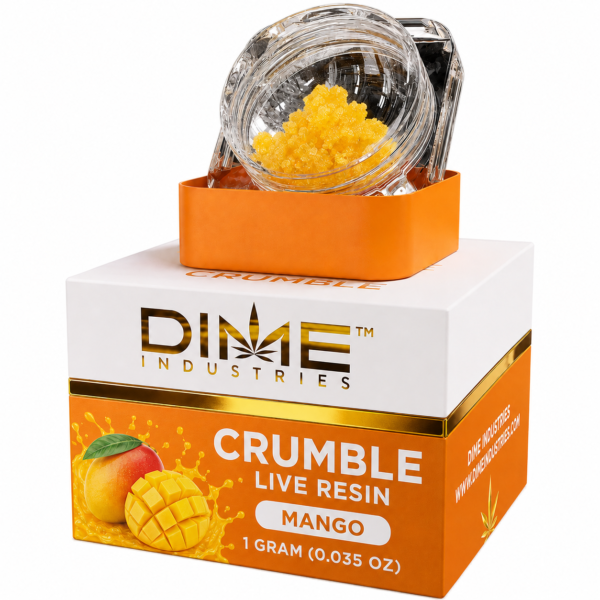
Visually, good crumble looks kind of like a mix between honeycomb and feta cheese. It’s dry to the touch but breaks apart easily between your fingers. It packs a crumbly texture with the freshness of live resin, and it looks soft but slightly dry, somewhere between honeycomb and feta cheese, while still holding onto the rich aroma you’d expect from a live product. That texture isn’t just for show. It comes from the whipping step during production, and it’s what separates crumble from its glassier cousin, shatter, even though both start from a similar extraction process. The whipping step is what differentiates crumble from shatter.
Here’s the thing people get confused about a lot: “live resin” describes the starting material and process (fresh frozen plant, terpene preservation), while “crumble” describes the final texture. So you’ll see “live resin crumble,” “live resin badder,” and “live resin sauce” all sitting on the same shelf. Same base process, different finishing technique, different mouthfeel and dab experience.

Potency-wise, crumble runs strong. Most batches you’ll find land somewhere in the 60% to 90% total cannabinoid range, though some hit even higher. Crumble’s extraction process typically produces higher yields, in the 60% to 90% THC range, so it’s smart to be mindful of how much you consume, especially if you’re newer to concentrates. If you’ve never dabbed before, start with a dab about the size of a grain of rice. A dose about the size of a grain of rice is usually a good starting point. I know that sounds tiny, but concentrates hit way harder than flower, and there’s no reason to prove anything to yourself on day one. You can always take another dab. You can’t un-take one.
One more thing worth knowing up front: a lot of what’s sold online right now as “live resin crumble” is actually THCA-dominant hemp product, not marijuana-derived concentrate from a state dispensary. Both exist, and both can be great, but they’re regulated totally differently (I’ll cover that in the shipping section below). THCA is the raw, non-intoxicating acid form of THC that converts into the psychoactive THC when it’s heated, whether that’s from a dab rig, a torch, or an oven. THCA is the non-intoxicating precursor to THC. If a product is labeled “THCA crumble,” that just tells you the cannabinoid it’s tested highest in before you heat it up, not that it lacks potency.
I get asked a lot why anyone would care about the THCA vs. marijuana-derived distinction if the end result feels the same once you dab it. Here’s my honest answer: it matters for where you’re legally allowed to buy from, whether it can be shipped to your address, and in some cases how consistent the regulatory oversight is batch to batch. State-licensed marijuana programs generally have stricter, longer-established testing requirements. The hemp-derived market is newer and more of a patchwork, which is exactly why leaning on the COA yourself matters even more when you’re buying hemp-derived product online instead of walking into a licensed dispensary with a budtender standing right there.

2. How It’s Made (And Why That Matters for Quality)
I’m not a chemist, but after years of buying and comparing batches, understanding the production side has saved me money and steered me away from bad product more than once. So here’s the short version.
Extractors start with fresh frozen cannabis (sometimes called “live” material) and run it through a closed-loop system using a hydrocarbon solvent, typically butane or propane, sometimes a blend of both. They use a hydrocarbon extraction process similar to other cannabis concentrates, using solvents like butane and propane at sub-zero temperatures, and this preserves the rich cannabinoid and terpene profiles of the cannabis. The cold temperature is the whole point. It stops the terpenes from evaporating off during extraction, which is exactly why live resin products smell so much stronger than concentrates made from dried, cured flower.
After extraction, the raw oil goes through a purge. This step removes residual solvent using low, controlled heat under vacuum. Purging isn’t optional, it’s a safety requirement in every regulated market, because leftover butane or propane in a product you’re inhaling is genuinely dangerous. This is also one of the biggest reasons lab testing matters so much for concentrates specifically (more on that in Section 5).
Once the oil is purged, it goes through mechanical agitation, basically getting whipped and worked by hand or machine until it aerates and dries into that crumbly, honeycomb texture. Depending on temperature, moisture content, and how long the whipping goes, the same batch of oil could end up as crumble, badder, or wax. That’s why you’ll sometimes hear brands say a strain “leaned more badder than crumble this round.” The consistency of crumble concentrates may vary by strain, and some varieties may lean toward a more badder-like texture rather than traditional crumble, which is natural and doesn’t affect quality or potency.
Quality comes down to three things at this stage: the freshness and quality of the starting flower, how clean and controlled the extraction was, and how thorough the purge was. Cheap crumble usually cuts corners on one of these, most often the starting material (trim run instead of nug run) or the purge (rushed, leaving trace solvent behind that a real lab test would catch).


3. Product Comparison: Crumble vs. Every Other Concentrate
People ask me all the time why I pick crumble over the ten other concentrate formats sitting in a dispensary case. Honestly it comes down to convenience and flavor balance. But every format has its place, so here’s how they actually compare.
| Concentrate | Texture | Typical Potency | Flavor/Terpene Retention | Ease of Use | Shelf Life |
|---|---|---|---|---|---|
| Live Resin Crumble | Dry, crumbly, honeycomb-like | 60-90%+ | High (fresh frozen input) | Easy to handle and dose | Moderate, needs cool/dark storage |
| Regular Crumble | Dry, crumbly | 50-80% | Medium (dried/cured input) | Easy | Moderate |
| Shatter | Glassy, brittle | 60-90%+ | Medium to high | Easy but fragile, snaps/shatters | Good if kept cold |
| Badder/Budder | Soft, cake-batter texture | 60-90%+ | High | Sticky, needs a dab tool | Shorter, more prone to oxidizing |
| Wax | Sticky, opaque | 50-80% | Medium | Sticky, messy | Moderate |
| Live Rosin | Sappy, jam-like | 50-80% (varies) | Very high (solventless) | Sticky, needs careful handling | Short, best used quickly |
| Sauce (Live Resin) | Liquid terp layer over THCA crystals | Varies widely | Very high (concentrated terp layer) | Messy, needs a dab tool | Shorter |
| THCA Diamonds | Crystalline | 90-99% THCA | Low on its own (usually paired with sauce) | Easy but very potent | Long, stable |
| Live Resin Vape Carts/Disposables | Liquid oil | Varies by cart | High if made from live resin distillate | Very easy, no rig needed | Long |
A few notes on how I’d break this down in plain terms:
Crumble vs. shatter. These come from a really similar extraction process. The difference is mostly in the finishing step. Shatter gets left alone to set up glassy and hard, crumble gets whipped into that dry, crumbly texture. I personally like crumble better for day-to-day use because it doesn’t snap into razor-sharp shards when you’re trying to break off a dab, and it’s a little more forgiving to store since it doesn’t need to stay perfectly cold to hold its shape.
Crumble vs. live rosin. Live rosin is solventless, meaning it’s made with just heat and pressure instead of a chemical solvent like butane. Rosin is a solventless concentrate made by applying heat and pressure to cannabis flower or hash, resulting in a sticky resinous substance rich in cannabinoids and terpenes. Purists (and I get it) will tell you rosin is the “purer” product because nothing but plant matter and pressure touched it. It’s also usually more expensive. Due to the meticulous production process and use of premium starting material, live rosin tends to be more expensive than other cannabis concentrates, though many find the superior quality and sensory experience worth the investment. If budget’s not a concern and you can find a fresh batch, live rosin crumble or jam is genuinely incredible. If you want something similar for less money, live resin crumble is the move.
Crumble vs. badder/wax. Same base extraction, different whip. Badder and wax stay softer and stickier, which some people love for easy scooping with a dab tool, but they can be a pain to portion out cleanly and they oxidize a little faster once the jar’s open a lot. Crumble holds its structure better over time.
Crumble vs. THCA diamonds and sauce. Diamonds are basically pure crystallized THCA with almost no smell on their own, they’re usually sold sitting in a pool of terpene-rich sauce so you get potency from the diamonds and flavor from the sauce. It’s a strong combo but honestly more of an “occasion” dab for me than an everyday one. Crumble gives you both potency and flavor already balanced into one texture, which is why it’s my go-to for regular use.
Crumble vs. vapes. If you don’t own a rig or want something more discreet, a live resin vape cart or disposable is going to be the easier call. You lose a little bit of the raw, in-your-face terpene punch you get from dabbing straight crumble, but you gain massive convenience. I keep both around depending on where I am and what I’m doing.
So which one should you actually buy?
If I’m being straight with you, there’s no single right answer here, it depends on what you actually want out of a session. If you want the best possible balance of flavor, potency, and value for everyday use, crumble is genuinely hard to beat, which is why it’s the one I keep buying. If money isn’t a huge concern and you want the closest thing to the raw plant experience, live rosin is worth the extra cost at least once so you know what you’re comparing everything else to. If you want maximum potency for the least amount of material, diamonds and sauce combos get you there, just go in knowing it’s a stronger, more intense experience than crumble. And if you need something you can use anywhere without drawing attention, a vape cart solves that problem in a way none of the dabbable concentrates can.
I’d also say this: don’t assume the most expensive option on the shelf is automatically the best one for you. I’ve paid premium prices for rosin that turned out drier and less flavorful than a mid-priced crumble from a brand that clearly knew what it was doing with its extraction process. Price is a signal, but it’s not a guarantee, which brings us right back to why the lab report and the actual terpene numbers matter more than the price tag.
4. Terpene Breakdown: What You’re Actually Tasting
This is my favorite part of the whole live resin conversation, honestly. Terpenes are the aromatic oils in the plant that give each strain its specific smell and flavor, and they’re a huge part of why live resin products taste so much louder than regular extracts. Terpenes are aromatic compounds produced by cannabis that give each strain its distinctive smell and flavor, and cannabis produces over 200 different terpenes, though only about 15-20 appear in significant concentrations.
They also do more than smell good. Terpenes interact with cannabinoids like THC in what researchers call the entourage effect, meaning the terpene profile can shape how a strain actually feels, not just how it tastes. This is why two strains with identical THC percentages can produce completely different experiences, because their terpene profiles differ. That’s also why I never fully trust a strain name by itself. Genetics drift, growers vary, and the same strain name from two different farms can smell and hit totally different. The terpene panel on a lab report tells you a lot more than the strain name does.
Here are the terpenes you’ll see most often on a live resin crumble COA, and what they generally bring to the table:
🍋 Limonene: Citrus smell, lemon and orange notes. Commonly associated with an uplifted, clear-headed feeling. Limonene effects are often described as promoting clarity and focus while helping to reduce stress. Shows up a lot in sativa-leaning strains.
🌲 Pinene: Smells like pine needles, sometimes with a little rosemary or basil edge. Pinene is present in pine trees, rosemary, basil, and different cannabis strains, and it’s known to help with alertness and memory, which can help mitigate some of THC’s less pleasant effects. It’s also been noted as a natural bronchodilator. It can function as a natural bronchodilator, meaning it can help people breathe better, especially if they have asthma or other breathing issues.
🌿 Myrcene: Earthy, musky, sometimes a little like ripe mango. Myrcene is linked to couch-lock sensations and is common in indica-dominant strains, and it’s one of the most abundant terpenes in cannabis. Funny enough, eating an actual mango before you smoke is a real thing people do because mango is high in myrcene, which may enhance the effects.
🌶️ Caryophyllene (Beta-Caryophyllene): Peppery, spicy, a little woody. This one’s unusual because it actually binds to cannabinoid receptors like a cannabinoid would. Caryophyllene is unique because it’s also a cannabinoid in the sense that it interacts with the body’s endocannabinoid system, and it may help with tension, discomfort, and stress management.
💜 Linalool: Floral, lavender-like. Linalool has a floral scent reminiscent of lavender and is often associated with relaxation, potentially helping alleviate anxiety and stress. A lot of nighttime or “wind down” strains lean heavy on linalool.
🌰 Humulene: Earthy, woody, a little like hops (it’s actually found in hops too). Often paired alongside caryophyllene in strains people describe as “gassy” or “diesel.”
🌸 Terpinolene: Herbal, a little floral, a little fruity all at once. Shows up in sativa-leaning strains and is less common as a dominant terpene, so when you see it up top on a COA, it usually stands out.
On a live resin crumble COA, you generally want to see total terpenes somewhere north of 2%, and honestly the good batches I’ve bought tested well above that, sometimes into the 4-8% range. Check that total terpenes exceed 2% as a general benchmark when reading a COA. Anything noticeably lower than that on a “live resin” labeled product is a sign the flash-freeze process wasn’t handled great, or the product sat too long before it was tested and the terpenes started degrading.
One legit way to spot-check quality before you even open a lab report: smell the jar. A strong, specific aroma that matches the strain name is a good early sign. A faint, generic “weed smell” on something marketed as live resin usually means the terpene content didn’t hold up.
5. Lab Testing Explained: How to Read a COA Like You Know What You’re Doing
Okay, this is the section I’d tell a new buyer to read twice. A Certificate of Analysis (COA) is the single most useful tool you have for judging a concentrate before you buy it, and most people never actually open one. A Certificate of Analysis is a document provided by a third party, generally a lab, that analyzes the compounds found in cannabis, including cannabinoid and terpene profiles as well as testing for pesticide residues or heavy metals.
Reputable sellers link the COA right on the product page, or they put a QR code on the packaging that pulls it up instantly. A product label tells you the basics, like THC percentage, strain name, and weight, but the Certificate of Analysis is where the rest of the story lives. If a company selling live resin crumble can’t produce a current, batch-specific COA, that’s not a small red flag, that’s a reason to buy from someone else.
What’s actually on a COA
Header info. Lab name, accreditation number, batch or lot number, and test date. Check that the lab is accredited, and that the product name and batch number match your product. This part matters more than people think. If the batch number on the COA doesn’t match the batch number on your jar, the report doesn’t actually apply to what you’re holding.
Potency panel. This lists out the individual cannabinoids (THCA, Delta-9 THC, CBD, CBG, CBN, and so on) as both a percentage and a milligram amount. The cannabinoid potency panel is typically the first section of a COA, and it lists THCA, the raw non-psychoactive precursor to THC, along with the other cannabinoids present. For a live resin crumble product, you’ll usually see “Total THC” calculated by combining Delta-9 THC with a converted percentage of THCA, since THCA turns into THC when it’s heated.
Terpene panel. Individual terpenes listed by percentage, plus a total terpene number. This is where you check for that 2%+ benchmark I mentioned above, and where you compare what’s actually in the jar against what the strain name promises.
Safety panel. This is genuinely the most important section and the one people skip the fastest. It covers pesticides, heavy metals (lead, arsenic, cadmium, mercury), residual solvents (leftover butane or propane from extraction), and microbial contaminants (mold, yeast, bacteria). Every single one of these should show a clear “PASS.” A complete COA should include potency, pesticides, heavy metals, microbial, and residual solvents testing, and any FAIL result on a safety test means the product should not be consumed.
Residual solvent testing matters more for concentrates specifically than it does for flower, because concentrates go through a chemical extraction process that flower doesn’t. If a crumble product’s purge wasn’t thorough, trace butane or propane can linger, and the residual solvent panel is the only way you’d know before you dabbed it.
Red flags to watch for
I’ve been burned before, and every time, looking back, there was a sign I ignored. Here’s what to actually watch for:
- No COA available at all. Full stop, walk away.
- Batch number mismatch between the report and your packaging. If the batch numbers do not match, the COA may not apply to the product you’re looking at.
- An unaccredited or unnamed lab. Look for ISO 17025 accreditation or state-required accreditation, since unknown labs may not have rigorous standards. You can actually check lab accreditation status yourself through organizations like PJLA or A2LA. You can check accreditation status for cannabis testing labs via PJLA or A2LA.
- An old test date. Terpenes degrade over time, and a test date more than 6 months old may not reflect current terpene content, though cannabinoids are more stable but still degrade over time.
- Suspiciously “perfect” numbers. Real lab results have decimal places and natural variation, so if every result across every batch looks too round or too perfect, that’s worth questioning.
- A strain that doesn’t match its own terpene profile. If a strain shows a terpinolene-dominant profile instead of the myrcene-caryophyllene profile it’s known for, the genetics may be mislabeled.
- No listed testing method. A trustworthy lab will note whether it used GC-MS or HPLC testing methodology. If there’s no info on how the lab tested, transparency is lacking.
Here’s an important reality check I try to give every new buyer: potency isn’t the whole story. A super high THC or THCA number looks impressive on a label, but it doesn’t automatically mean a better experience. A 95% THC vape may sound impressive but can trigger anxiety, rapid tolerance, or throat irritation, while a 65% product with a rich terpene blend might offer a more manageable, more enjoyable experience. I’ve had plenty of “lower potency” crumble that smoked smoother and hit better than something twenty points higher on paper, purely because the terpene profile was richer and better balanced.
Example COA reading (for illustration only)
To show you what a real read-through looks like, here’s a sample breakdown using placeholder numbers, not pulled from any specific brand or batch. Always check the actual, current COA for whatever product you’re buying, since potency and terpene content vary batch to batch and strain to strain.
| Category | What You’d See (Example Only) | What It Means |
|---|---|---|
| Total THC | Example range: 75-88% | Combined Delta-9 THC + converted THCA |
| Total Terpenes | Example range: 3-7% | Higher generally means more flavor and aroma |
| Top Terpenes | Example: Caryophyllene, Limonene, Myrcene | Tells you the likely flavor and general effect direction |
| Pesticides | PASS | No detectable pesticide residue above the legal limit |
| Heavy Metals | PASS | No detectable lead, arsenic, cadmium, or mercury above limit |
| Residual Solvents | PASS | Extraction solvent was fully purged out |
| Microbials | PASS | No mold, yeast, or harmful bacteria detected |
Notice the table doesn’t have a single “correct” THC number. That’s on purpose. Real batches vary, and any seller promising the exact same sky-high number on every single drop, forever, should make you raise an eyebrow.
6. What Real Buyers Report Finding on Their Lab Results
I talk to a lot of other concentrate users, in dispensary lines, in online forums, in group chats. I’m not going to make up specific lab numbers and attach them to fake names, that’s not honest and it’s not helpful to you. But I can tell you the patterns that come up over and over when regular buyers start actually reading their COAs instead of just glancing at the THC percentage on the label. 📋
People are surprised by how often terpene totals get left off the label entirely. A lot of buyers tell me the THC number is front and center on the packaging, but they had to dig for the QR code or the brand’s website to find the actual terpene breakdown. If a brand isn’t putting terpene content anywhere near as prominently as THC content, that tells you something about what they think matters (spoiler: it’s usually just the number that sells fastest).
People report inconsistency between batches from the same brand. This one comes up a lot, and it’s actually a good sign when it happens honestly. Real cannabis, grown from real plants, is going to test differently harvest to harvest. Buyers who track COAs across multiple purchases from the same brand often notice one batch tests at, say, high 70s and the next batch from the same strain tests low 80s. That’s normal. What’s not normal is if every single batch, forever, from every strain, magically lands on the exact same round number.
People catch mismatched batch numbers more than you’d expect. More than a few buyers have told me they scanned a QR code, pulled up a COA, and the batch number didn’t match what was printed on their jar. Sometimes it’s an honest clerical mix-up. Sometimes it’s a seller reusing an old, better-looking report for a new batch. Either way, if you find a mismatch, message the seller and ask directly. A legit operation will fix it or send you the correct report. One that goes quiet is telling you something.
People notice residual solvent panels get skipped more on cheaper products. This shows up a lot with lower-cost, less established online sellers. Buyers report seeing a full potency and terpene panel but no residual solvent testing listed, especially on butane-extracted concentrates. Since crumble is a solvent-based product, this is one panel you really don’t want to see missing.
People say reading the COA changed what they buy. This is the one I hear most, and it matches my own experience. Once you start actually reading lab reports instead of just trusting the label, you naturally gravitate toward brands that make it easy to find that information. It filters out a lot of sketchy sellers on its own, without you even trying.
If you’re new to this, my honest advice is to pull up the COA before you ever add something to your cart, not after. It takes two minutes and it tells you more than any product description ever will.
7. Reviews: What People Are Actually Saying ⭐
I read a lot of concentrate reviews before I buy anything new, and I write plenty myself. Here’s an honest roundup of the kind of feedback that shows up again and again on live resin crumble, pulled together from common patterns across community reviews and my own dabbing notes. These aren’t quotes from any one specific person or brand, they’re a fair representation of what regular buyers consistently say.
⭐⭐⭐⭐⭐ “Smoothest dab I’ve had in months.” “I’ve dabbed shatter for years and switched to live resin crumble because a friend swore by it. The flavor difference is real. It tastes like the actual strain instead of just generic ‘weed.’ Texture makes it easy to portion too, no fighting with a sticky dab tool.”
⭐⭐⭐⭐⭐ “Terpenes actually hit different.” “You can smell the jar from across the room before you even open it. That’s how I judge quality now honestly, if it doesn’t smell strong, I don’t buy it again. This stuff smelled exactly like the strain description promised.”
⭐⭐⭐⭐ “Great flavor, texture varied batch to batch.” “One order was classic crumble texture, the next was closer to badder. Still tasted great and hit hard, just wasn’t expecting the texture change. Wish the listing gave a heads up that it can vary.”
⭐⭐⭐⭐⭐ “COA matched what I got, appreciated that.” “I checked the lab report before buying and the batch number actually matched what was on my jar. Little thing but it made me trust the brand more. Terpene total was solid too, noticeably stronger smell than a cheaper brand I tried before.”
⭐⭐⭐ “Good product, wish shipping was faster.” “Product itself was great, potent and flavorful. Shipping took longer than expected though, and it’s clear there’s some legal stuff going on with certain states that slows things down. Worth checking your state’s rules before ordering.”
⭐⭐⭐⭐⭐ “New to dabbing, this was a good starting point.” “Started with a tiny dab like everyone recommends and it was plenty. Flavor was way better than I expected for my first concentrate. Will be buying again, just going slow.”
⭐⭐ “Beware of cheap knockoffs.” “Ordered from a random site with no COA linked anywhere and regretted it. Barely any smell, harsh hit. Went back to a brand that actually posts lab results and it was night and day. Lesson learned, always check for the COA first.”
The pattern across almost every honest review I’ve read, good or bad, comes back to the same two things: terpene strength (does it actually smell and taste like the strain) and transparency (can you find a real, matching lab report). Everything else, price, packaging, shipping speed, matters, but those two things are what separate a repeat customer from a one-time buyer.
How to actually use reviews when you’re shopping
A few practical tips here, because reviews can mislead you just as easily as help you if you don’t read them the right way. First, ignore reviews that only mention potency. A review that says “hits hard, 5 stars” and nothing else doesn’t tell you anything about flavor, texture, or whether the batch was tested properly. Second, pay more attention to reviews that mention specific details, like texture consistency, smell, or whether the COA matched the product, since those are harder to fake and generally come from someone who actually paid attention. Third, watch for a pattern of very similar, oddly polished five-star reviews posted around the same date. That’s a common sign of incentivized or fake reviews, and it shows up on cannabis product pages just as much as anywhere else online. A mix of four and five star reviews, with a few honest three-star “good but not perfect” reviews mixed in, usually reads as more trustworthy than a wall of nothing but five stars.
8. The Buying Guide: How to Pick a Batch That Won’t Let You Down
Alright, here’s the part you probably came here for. If you’re searching “live resin crumble for sale” right now, here’s exactly what I’d walk through before hitting checkout.
Step 1: Confirm what you’re actually buying
Is this a hemp-derived, THCA-dominant product being sold online across state lines, or is it a marijuana-derived product from a state-licensed dispensary? Both can be excellent, but they’re legally different categories, and it changes where you can buy from and have it shipped (full breakdown in Section 10). If a website is shipping nationwide, it’s almost certainly hemp-derived. If you’re buying in person at a licensed dispensary in a legal state, it’s marijuana-derived. Know which one you’re getting.
Step 2: Pull the COA before you buy, not after
I said this above and I’ll say it again because it’s the single biggest thing that separates good buyers from disappointed ones. Look for a current, batch-matched COA from an accredited lab. Check total THC, check total terpenes (aim for 2%+, ideally higher), and confirm every safety panel shows PASS.
Step 3: Check the extraction source material
Ask (or look for on the product page) whether the crumble came from “nug run” (whole flower buds) or “trim run” (leftover trim material). Nug run comes from flower buds while trim run is made from trim. Nug run generally produces a cleaner, more flavorful product, and it usually costs a bit more for that reason. Trim run isn’t automatically bad, plenty of solid budget crumble is trim run, but it’s a factor worth knowing.
Step 4: Compare price per gram, not just sticker price
Live resin crumble prices swing a lot depending on strain rarity, THC/terpene content, and brand reputation. Don’t just look at the total price, break it down to price per gram and compare that across a few sellers before deciding. A $60 gram from a brand with transparent lab results and strong terpene numbers can genuinely be a better deal than a $35 gram from a seller with no COA linked anywhere.
Step 5: Read the terpene profile against what you actually want
If you want something relaxing for nighttime, look for myrcene or linalool dominant profiles. If you want something more energizing or social, look for limonene or pinene forward strains. Caryophyllene-heavy batches tend to feel a little more grounded and body-focused. This is honestly more useful than picking based on “indica” or “sativa” labels, which don’t reliably predict effects the way genetics and terpene content do. Experts recommend looking at the specific cannabinoids and terpenes in a product to help predict its effects, since this is more reliable than just looking at whether it’s classified as indica or sativa.
Step 6: Check return and quality policies
A brand confident in its product will have a clear policy for what happens if something arrives damaged, melted from shipping heat, or doesn’t match its listed COA. If you can’t find any return or satisfaction policy, that’s worth factoring into your decision.
Step 7: Start small on a new brand
Even if a brand looks great on paper, order a smaller quantity the first time. Test the texture, the smell, the hit, and how you feel afterward before committing to a bulk order. I’ve been let down by beautiful product photos more than once, and a small first order protects you.
Step 8: Look at how the brand talks about its own product
This one’s a little softer than the other steps, but it’s saved me from bad purchases more than once. Read the actual product description, not just the headline. Brands that know what they’re doing tend to talk specifically about extraction method, source material, and terpene content. Brands that are just trying to move volume tend to lean on vague words like “premium” and “top shelf” without backing any of it up with real numbers. If a product page reads like an ad and nothing else, that’s usually a sign the brand is selling the idea of quality instead of the actual thing.
Step 9: Check how the brand handles questions
Before you buy from a new seller, especially online, send a quick message asking something specific, like whether a particular batch’s COA is current or whether a product is nug run or trim run. How fast and how clearly they answer tells you a lot. A brand that answers a direct question with a direct answer is a brand that’s probably going to handle a shipping issue or a quality complaint the same way. A brand that goes quiet, or answers with more marketing copy instead of an actual answer, is telling you something too.
What I personally prioritize, in order
If I had to rank what actually matters most when I’m choosing between two live resin crumble listings, it goes like this: a current, matching COA first, terpene content second, extraction source material (nug run vs. trim run) third, price per gram fourth, and brand reputation or reviews fifth. Notice price is near the bottom of that list, not the top. I’d rather pay a little more for something I can verify than save five bucks on something I’m just hoping is good.
A quick note on price expectations
Live resin crumble typically costs more than regular (non-live) crumble, because the fresh-frozen process is more labor and resource intensive, and because the resulting terpene content is genuinely higher. If you’re seeing “live resin” priced identically to standard concentrate from the same seller, ask yourself whether it’s actually made from fresh frozen material or if the label is doing some heavy lifting.
9. Storage Guide: Keeping Your Crumble Fresh 🧊
You can buy the best batch on the market and still ruin it with bad storage. I learned this the hard way with a jar I left on a sunny windowsill for a week. Never again.
Keep it airtight. Store your crumble in an airtight glass container in a cool, dark place. Oxygen exposure degrades terpenes fast, and it’s the number one thing that turns a loud, flavorful jar into something bland within a few weeks.
Keep it cold, but know the tradeoffs. Refrigeration can help prevent terpene loss and keep your crumble from drying out. A lot of people keep their day-to-day jar in the fridge. Just know that pulling a cold jar in and out repeatedly introduces condensation risk if you’re not careful, so let it come to room temp for a few minutes before opening if it’s been in the fridge.
Freeze it for long-term storage. You can vacuum seal and freeze crumble for long-term storage. If you bought in bulk or found a strain you know you’ll want months from now, portion it out, vacuum seal individual amounts, and freeze. Only thaw what you’re about to use.
Keep it dark. Light, especially direct sunlight, breaks down cannabinoids and terpenes over time. Amber or opaque glass jars exist for a reason. If your jar is clear, keep it in a drawer or cabinet instead of on an open shelf.
Avoid temperature swings. Constantly moving a jar from a hot car to a cold fridge to room temperature and back again stresses the product and speeds up degradation. Pick a storage spot and stick with it.
Don’t store it in plastic or silicone long-term. Terpenes are solvents in their own right, and they can slowly leach into certain plastics and silicone containers, pulling flavor and potency out of your product and potentially picking up unwanted compounds from the container. Glass is the standard for a reason.
Watch the humidity. Too dry and the crumble can lose some of its texture and turn brittle in a way that crumbles apart too much (ironic, I know). Too humid and you risk mold, which is a real health issue, not just a quality one. A cool, stable environment avoids both extremes.
If you notice a jar losing its smell, going from crumbly to weirdly hard or oily-looking, or developing any kind of fuzzy spot (please just throw that out, don’t risk it), that’s your product telling you the storage wasn’t right. Fix the setup for the next jar.
My actual storage setup, for reference
I keep a small stash of amber glass jars in a drawer, away from any window and away from my stove and heater vents. My “in use” jar sits in the fridge door, and anything I’m not touching for a few weeks gets vacuum sealed in a small bag and dropped in the back of the freezer, labeled with the strain name and the date I bought it. That last part sounds like overkill, but I used to lose track of how old a jar was, and old crumble loses its punch even if it’s stored right. A cheap label maker or even just a strip of painter’s tape and a marker solves that problem completely.
If you’re someone who dabs daily, you honestly don’t need to overthink storage that much, since you’ll cycle through a jar before degradation becomes noticeable. It’s the occasional user, or the person who buys in bulk to save money, who really benefits from a proper cold storage routine.
A note on dab tools and temperature
Storage isn’t the only thing that affects how your crumble performs. How you actually dab it matters too. Live resin crumble is packed with terpenes, and terpenes start burning off at fairly low temperatures compared to what a lot of people think of as a “good dab” temp. Going in too hot with a torch and a glowing red banger scorches off a lot of that flavor you paid extra for. A lot of experienced dabbers I know prefer lower temperature dabs, letting the banger cool down for 30 to 45 seconds after heating before applying the concentrate, specifically to protect the terpene profile. You’ll get less of that harsh, chemical-tasting hit and a lot more of the actual strain flavor. An e-nail with a set, consistent lower temperature makes this a lot easier to dial in than eyeballing a torch, if that’s an option for you.
10. Shipping Guide: What’s Legal to Order Online in 2026 📦
This section changes more than any other part of this guide, so I want to be extra clear and extra current here. Cannabis law in the U.S. is genuinely a patchwork right now, and it’s shifting fast heading into the back half of 2026. Here’s where things actually stand.
The core legal split: hemp-derived vs. marijuana-derived
Everything comes back to one legal line drawn by the 2018 Farm Bill: cannabis with 0.3% or less Delta-9 THC by dry weight is legally “hemp.” Anything above that is legally “marijuana,” a federally controlled substance. Before 2018, hemp was classified the same as marijuana under the Controlled Substances Act, but the 2018 Farm Bill removed hemp from that classification entirely, reclassifying it as an ordinary agricultural commodity, and any cannabis plant below the 0.3% Delta-9 THC threshold became legally hemp rather than marijuana.
That single distinction is why you’ll find two totally different markets for live resin crumble online:
Marijuana-derived crumble, sold through state-licensed dispensaries in legal states, cannot be shipped across state lines under any circumstances. Marijuana-derived products cannot be legally shipped across state lines, period. If you’re buying from a licensed dispensary, you’re picking it up in person or having it delivered within that state only.
Hemp-derived, THCA-dominant crumble, sold online by hemp companies, can currently be shipped to most states under federal law, as long as the destination state allows it and the seller has documentation proving it’s compliant. Under the current federal framework, THCA can be shipped legally through USPS and private carriers to states where hemp-derived products are permitted, since the 2018 Farm Bill explicitly authorizes interstate commerce of legal hemp products, including shipping across state lines.
For shipping specifically, sellers need real documentation, not just a claim. Shippers must be able to provide documentation confirming the hemp’s legal status upon request, and in practice this means having a current Certificate of Analysis from an accredited, DEA-registered laboratory that confirms the cannabinoid profile and Delta-9 THC content. This is yet another reason the COA matters so much, it’s not just a quality tool, it’s the legal backbone of the entire online hemp market.
Important: vape products specifically
If you’re looking at live resin vape carts or disposables instead of straight crumble, know that direct-to-consumer mail shipping of vape products is restricted federally regardless of hemp or THC content. Vape products are banned from direct-to-consumer mail under the PACT Act. Sellers work around this with private carrier delivery services in some cases, but it’s a genuinely different, more restricted category than crumble or flower.
States that currently restrict or ban shipment entirely
Some states have passed their own laws blocking online hemp cannabinoid delivery outright, regardless of federal Farm Bill protections. As of mid-2026, reported examples include Tennessee, where a law effective January 1, 2026 bans online sale and delivery of hemp cannabinoid products, Idaho, which maintains a zero-tolerance THC policy, and Hawaii, cited for a restrictive enforcement environment. States like Arkansas, Kansas, Rhode Island, South Dakota, Iowa, Alaska, Delaware, and North Dakota are also commonly flagged as restrictive or evaluated case by case by hemp retailers. Texas has also tightened its in-state retail rules as of mid-2026. Texas hemp law changed quickly, with in-state retail restricted as of July 31, 2026, and further changes possible around the federal November 2026 deadline.
Laws like this change fast and sometimes with very little notice. Before you order live resin crumble online, always check your specific state’s current rules, and don’t assume last year’s information (or even last month’s) is still accurate.
The big one: the November 12, 2026 federal deadline
This is the most important date in this entire guide, and if you’re reading this anywhere close to that date, it changes everything below. Federal hemp law is set to be redefined on November 12, 2026. Section 781 of P.L. 119-37 redefines hemp at the federal level on November 12, 2026, and three things change at once: hemp must contain no more than 0.3% total THC by dry weight (where total THC equals Delta-9 THC plus THCA multiplied by 0.877), a 0.4 mg per-container cap gets applied to consumable hemp products, and synthetic or converted cannabinoids like Delta-8 and HHC fall outside the new legal definition entirely.
Read that total-THC math carefully, because it’s the part that changes everything for crumble specifically. Right now, the legal test only looks at Delta-9 THC. After the deadline, THCA counts too, at 87.7% of its value. Most current high-THCA flower exceeds this new total-THC standard, and that logic applies just as directly to THCA-dominant concentrates like crumble. Under the law as written, THCA concentrates will no longer qualify as federally legal hemp after the deadline takes effect, since any concentrate with meaningful THCA content at saleable potencies will exceed the new total-THC threshold.
Practically speaking, that means the current model of ordering high-potency, hemp-derived THCA crumble online and having it shipped to nearly any state is expected to stop working once this deadline hits. In practical terms, interstate commerce in THCA flower and concentrates is expected to stop, mail carriers are expected to no longer ship it, and the current national retail market for these products is expected to end.
There’s been some legislative pushback trying to delay or soften this. Several bills have been introduced, including the HEMP Act and the Hemp Planting Predictability Act, but none had passed committee as of early 2026, and an attempt to amend the Farm Bill to delay the deadline was ruled “not germane” and never got a vote. So as of this writing, the safest assumption is that the deadline holds as written. If you’re planning to order live resin crumble online and want to be sure you’re getting the current, higher-potency hemp-derived product, ordering before November 12, 2026 is the more certain path. After that date, check current law again before assuming anything about availability.
My honest advice on this whole section
Laws around cannabinoid concentrates move fast, faster than almost any other product category I follow. What’s accurate today might not be accurate in three months. Before you buy live resin crumble online:
- Confirm whether it’s hemp-derived (shippable, with conditions) or marijuana-derived (in-state pickup or delivery only).
- Check your specific state’s current hemp cannabinoid laws, not a general national summary.
- If you’re reading this near or after November 12, 2026, specifically verify whether the total-THC standard has taken effect and how it’s impacting THCA concentrate availability.
- Buy from sellers who provide real documentation (a matching, current COA) proving legal compliance, since that protects both of you if a shipment ever gets questioned.
11. FAQ
What is live resin crumble? It’s a cannabis concentrate made from fresh, flash-frozen plant material (instead of dried and cured flower), extracted with a hydrocarbon solvent and whipped into a dry, crumbly texture. The fresh-frozen process preserves more of the plant’s original terpene content compared to concentrates made from cured flower.
Is live resin crumble the same as regular crumble? Not exactly. Regular crumble is typically made from dried and cured flower or trim, while live resin crumble starts from fresh frozen plant material. Both go through a similar solvent extraction and whipping process, but live resin generally holds a stronger, more accurate terpene profile because the plant never dried out before extraction.
How strong is live resin crumble? Most batches test somewhere between 60% and 90% total cannabinoids, though this varies by strain and brand. Always check the actual COA for the batch you’re buying rather than assuming a fixed number, since potency changes harvest to harvest.
How do I use live resin crumble? Most people dab it using a rig, an e-nail, or a dab pen designed for concentrates. It can also be sprinkled into a joint, blunt, or bowl on top of flower. If you’re new to concentrates, start with a dab about the size of a grain of rice and wait to feel the full effects before taking more.
How should I store live resin crumble? Keep it in an airtight glass container, in a cool, dark place. Refrigeration helps preserve terpenes and prevents drying out, and vacuum sealing plus freezing works well for longer-term storage. Avoid plastic containers, direct light, and repeated temperature swings.
How long does live resin crumble stay fresh? With proper storage (airtight, cold, dark), most crumble holds solid flavor and potency for several months. Terpenes are the first thing to fade, so a jar that’s lost its smell has likely lost some of its flavor punch even if the cannabinoid content is still technically intact.
What should I look for on a lab report (COA) before buying? Check that the batch number matches your product, confirm the lab is accredited, look for a total terpene content above roughly 2%, and make sure every safety panel (pesticides, heavy metals, residual solvents, microbials) shows a clear PASS. Also check the test date, since terpene data more than a few months old may not reflect the current jar.
Why does the lab report matter so much for concentrates specifically? Concentrates go through a chemical extraction process that flower doesn’t, so residual solvent testing (checking for leftover butane or propane) is a bigger deal for crumble than it is for raw flower. A missing or failed residual solvent panel is a real safety concern, not just a quality nitpick.
Is live resin crumble legal to order online and have shipped to my house? It depends entirely on whether the product is hemp-derived or marijuana-derived, and on your specific state’s laws. Hemp-derived, THCA-dominant crumble can currently be shipped to many states under federal Farm Bill protections, with proper documentation. Marijuana-derived crumble from a state dispensary cannot be shipped across state lines under any circumstances. Some states also have their own laws blocking online hemp shipment entirely, so always confirm your state’s current rules before ordering.
What is THCA and how is it different from THC? THCA is the raw, non-intoxicating acid form found in the living cannabis plant. It converts into the psychoactive THC when heated, whether that’s from a torch, a dab rig, or an oven. A product labeled high in THCA isn’t weak, it’s simply reporting the cannabinoid content before that heat-activation step happens.
What’s the difference between live resin crumble and live rosin? Live resin uses a chemical solvent (usually butane or propane) during extraction. Live rosin is solventless, made using only heat and pressure. Rosin is often considered a purer product by concentrate purists and tends to cost more, while live resin crumble typically offers a similar flavor experience at a lower price point.
Why does the same strain taste different from different brands? Terpene content and genetics vary by grower, and strain names aren’t strictly regulated the way lab results are. Two products both labeled the same strain name can come from different genetic lines or different growing conditions, resulting in noticeably different terpene profiles. This is why checking the actual terpene panel on a COA is more reliable than trusting a strain name alone.
Are there pesticides or contaminants in live resin crumble? There shouldn’t be, if it’s properly tested. Reputable products are tested for pesticide residue, heavy metals, residual solvents, and microbial contaminants, and every category should show a PASS result on the COA. If a seller can’t provide this documentation, there’s no way to confirm the product is actually clean.
What is the November 2026 hemp deadline and how does it affect crumble? Federal hemp law is set to change on November 12, 2026, shifting the legal definition of hemp from a Delta-9-only standard to a total-THC standard that includes a portion of THCA content. This is expected to push most current THCA-dominant concentrates, including THCA-based live resin crumble, outside the legal hemp definition, which would end most interstate online shipping of these products as they’re currently formulated. Marijuana-derived crumble sold through state dispensaries isn’t directly affected by this specific hemp law change, since it’s already regulated under separate state marijuana programs.
Can I fly with live resin crumble? This isn’t something to guess on. Cannabis, hemp-derived or not, involves federal air travel rules through the TSA, plus separate state laws at your departure and arrival points. This guide covers buying, storage, and shipping, not air travel specifically, so check current TSA guidance and both relevant state laws directly before you consider traveling with any cannabis concentrate.
What’s the ideal dose for a beginner? A dab about the size of a grain of rice is the standard starting point most experienced users recommend. Concentrates hit significantly harder than flower, so it’s better to start small, wait to feel the full effect, and take more only if needed, rather than starting with a large dab and having no way to undo it.
A Few Final Thoughts
I’ve spent way too much money over the years learning the difference between crumble that’s worth buying again and crumble that ends up sitting in a drawer half-finished. The pattern that keeps proving true: read the COA, check the terpene content, store it right, and know exactly what you’re legally allowed to have shipped to your door based on where you live. Do those four things and you’ll avoid almost every bad experience I’ve ever had with a bad batch.
The cannabis concentrate market, hemp and marijuana both, is moving fast right now, especially with the federal hemp redefinition coming later this year. What’s true about availability and shipping today may not be true in a few months. Keep checking, keep reading your lab reports, and buy from people who make that information easy to find. 🌿
If there’s one habit I’d want you to walk away with from this whole guide, it’s this: treat the lab report as the actual product description, and treat the marketing copy as just packaging around it. The jar can say whatever it wants. The COA is the part that’s independently verified, and it’s the part that’ll tell you the truth about what you’re about to put in your body. Everything else in this guide (storage, comparisons, shipping rules) matters, but that one habit alone will keep you out of trouble more than any other single tip here.
Disclaimer: This article is for informational purposes only and isn’t legal advice. Cannabis and hemp laws vary by state and are changing rapidly heading into late 2026. Always confirm current laws in your specific state and the destination state before ordering any cannabis or hemp product online. Lab data, potency figures, and COA examples referenced in the buying guide and lab testing sections are illustrative only and don’t represent any specific batch, brand, or actual test result. Always review the current, batch-matched Certificate of Analysis for the exact product you’re purchasing.


Reviews
There are no reviews yet.