Everything You Need to Know Before You Buy
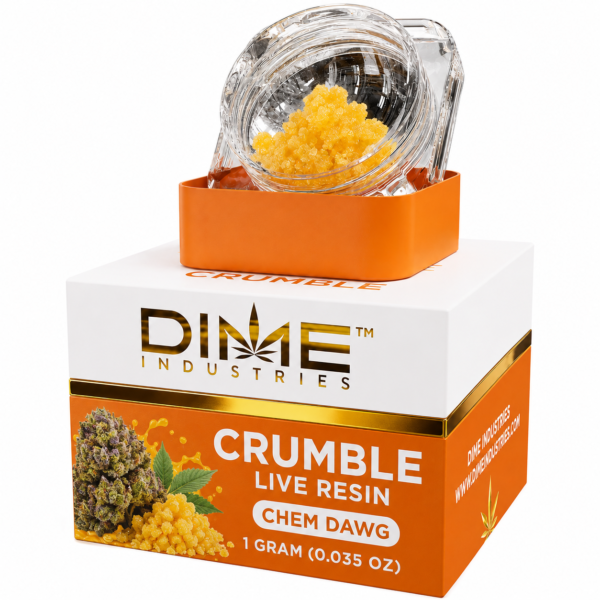
Let’s talk about what Crumble Live Resin Chemdawg actually is, because “live resin” gets thrown around a lot and it doesn’t always mean the same thing from one brand to the next. This one starts as fresh frozen cannabis, meaning the plant gets cut and frozen the same day, sometimes within hours. It skips the drying and curing steps you’d normally see with flower. Then it goes through hydrocarbon extraction and gets purged down into a crumble, which is a dry, flaky texture that breaks apart easily in your fingers. The strain behind it is Chemdawg, one of the most talked-about cultivars in cannabis history, and its diesel smell shows up loud and clear in this jar.
So why does any of that matter? Because the fresh frozen part is the whole point. Terpenes, the compounds that give cannabis its smell and flavor, are pretty fragile. They break down when you dry and cure flower the normal way. Freezing the plant right after it’s cut skips that loss almost entirely, which is why live resin tends to smell stronger and taste closer to the actual living plant than most other concentrates. If you’ve ever opened a jar of concentrate and thought “that’s it?”, this is the category built to fix that problem.

A quick word on what this page is and isn’t. It’s a straight rundown of the product, the process, and the strain behind it, written so you can decide for yourself if it’s worth buying. It’s not a sales pitch stuffed with adjectives, and it’s not going to tell you this concentrate cures anything or does anything beyond what any cannabis concentrate does. Anything we can’t verify for this exact batch, potency numbers, exact terpene percentages, current lab results, gets marked as not officially disclosed instead of made up. That’s on purpose.
🙋 Who Crumble Live Resin Chemdawg Is For
This isn’t a beginner’s first concentrate, and it doesn’t need to be. If you’re new to dabbing, Chemdawg’s flavor is intense, and that’s kind of the whole appeal for people who already know what they like. It tends to land best with people who already have some concentrate experience and specifically want something with a loud, old-school diesel smell instead of a sweeter, dessert-style profile.
It also tends to appeal to people who care about where their extract came from. If you’re the type who reads the strain history section of a product page (you’re currently reading one), or you like knowing whether something is fresh frozen or cured before you buy it, this product was built with that mindset in mind. And if you’ve been chasing that specific fuel-forward Chem smell across different brands, this is a straightforward version of it, made from a strain that’s been shaping that flavor category for decades.
🌿 What Makes Crumble Live Resin Different From Other Concentrates?
People throw around a lot of extract names, so let’s break down what actually separates crumble live resin from the rest of the shelf. Extraction method, starting material, and final texture all play a role, and mixing those three things up is where a lot of confusion about concentrate types comes from. Here’s each comparison broken out so you can actually see the differences instead of just taking our word for it.
Live resin vs. cured resin. Cured resin starts from flower that’s been dried and cured the normal way before extraction. That process is great for flower you’re going to smoke, but it costs you terpenes along the way. Live resin skips the cure entirely by freezing the plant fresh, so more of the original aroma survives into the final product.
Live resin vs. distillate. Distillate goes through a refining process that strips out almost everything except cannabinoids, including the terpenes. Most distillate producers add terpenes back in afterward, sometimes from the same plant, sometimes from a totally different source. Live resin never needs that step because the terpenes were never removed in the first place.
Live resin vs. wax. Wax is usually made from cured material and whipped into a soft, opaque texture during purging. It can still taste good, but it’s built from dried flower, not fresh frozen plant, so the terpene profile tends to be a bit more muted than what you get from live resin.
Live resin vs. shatter. Shatter is purged into a hard, glass-like slab instead of a crumbly or whipped texture. It looks impressive, but that stability comes from how it’s purged, not from anything related to using fresh frozen material. You can make shatter from cured material or fresh frozen material, so texture alone doesn’t tell you much about terpene content.
Live resin vs. rosin. Rosin skips chemical extraction entirely and uses heat and pressure instead. It’s a different category built around a different tradeoff: rosin avoids solvents completely, while live resin uses a hydrocarbon solvent but gets to start from fresher, less-processed plant material. Neither one is automatically better, they’re just built on different priorities. If avoiding solvents entirely matters most to you, rosin is worth a look. If you want the widest possible flavor range and don’t mind a properly purged hydrocarbon extract, live resin usually wins on raw terpene intensity.

🧊 Live Resin Texture Types, Beyond Crumble
Crumble is just one texture live resin can take, and knowing the others helps you understand why this one looks and handles the way it does. Sauce is a wetter, more liquid consistency, usually made up of a terpene-rich liquid sitting on top of separated cannabinoid crystals. It’s flavorful but harder to handle since it’s sticky and doesn’t hold a shape. Badder (sometimes spelled batter) is whipped during purging while it still holds some moisture, so it stays soft and cake-like instead of drying out. Diamonds refers to pure THCA crystals that form naturally in some extracts, often paired with a terpene sauce for flavor. Sugar sits somewhere between sauce and badder, with a grainy, wet texture.
Crumble sits on the drier end of that spectrum. It’s purged further than badder or sauce, which is what gives it that dry, flaky, easy-to-break texture. The tradeoff is usually a slightly less punchy aroma compared to a fresh jar of sauce, but crumble makes up for that with easier handling, simpler storage, and a texture that doesn’t turn into a sticky mess the second it warms up a little.
⚙️ Hydrocarbon Extraction, Explained in Plain Terms
Hydrocarbon extraction sounds technical, but the idea behind it is pretty simple. A solvent, usually butane or propane, is run through the frozen plant material inside a sealed, closed-loop system. That solvent is good at pulling resin off the plant without pulling along a lot of the plant fiber and chlorophyll that would make the final product taste harsh. Once the resin and solvent are separated from the plant material, the mixture moves into a purge stage.
Purging is where heat and vacuum pressure work together to pull the solvent back out, leaving the resin behind. This step matters a lot, because leftover solvent isn’t something you want in a product you’re inhaling. That’s exactly why residual solvent testing exists as a standard part of quality control for anything made this way, which we cover in more detail in the quality standards section further down this page. A properly purged batch should test at safe, verified levels before it ever reaches a shelf.
⛽ What Makes Chemdawg Famous?
Chemdawg isn’t a new strain trying to build buzz. It’s one of the old names in the game, and a lot of today’s popular hybrids trace back to it in one way or another, at least according to the stories that have been passed around cannabis circles for decades. The most common version of the story says a grower known as Chem Dog picked up seeds in the 1990s and started growing out a phenotype with an unmistakable diesel, fuel smell. That plant became Chemdawg, and it spread fast through the underground breeding scene.
Chemdawg’s biggest claim to fame is what came after it. Sour Diesel, one of the most recognized sativa-leaning strains ever, is widely linked to Chemdawg genetics in cannabis lore. OG Kush is also frequently connected to the Chemdawg lineage, even though the exact genetic history isn’t something anyone can fully confirm on paper. Newer hybrids like GMO (sometimes called Garlic Cookies) lean on that same Chem family funk, and phenotypes like Chem 91 and Chem D are essentially variations that came out of the original Chemdawg lines as growers selected for different traits over the years.
None of that history is scientifically documented in a lab sense, a lot of old-school strain lineage is more folklore than paperwork. But that folklore is a big part of why Chemdawg still matters. It’s a strain that shaped the flavor and smell people now expect from an entire category of gas-forward hybrids, and pressing it into a fresh frozen live resin is basically a way of tasting that history directly.
🧬 The Broader Chem Family
Once Chemdawg started circulating, growers noticed something interesting: different seeds from the same original batch didn’t grow identically. Some phenotypes leaned more fuel-forward, others leaned earthier or sourer. Growers started numbering and naming the standout cuts, which is where names like Chem 91 and Chem 4 came from. Each one is basically a specific version of the Chemdawg lineage that a grower decided was worth keeping and passing along.
That’s a pretty normal part of how older cannabis strains evolved before large-scale, documented breeding programs became common. A grower would find a phenotype they liked, keep clones of it going, and share cuttings with other growers, who’d sometimes rename it or cross it into something new. It’s part of why cannabis genealogy gets messy the further back you go, and also part of why strains like Chemdawg carry so much reputation even without hard genetic paperwork to back up every claim.
👃 Chemdawg’s Reputation Among Growers and Extractors
Ask anyone who’s worked with Chemdawg genetics for a while and diesel is usually the first word they use to describe it. That fuel-heavy smell isn’t subtle in the plant, and it tends to show up even more intensely once the plant is turned into a concentrate, especially a fresh frozen one that skips the terpene loss that comes with a normal dry and cure. That’s a big reason extractors specifically seek out Chemdawg cuts when they want a live resin batch with a strong, unmistakable gas profile instead of something milder.
It’s also a strain that’s stuck around for decades without needing a rebrand or a marketing push, which says something in an industry where new strain names show up constantly. People keep coming back to Chemdawg because the smell and effect are consistent and recognizable, not because of clever packaging.
⛽ Chemdawg vs. Other Diesel-Forward Strains
Diesel and fuel smells show up across a bunch of popular strains, but they’re not all built the same way. Here’s how Chemdawg stacks up against a few of its closest relatives, at least as far as cannabis lore connects them.
Chemdawg vs. Sour Diesel. Sour Diesel is often described as more citrus-forward and sharper, with a sourness that Chemdawg doesn’t lean into as hard. Chemdawg tends to sit heavier on straight fuel and earth, with less of that sour edge.
Chemdawg vs. GMO. GMO (Garlic Cookies) adds a savory, garlicky funk on top of the Chem family gas smell, which makes it noticeably different from Chemdawg on the nose even though they’re related in cannabis lore. Chemdawg stays more straightforward diesel and pepper without that garlic note.
Chemdawg vs. OG Kush. OG Kush usually leans more piney and earthy up front, with the fuel note sitting more in the background. Chemdawg flips that ratio, putting diesel and fuel front and center with pine showing up more in the finish.
None of these comparisons are exact science, strain expression shifts with growing conditions, phenotype, and how a plant is cured or extracted. But if you’ve tried any of these before, it gives you a rough map of where Chemdawg sits inside that broader diesel-strain family.
Ingredients and What You’re Really Buying
There’s not much of a list here, and that’s kind of the point. A properly made live resin is just cannabis, extracted and purged. No added flavoring, no cutting agents, no fillers. What you’re paying for is the plant’s own terpene and cannabinoid content, concentrated down into a small jar. If a product needs a long ingredient list to taste good, that’s usually a sign something got added that wasn’t part of the original plant.
That simplicity is also why the extraction and purge steps matter so much. Since there’s nothing else in the jar to fall back on, the quality of the final product depends almost entirely on how well those two steps were handled. A rushed purge, sloppy temperature control, or low-quality starting material will show up directly in the final flavor, since there’s nothing else masking it.
Crumble Live Resin Chemdawg Specs
The quick facts. Anything batch-specific that we can’t verify is marked as not officially disclosed instead of guessed at.
What Crumble Live Resin Chemdawg Tastes Like
The chemdawg flavor profile isn’t just “diesel.” Here’s how it actually breaks down across a dab.
Flavor is where fresh frozen extraction really earns its reputation, and Chemdawg is a strong test case for that. Because the plant never went through a slow dry and cure, the terpenes that give this strain its identity are still mostly intact by the time it reaches your rig. That means the flavor doesn’t taste flattened out or generic the way some concentrates can. It tastes like the strain, not like “concentrate” as a general category.
Fuel
A sharp, gassy blast right up front. This is the note Chemdawg built its reputation on.
Lemon, Pepper, Herb
Once the initial fuel note fades, a citrus brightness comes through, backed by a spicy pepper edge and a herbal undertone.
Earth, Pine, Gas
The exhale settles into something earthier, with pine and a lingering gas note that sticks around after the hit.
Temperature makes a real difference in how much of this range you actually taste. Dab it too hot and you’ll mostly get the fuel note with everything else burned off. Keep it low and slow and you’ll notice the citrus and pepper notes hanging around a lot longer than you’d expect.
Chemdawg Aroma, Broken Down
The Chemdawg aroma hits in layers, and each one tells you something about the terpenes doing the work. The opening aroma, the smell you get the second the jar is open, is pure diesel and fuel. That’s the calling card of this strain and it’s not subtle. Give it a second and a secondary aroma shows up underneath, more citrus and pepper, a little sharper and brighter than the initial fuel blast. As the jar sits open, a lingering aroma settles in, more earthy and pine-heavy, which is common in older Chem-family genetics.
That kind of layered aroma is what people mean when they talk about terpene complexity. It’s not one flat note, it’s several terpenes overlapping and shifting as they interact with air and temperature. A concentrate with real terpene complexity will smell a little different depending on how long the jar’s been open, which is actually a good sign, not a flaw.
Worth pointing out too, aroma and flavor aren’t always identical, even though they’re closely related. Aroma is what you notice before you ever touch the concentrate, just from opening the jar. Flavor is what actually comes through during the dab itself, shaped by heat, your rig setup, and how much air you’re pulling. A jar can smell incredible sitting on the shelf and still taste slightly different once it’s actually vaporized, which is part of why we broke out flavor and aroma as separate sections instead of lumping them together.
Terpene Profile for High Terpene Live Resin
General terpene tendencies associated with Chemdawg as a strain category.
| Terpene | Common Aroma |
|---|---|
| Myrcene | Earthy, herbal |
| Limonene | Citrus |
| Caryophyllene | Pepper, spice |
| Pinene | Pine |
| Humulene | Woody, earthy |
How Fresh Frozen Extraction Actually Works
Harvest
Plants are cut down at peak ripeness, same as they would be for any other product.
Immediate Freezing
Instead of hanging to dry, the fresh plant material goes straight into a freezer, often within hours of being cut.
Cold Storage
Material stays frozen until it’s ready for extraction, which locks in the terpene profile and stops the natural breakdown that happens during a normal dry and cure.
Extraction
The frozen plant is run through a closed-loop hydrocarbon system, which pulls the resin out using a solvent under controlled temperature and pressure.
Purging
The extract goes into a vacuum oven where heat and low pressure work together to remove the solvent, leaving behind the finished concentrate.
Final Crumble Consistency
Once purging is done, the extract is worked into its final texture, in this case a dry, golden crumble that breaks apart easily.
This is why fresh frozen extraction matters so much to the final product. Skipping the dry and cure step is the single biggest reason live resin smells and tastes different from concentrates made off cured flower.
Why Texture Matters
Crumble consistency is easy to spot once you know what to look for. Good crumble breaks apart with almost no effort, doesn’t stick to your tool or fingers too much, and holds a consistent golden amber color from the top of the jar to the bottom. That last part matters more than people think. If the surface looks bright and gold but the inside is darker or duller, that’s usually a sign the batch wasn’t purged evenly.
Texture also affects how easy the product is to handle day to day. Crumble is generally simpler to portion out than a stickier texture like sauce or badder, since it doesn’t cling to a dab tool the same way. Storage is a little more forgiving too, crumble tends to hold its shape better at room temperature than softer textures do. Color and moisture balance both come down to how carefully the purge was handled, so a clean, consistent crumble is usually a decent sign of quality control during production.
One thing worth watching for: crumble that looks overly dry, almost powdery or dusty, can sometimes mean it was purged a bit too aggressively, which can strip out some flavor along with the residual solvent. The sweet spot is dry enough to break apart cleanly, but not so dry that it crumbles into dust the second you touch it. A little resistance when you break off a piece is normal and expected.
How to Store Live Resin
Use a glass container
Glass doesn’t react with the concentrate or hold onto smell the way some plastics can over time.
Keep it cool and dark
Heat and light both break down terpenes, so store it somewhere shaded and away from direct sun.
Watch the humidity
Too much moisture in the air around your storage spot can affect texture over time, so a dry cabinet or drawer works better than a bathroom shelf.
Avoid repeated warming and cooling
Pulling a jar in and out of the fridge over and over stresses the terpenes. Pick a storage temperature and stick with it.
Use the fridge or freezer for long-term storage
If you’re not going through it quickly, cold storage helps the flavor and texture hold up for months instead of weeks.
What to Expect From Batch to Batch
Small batch live resin, like this one, isn’t going to be perfectly identical every single time you buy it. Chemdawg pulled from one harvest can smell and taste slightly different than Chemdawg pulled from the next, depending on things like growing conditions, when exactly the plant was harvested, and how it was handled between cutting and freezing. That’s just how working with a living plant goes.
This is different from something like distillate, which is often blended specifically to taste the same batch after batch. Live resin trades that kind of uniformity for a more accurate snapshot of each individual harvest. Most of the time the differences are subtle, maybe a bit more citrus in one batch, a bit more earth in another, but it’s worth knowing going in so you’re not thrown off if two jars from the same strain don’t taste 100 percent identical.
Quality Standards Behind This Product
What “quality” should actually mean for a hydrocarbon-extracted concentrate like this one.
Quality in this category isn’t just about how the final product looks in the jar, though that matters too. It really comes down to what happens before the product ever gets photographed for a listing: how the plant was handled, how carefully the extraction was run, and whether the purge actually removed the solvent down to a safe, tested level. A jar can look perfect and still fall short if that testing step got skipped or rushed.
What Should Be Tested
- Cannabinoid profile (THC, CBD, and related compounds)
- Residual solvent testing, since this product uses hydrocarbon extraction
- Microbial screening for mold and bacteria
- Heavy metals testing
- Pesticide screening
What To Ask Before You Buy
- Ask for the current certificate of analysis (COA)
- Check the batch or extraction date
- Confirm the retailer is licensed in your state
- Look for a lab name and test date on the COA, not just a logo
- Ask directly if anything on the label seems unclear
🔬 What Each Test Actually Checks For
Cannabinoid profile testing measures how much THC, CBD, and other cannabinoids are actually in the product. This is the number most people look at first, and it should come from an actual lab, not an estimate printed on the packaging.
Residual solvent testing is specific to products made with a chemical extraction method, like this one. It confirms that butane or propane used during extraction was purged out down to a level considered safe for inhalation. This test isn’t relevant for solventless products like rosin, but it’s essential for anything made with hydrocarbon extraction.
Microbial screening checks for mold, yeast, and bacteria that can grow on cannabis material if it isn’t handled or stored correctly before extraction. This matters for basic product safety, regardless of extraction method.
Heavy metals testing checks for contaminants like lead, arsenic, cadmium, and mercury, which can sometimes end up in cannabis through soil, water, or even extraction equipment if it isn’t properly maintained.
Pesticide screening confirms the plant wasn’t grown with banned or excessive pesticide use. Regulations vary by state, but a clean pesticide panel is a basic expectation for any legally sold cannabis product.
Together, these five categories cover the main things a COA should confirm before a product reaches a shelf. If a listing can’t produce a current COA covering these categories, that’s worth treating as a real gap, not a minor detail.
Where This Product Can Legally Be Sold
Cannabis concentrates are only legal to sell and ship within markets where local law allows it, and that varies a lot from state to state and country to country. Before ordering, it’s on you and the retailer to confirm that shipping to your specific location is actually legal. A website being accessible from your area doesn’t automatically mean the product can legally be shipped there.
Licensed retailers typically handle age verification at checkout and again at delivery, and packaging is usually designed to be discreet and tamper-evident. If a seller skips age verification entirely or seems vague about licensing, that’s a sign to look elsewhere, regardless of how good the product itself looks in photos.
It’s also worth checking whether the retailer lists a physical business address or license number somewhere on their site. Legitimate cannabis retailers are usually happy to show that information, since it’s required for them to operate legally in the first place. A site that hides that detail, or makes it hard to find, is worth a second look before you hand over payment information.
What Is Live Resin, Exactly?
If you’re new to concentrates, here’s the short version. Live resin is a cannabis extract made from plant material that was frozen fresh, right after harvest, instead of being dried and cured the normal way first. That single change is the whole reason the category exists. Drying and curing flower is great for smoking flower, but it’s slow, and terpenes evaporate during that process. Freezing the plant fresh skips that loss almost entirely.
Once the plant is frozen, it goes through extraction, usually with a hydrocarbon solvent like butane or propane, which pulls the resin out of the plant material. From there it gets purged, meaning the leftover solvent is removed under heat and vacuum until it’s down to a safe, tested level. What’s left behind is a concentrate that keeps a lot more of the plant’s original smell and taste than most other extraction methods manage.
People usually reach for live resin specifically because of that flavor difference. If you’ve ever compared a jar of live resin to a jar of regular cured concentrate side by side, the difference in aroma is usually obvious within a few seconds of opening both jars.
It’s worth mentioning that live resin isn’t automatically stronger in terms of potency just because it’s fresher. Potency comes down to cannabinoid content, which is a separate thing from terpene content. What live resin reliably offers is a more complete, more accurate flavor and aroma profile of the strain it came from, not necessarily a bigger effect. If potency is your main priority, that’s a separate spec to check on the label or COA, not something you should assume based on the live resin label alone.
Why Fresh Frozen Live Resin Tastes Different
Terpene preservation is really the whole story here. Cannabis starts losing terpenes the moment it’s cut, and drying flower over several days, followed by weeks of curing, gives those compounds a lot of time to break down or evaporate. Freezing the plant within hours of harvest basically stops that clock. That’s why fresh frozen live resin tends to hold onto more of its original flavor and aroma complexity than concentrates made from dried, cured material.
That difference shows up in flavor retention and aroma complexity, both things we already walked through in the flavor and aroma sections above. It also shows up in consistency. Because the plant profile is locked in early, batches from the same strain tend to taste more like the strain is supposed to taste, rather than whatever survived a long drying and curing process. In short, fresh frozen extraction is about protecting the plant’s natural profile instead of working around what’s left of it after time and air have already done their damage.
What People Generally Report
Every person’s experience with cannabis is different, and that depends on a lot of things beyond just the strain, tolerance, dose, how it’s consumed, and individual body chemistry all play a part. So we’re not going to tell you exactly how this will make you feel. What we can say is that Chemdawg has a long reputation among people who use it as a heavier-leaning hybrid, often described anecdotally as relaxing with a strong head presence, though that’s based on general strain reputation rather than anything specific to this batch.
If you’re new to concentrates or trying this strain for the first time, start with a small amount and give it time before deciding whether to take more. This isn’t medical advice and it isn’t a guarantee of any particular effect, it’s just a heads up based on how this strain is generally talked about within the cannabis community.
How to Actually Dab Crumble Live Resin
Go low and slow
Low-temperature dabs protect the terpenes that give Chemdawg its flavor. High heat burns off a lot of that complexity and leaves you with mostly just gas and not much else.
Use a clean banger
Leftover reclaim from a previous strain will mix into the flavor. A quick wipe or swap keeps the Chemdawg profile from getting muddy.
Portion it out before you start
Crumble breaks apart easily, which makes it simple to portion a small dab ahead of time instead of trying to eyeball an amount mid-session.
Let your rig cool between hits
A banger that’s still too hot from a previous dab will torch the terpenes on contact. Give it a few extra seconds if you’re taking back-to-back hits.
Start small if you’re less experienced
Concentrates are more potent than flower by volume. A small dab goes a long way, especially the first time you try a new batch.
Mistakes People Make Buying Live Resin
Assuming “Live Resin” Always Means the Same Thing
- Not every product labeled live resin was actually made from fresh frozen material
- Ask or check the label for fresh frozen extraction specifically
- Cured resin can still be good, but it’s a different product
Skipping the COA
- A pretty label doesn’t confirm potency, purity, or residual solvent levels
- Always ask for the current certificate of analysis before buying
- Compare the test date to the batch date if both are available
Storing It Wrong
- Leaving concentrate in a warm car or on a sunny windowsill degrades flavor fast
- Repeated fridge-to-counter temperature swings stress the terpenes
- Plastic containers can hold onto smell and affect texture over time
Overheating the Dab
- Torching a banger until it’s glowing burns off the flavor you paid for
- Low-temp dabbing takes a little more patience but tastes noticeably better
- If it tastes harsh and flat, the temperature is probably too high
Crumble Live Resin Chemdawg: FAQs
1. What is Crumble Live Resin Chemdawg?
It’s a cannabis concentrate made from Chemdawg plants that were frozen right after harvest, then extracted with a hydrocarbon solvent and purged into a golden, crumbly texture. It’s known for a diesel, citrus, and pepper flavor that carries over from the live plant instead of dried, cured flower.
2. How is live resin made?
Fresh cannabis is frozen within hours of being cut, instead of dried and cured first. It’s then run through a closed-loop hydrocarbon extraction system and purged with heat and vacuum until the solvent is removed, which locks in more of the original terpenes than a normal cure would.
3. Why is Chemdawg popular?
It’s got a loud, unmistakable diesel smell, decades of history in cannabis culture, and it’s linked in cannabis lore to some of the most famous strains around, including Sour Diesel and OG Kush. That reputation has held up for a long time without needing a marketing push.
4. How should live resin be stored?
Keep it in a sealed glass jar, in a cool dark spot, away from repeated warming and cooling. A fridge or freezer works well if you’re storing it for more than a few weeks.
5. What gives Chemdawg its distinctive aroma?
A mix of terpenes, mainly myrcene, limonene, caryophyllene, and pinene, that together create the fuel, citrus, pepper, and pine smell Chemdawg is known for. Exact percentages vary by batch and aren’t officially disclosed on this page.
6. How long does live resin stay fresh?
With proper storage, most live resin holds its flavor and texture well for several months. It’s not going to spoil like food, but the aroma fades gradually over time, especially if the jar gets opened often or kept somewhere warm.
7. How should crumble consistency look?
Good crumble should break apart easily with light pressure, look dry but not powdery or dusty, and hold a consistent golden amber color from top to bottom, not just on the surface.
8. What’s the difference between crumble and badder?
Crumble is purged further, to a drier, flakier stage. Badder is whipped while it still holds more moisture, which keeps it soft and cake-like instead of crumbly. Both come from a similar process, just stopped at a different point.
9. What are common aroma notes in Chemdawg?
Diesel and fuel up front, with citrus, pepper, and earthy pine notes underneath, and a lingering gas smell that tends to stick around after the jar’s been open a while.
10. Why is fresh frozen material used?
Freezing the plant right after harvest skips the drying and curing steps, which is where a lot of terpenes usually break down or evaporate. That’s the whole reason fresh frozen live resin tends to smell and taste closer to the actual living plant.
Why You Can Trust This Listing
We’d rather show you the real process than talk you into a purchase with empty claims. That means third-party lab testing information tied to an actual COA, not just a badge on the page. It means being upfront about the fresh frozen extraction process instead of using “live resin” as a buzzword without explaining what it actually involves. It means batch consistency notes so you know what can shift from one restock to the next, and real product photography instead of stock images that could be any jar of concentrate.
It also means being honest about what we don’t know. Anything batch-specific we can’t confirm, exact potency, exact terpene percentage, current lab results, is marked as not officially disclosed instead of filled in with a guess. If you want that information for the exact batch you’re about to buy, ask your retailer for the current COA before checkout. Shipping and return details, along with customer support contact info, should always be clearly listed wherever this product is actually sold.
None of this is complicated, and none of it should feel like a secret. A retailer that’s confident in what they’re selling should be willing to hand over a COA without making it difficult, answer questions about extraction method without getting vague, and stand behind their return policy if something arrives damaged or wrong. If any of that feels like pulling teeth, that’s worth treating as a red flag before you buy, not after.
The Short Version, If You Skipped Ahead
The Basics
- Fresh frozen Chemdawg, extracted with hydrocarbon extraction
- Purged into a golden, dry crumble texture
- Diesel, citrus, and pepper flavor with an earthy, pine finish
- No cutting agents, no added flavoring
Before You Buy
- Ask for the current COA covering potency and residual solvent
- Confirm the retailer is licensed to ship to your state
- Plan to store it in glass, cool and dark
- Start small if you’re new to concentrates or this strain
Should You Buy Crumble Live Resin Chemdawg?
If you want a concentrate that smells like the strain it came from, this is built for that. Crumble Live Resin Chemdawg leans on fresh frozen extraction and a genetics-heavy strain to deliver a diesel, citrus, and pepper flavor that’s hard to fake with distillate or lower-effort processing. It’s not for everyone, some people prefer the process behind rosin, or a milder flavor profile altogether. But if diesel, gas, and old-school Chem genetics are your thing, this is a straightforward, honestly labeled option to try.
Before you buy, run through the basics one more time: check the current COA, confirm the retailer is licensed where you live, and store it properly once it arrives. Do that, and you’re not just buying a jar of concentrate, you’re buying into a strain with a genuine history behind it, made using a process built to keep as much of that strain’s real character intact as possible.


Reviews
There are no reviews yet.