
Same starting material, two totally different dab sessions. Here’s how to pick.
If you’ve stood in front of a dispensary case staring at two jars that came from the exact same strain and wondered why one looks like a dry cookie and the other looks like cake frosting, you’re not alone. 🤔 Live resin crumble and live resin badder start life the exact same way. Then one extra step in the lab sends them in two totally different directions.
This guide breaks down what actually separates crumble from badder, what each one tastes and feels like, which temperature to dab them at, and how to spot the best crumble live resin for sale when you’re shopping online or at the counter. No fluff, just what you need to make a good call.
Both of these products live under the “live” concentrate umbrella, which already sets them apart from concentrates made with dried, cured flower. But once you get past that shared starting point, the differences add up fast, in how they handle, how they taste, how hot you should dab them, and even how long they’ll stay fresh in your storage jar. We’ll walk through all of it, plus a straightforward buying checklist so you’re not just guessing when you see “crumble” or “badder” on a menu. 🌿
🔑 Quick answer: Crumble is dry, brittle, and easy to scoop with a dab tool. Badder is soft, whipped, and spreadable like cake batter. Badder usually holds onto slightly more terpenes because it’s made with a gentler process. Crumble usually stores a bit longer and handles less like a sticky mess. Potency between the two is close enough that it shouldn’t be your deciding factor.
🌱 What “Live” Actually Means (And Why It Matters Here)
Before we get into crumble versus badder, let’s clear up the word “live.” It gets slapped on a lot of products, so it helps to know what it’s actually promising.
“Live” means the cannabis plant was flash frozen right after harvest instead of being dried and cured first. That fast freeze locks in terpenes and cannabinoids that would otherwise evaporate during a normal drying process. According to Nurse Wellness, this preservation step is why live concentrates tend to smell and taste closer to the actual living plant than concentrates made from dried flower.
So both live resin crumble and live resin badder start from the same fresh frozen material and go through the same basic extraction. That’s the “live” part. What happens after extraction is where the two products split.
🍪 What Is Live Resin Crumble?
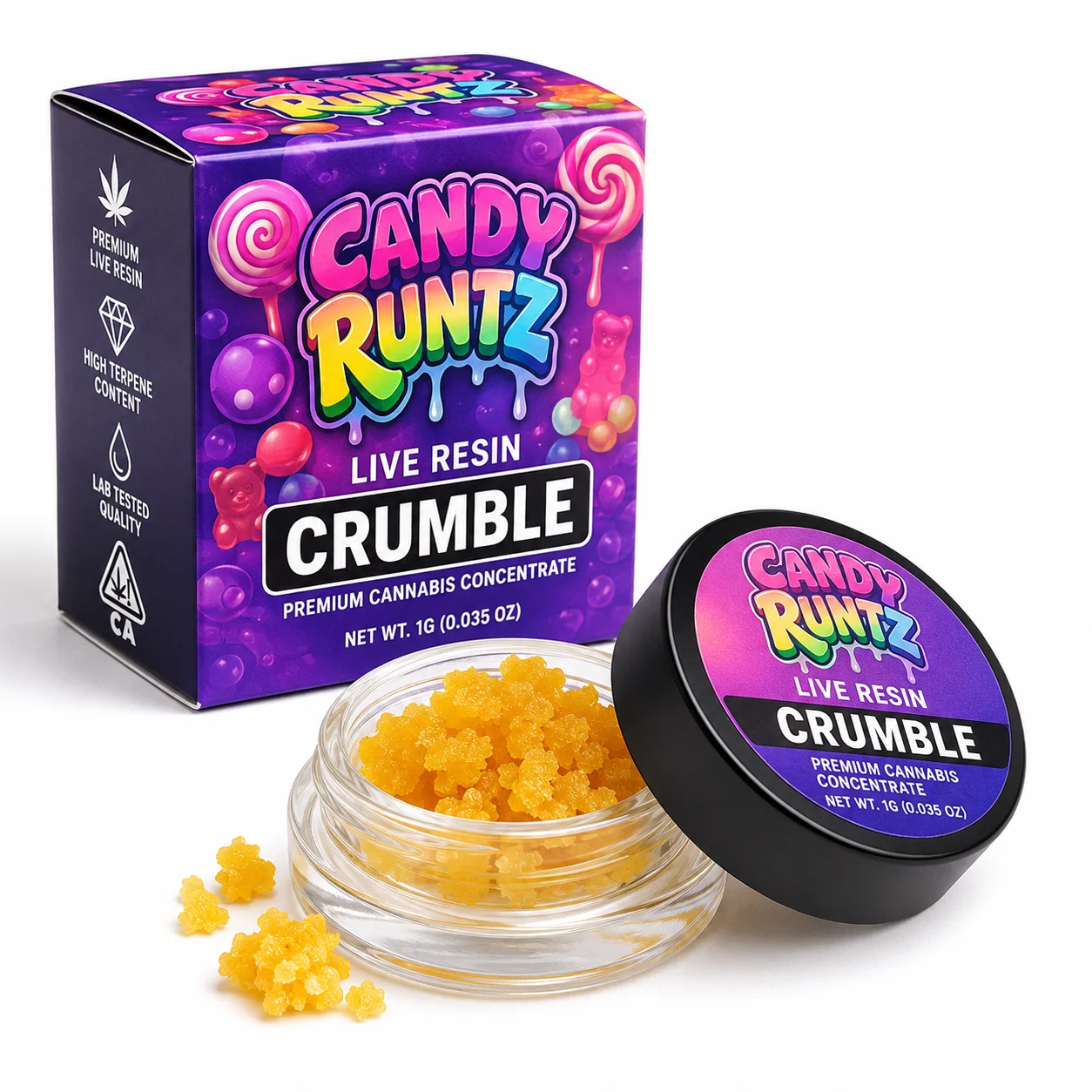
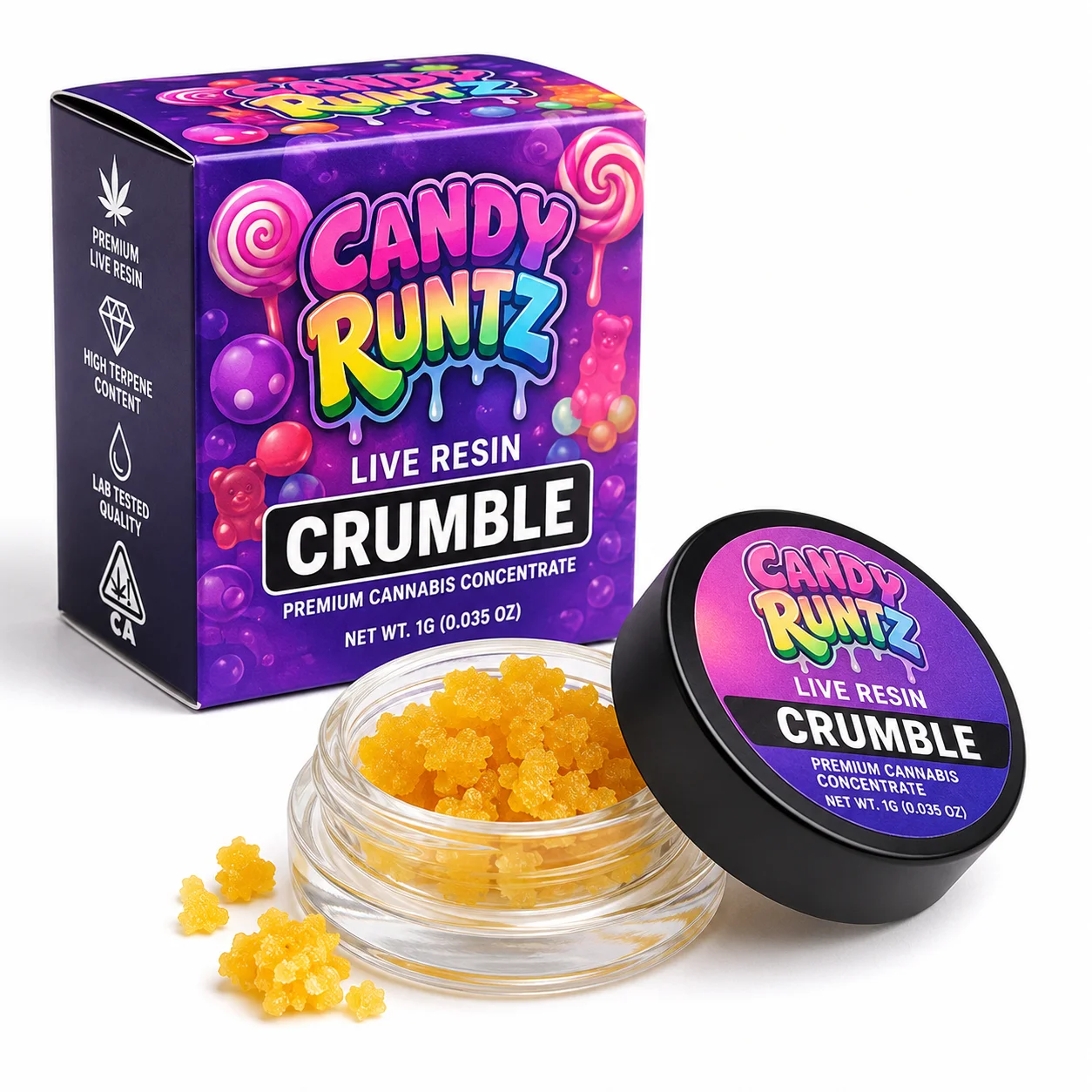
Crumble gets its name from what it does when you touch it. It’s dry, flaky, and it breaks apart in your fingers instead of sticking to them. That texture comes from purging the extract at a slightly higher temperature, or for a longer stretch of time, than you’d use for a softer concentrate. As Social Dispensary explains, that extended purge is exactly what turns a wetter extract into that dry, crumbly consistency.
Here’s the tradeoff. All that extra heat and time pulls out more moisture, but it also pulls out some of the more delicate terpenes along the way. Terpenes don’t handle heat well. So crumble usually ends up with a slightly simpler, less pungent aroma than its softer cousins, even though the terpenes it does have came from the same fresh frozen starting point. Mood’s breakdown of badder versus crumble puts it plainly: crumble’s higher heat takes terpenes out right alongside the moisture, and that’s what gives it the dry, brittle structure and a more stripped-down flavor.
🧱 Crumble at a glance:
- Texture: dry, flaky, breaks apart like a cookie
- Color: usually a bit lighter and more matte than badder
- Handling: easy to scoop, doesn’t stick to your tool
- Flavor: solid, but usually a step behind badder or sauce
- Best for: people who want something clean to handle and don’t want a sticky mess in the jar
🧈 What Is Live Resin Badder?
Badder (you’ll also see it spelled “budder” or “batter,” they’re the same family of product) goes through a different final step. After extraction, the concentrate gets whipped, sometimes called “buddering,” until it turns into a smooth, opaque, cake-batter-like paste. Jersey Meds notes that this whipping process changes the molecular structure just enough to give badder its soft, creamy handle, without needing the extended high-heat purge that crumble goes through.
Because badder is whipped at a cooler stage, it tends to hold onto more of its original terpene profile. That usually translates into a stronger smell and a richer flavor when you dab it. Mood points out that terpenes don’t handle heat well, and badder’s cooler process keeps more of them alive compared to crumble.
🍰 Badder at a glance:
- Texture: soft, whipped, spreadable, cake batter consistency
- Color: opaque, slightly matte, thick and dense
- Handling: sticks to your dab tool more, needs a bit more care
- Flavor: usually richer and more aromatic than crumble
- Best for: flavor chasers who don’t mind a little extra mess
⚗️ Where Crumble and Badder Actually Come From
It helps to understand the process a little more, because it explains why these two products end up so different even though they start out identical.
Both begin with fresh frozen cannabis (flash frozen right after harvest, not dried) run through a solvent-based extraction, usually butane or propane. That step, called BHO extraction, pulls the cannabinoids and terpenes out of the plant material and leaves behind a raw, oily extract. At this stage, crumble and badder are the same thing sitting in the same vessel.
From there, the extract goes into a vacuum oven for purging, which removes leftover solvent so the final product is safe to consume. This is the step where the two paths split:
- For crumble: the purge runs hotter and longer. All that extra heat and time drives out more moisture, which is what turns the extract dry and flaky. It also happens to be rougher on terpenes, since those compounds break down fast under sustained heat.
- For badder: the purge is shorter and cooler, and instead of letting the extract fully dry out, the producer agitates or whips it while it’s still pliable. That whipping motion introduces air and evens out the texture, turning it into that smooth, cake-batter consistency.
Neither process is “better” in a technical sense. They’re just different choices aimed at different results. A skilled extractor can make excellent crumble or excellent badder from the same batch of flower. The texture is a production decision, not a quality grade.
⚠️ Why the purge matters for safety: Since both start as BHO extracts, a proper purge isn’t optional, it’s what makes the product safe to consume. Residual solvents left behind from a rushed or incomplete purge are a real health concern. This is exactly why checking for a residual solvent test on the COA matters just as much as checking THC percentage.
🆚 How Crumble and Badder Stack Up Against Other Concentrates
Crumble and badder don’t exist in a vacuum. If you’ve browsed a concentrate menu, you’ve probably seen sauce, sugar, diamonds, and rosin too. Here’s a quick rundown of how they all relate, so you know where crumble and badder actually sit on the spectrum. 🧭
Sauce
Sauce is wetter and glossier than either crumble or badder, often with visible crystals sitting in a pool of terpene-rich liquid. It’s the flavor champion of the bunch, but it’s messier to handle and harder to portion.
Sugar
Sugar sits somewhere between sauce and crumble. It has a crystalline, slightly wet texture that’s flavorful but still fairly easy to scoop, without being as dry as crumble or as sticky as badder.
THCA diamonds
Diamonds are close to pure, crystalline THCA, often paired with terpene sauce for flavor. They’re the potency play more than the flavor play, and they need a much higher dab temperature (often 525°F to 650°F) to fully vaporize.
Live rosin
Rosin is solventless, made using heat and pressure instead of butane or propane. Purists tend to favor it for purity, though it’s usually pricier per gram than BHO-based crumble or badder.
Where do crumble and badder fit into all this? They’re the practical middle ground. Not as messy as sauce, not as intense as diamonds, and generally more affordable than solventless rosin. That’s a big part of why they stay popular even as newer concentrate styles show up on dispensary menus.
👤 Who Each Texture Actually Fits
Beyond the specs, it helps to think about your own habits. Here’s a more personal way to sort it out.
🧱 Crumble probably fits you if:
- You like to pre-portion your dabs ahead of time
- You hate cleaning sticky residue off your tools
- You don’t dab every day and want something that keeps well in storage
- You’re newer to concentrates and want an easier learning curve on handling
🧈 Badder probably fits you if:
- Flavor is the whole reason you dab in the first place
- You use an e-rig or enail where hitting a precise low temp is easy
- You don’t mind wiping down a tool after each session
- You want something that feels a little more forgiving if your temp runs slightly low
📊 Live Resin Crumble vs Badder: Side-by-Side Comparison
Here’s the whole thing laid out so you can scan it in ten seconds. 👇
| Category | 🧱 Crumble | 🧈 Badder |
|---|---|---|
| Texture | Dry, flaky, brittle | Soft, whipped, creamy |
| Typical THC range | 75 to 85 percent | 70 to 80 percent |
| Terpene retention | Lower (longer, hotter purge) | Higher (cooler whipping process) |
| Flavor intensity | Good, a bit more muted | Richer, more pronounced |
| Ease of handling | Easy to scoop, less sticky | Sticks to tools, needs care |
| Ideal dab temp | 400°F to 500°F | 400°F to 425°F |
| Storage stability | Holds shape well | Can soften if it gets warm |
| Beginner friendliness | Good, but easy to over-heat | Good, forgiving on temperature |
The dab temp numbers above line up with what most current guides recommend. Herb’s 2026 dabbing temperature guide puts crumble at 425 to 450°F because its dry, grainy texture needs a bit more heat to fully liquefy on the nail, while badder does better at 400 to 425°F since its whipped consistency vaporizes smoothly at lower heat. Other sources give slightly wider ranges (some put crumble as low as 400°F or as high as 500°F), so treat these as a starting point and adjust based on your rig and your own preference.
🔥 Flavor and Terpene Preservation: The Real Difference
If you only remember one thing from this article, make it this. The difference between crumble and badder isn’t really about strength. It’s about how much of the original terpene profile survives the process.
Terpenes are the aromatic compounds that give a strain its specific smell and taste, and they’re fragile. Heat breaks them down fast. Crumble’s production process runs hotter and longer to force out moisture, so more of those delicate compounds get cooked off along the way. Badder’s whipping step happens at a gentler stage, so it keeps more of that original aroma intact.
That said, don’t assume crumble is flavorless. Green Theory makes a fair point here: crumble made from a terpene-rich strain can still carry a strong, satisfying aroma, even with a bit less retention than a wetter concentrate. The starting flower matters just as much as the final texture. A live crumble made from a loud, terpy strain can easily out-flavor a badder made from something bland. 🌿
💡 Good to know: Texture tells you almost nothing about potency on its own. It mostly tells you about handling and, to a lesser degree, flavor. If potency is your main concern, check the certificate of analysis (COA), not the jar’s texture.
🧠 Why Terpenes Matter Beyond Just Smell
It’s easy to think of terpenes as just the smell and taste part of the equation, but they do more than that. Terpenes are thought to interact with cannabinoids like THC in a way that shapes the overall effect, not just the flavor. This idea gets called the entourage effect, and it’s a big reason flavor-focused dabbers care so much about terpene retention in the first place.
This is part of why badder tends to get praised for feeling a bit more “well-rounded” compared to a stripped-down concentrate. It’s not that the THC percentage is different. It’s that more of the surrounding terpene profile made it into the jar, so the overall experience can feel more layered. Crumble, with a somewhat leaner terpene profile from its longer purge, can feel a bit more direct and one-note by comparison, though a well-made crumble from a terpy strain can still hold plenty of character.
None of this is an exact science, and everyone’s body responds a little differently. But it’s a useful way to think about why two products with nearly identical THC numbers can still feel noticeably different in the moment. 🧬
💪 Potency: Does Texture Actually Change How Strong It Hits?
Short answer, not really. Crumble typically tests in the 75 to 85 percent THC range, and badder typically lands around 70 to 80 percent. Those ranges overlap plenty, and where the concentrate actually comes from (the strain, the grower, the extraction lab) matters a lot more than which final texture it ended up as.
What can shift slightly between the two is how the experience feels, not necessarily how strong it is on paper. Because badder holds onto more terpenes, some people describe the effects as feeling a little more rounded out, thanks to what’s often called the entourage effect, where terpenes and cannabinoids work together. Crumble, with a slightly more stripped-down terpene profile, can feel a bit more straightforward. Neither one is objectively “stronger” just because of its texture.
🌡️ Dabbing Experience: Temps, Tools, and Technique
How you dab each one matters just as much as which one you buy. Get the temperature wrong and you’ll waste product either way.
Dabbing crumble
Crumble’s dry texture needs a bit more heat to fully melt on the nail. Most guides land somewhere in the 400°F to 500°F window, with Herb recommending 425 to 450°F specifically. Go too low and you’ll get a sputtery, half-melted mess. Go too high and you’ll torch the terpenes and end up with a harsh, throat-scratching hit. Start on the lower end of the range and nudge up until you find your sweet spot.
Because crumble breaks apart easily, it’s simple to portion out with a dab tool before you even touch your rig. That makes dosing more predictable, which is one reason it’s often recommended for people newer to dabbing.
Dabbing badder
Badder likes it a little cooler, generally 400°F to 425°F. Its soft, whipped texture vaporizes easily at lower heat, and because it’s already holding more terpenes, keeping the temp down protects that flavor instead of burning it off. Oil Slick’s 2026 concentrate guide calls badder a friendly first choice if you’re using an e-rig, since those devices make it easy to dial in a consistent low temperature without a torch.
The one downside with badder is handling. It sticks to your dab tool more than crumble does, so you’ll want a designated tool for it and a quick wipe-down after each session to keep things from getting messy. 🧴
🛠️ Quick technique tips for either one:
- Heat your banger, then let it cool for 30 to 45 seconds before dropping your dab. This avoids scorching.
- Use a carb cap to trap heat and help the concentrate fully vaporize at a lower temperature.
- Start low. You can always add heat next time. You can’t undo a burnt terpene.
- Keep a separate tool for badder since it’s stickier and harder to clean off a shared tool mid-session.
📦 Storage: Keeping Either One Fresh
Both crumble and badder are sensitive to heat, light, and air, just in slightly different ways.
- Crumble holds its shape well and is fairly forgiving in storage, but it can still lose flavor if it sits somewhere warm or bright for too long.
- Badder is more temperature-sensitive because of its soft texture. Warm storage can turn it runny, and it can pick up moisture if the container isn’t sealed well.
For both, the rules are the same. Keep them in a cool, dark spot, use an airtight and non-stick container, and avoid moving them between temperature extremes. Nurse Wellness also points out the obvious but important part: store any cannabis concentrate safely away from kids and pets, always.
🤝 Which One Should You Actually Buy?
There’s no universal winner here. It really comes down to what you care about most.
🍪 Pick crumble if you want:
- Easy, mess-free handling and portioning
- Something that stores well without babysitting
- A slightly more straightforward, no-frills dab
🧈 Pick badder if you want:
- The loudest possible flavor and aroma
- A softer, more forgiving dab temp range
- A texture that scoops smoothly, even if it’s a bit stickier
A lot of regular dabbers just keep both on hand and pick based on mood. Crumble for a quick, clean dab. Badder when flavor is the whole point of the session. There’s nothing wrong with switching it up strain to strain either, since some strains genuinely shine more in one texture than the other. 🔄
Think about how you actually dab, too, not just what sounds appealing on paper. If you’re someone who dabs on the go, throws a container in a bag, and doesn’t always have a clean surface handy, crumble’s dry, low-mess nature will save you a headache. If your dab sessions happen at home with a set rig, a torch, and no rush, badder’s slightly fussier handling won’t feel like a big deal, and you’ll get more out of its flavor payoff. Neither choice locks you in forever. Plenty of people rotate between the two depending on the strain, the occasion, or just what sounds good that day. 🎲
🚫 Common Mistakes People Make With Both
A few habits will ruin a good jar of crumble or badder faster than anything else. Watch out for these:
- Dabbing too hot. More heat doesn’t mean a better hit. It means burnt terpenes and a harsh, coughing dab. Start low and work up.
- Using the same dab tool for both. Badder’s stickiness will contaminate crumble’s dry texture and make it harder to portion cleanly. Keep them separate or clean the tool between uses.
- Leaving the jar open. Air exposure degrades terpenes fast. Reseal the container every time, not just when you’re done for the day.
- Storing near a window or heat vent. Both light and heat break down cannabinoids and terpenes over time. A drawer or cabinet beats a countertop.
- Judging quality by texture alone. A dry crumble isn’t automatically worse than a soft badder, and a soft badder isn’t automatically better. The strain and the lab results tell you more than the texture does.
💰 Price and Value: What You’re Actually Paying For
Crumble and badder are usually priced similarly per gram since they come from the same extraction process and just differ in the final step. What actually moves the price is the strain, the brand, and how the product was tested and packaged, not the texture itself.
That said, a few things are worth factoring into your decision beyond the sticker price:
- Waste factor: badder’s stickiness can mean a little product gets left behind on your tool or banger each time. Crumble tends to transfer more cleanly, so you may get more usable product out of the same gram.
- Shelf life: if you buy in bulk and don’t go through it fast, crumble’s better storage stability might save you money in the long run by degrading more slowly.
- Strain rarity: a limited or high-demand strain will cost more regardless of whether it’s sold as crumble or badder. Don’t assume texture is driving the price difference you’re seeing between two products.
🛒 How to Find the Best Crumble Live Resin for Sale
If crumble is the one you’re leaning toward, here’s what actually separates a good jar from a mediocre one when you’re shopping online or at a dispensary.
1. Check the COA, not just the label
A real certificate of analysis should show you cannabinoid percentages and, just as important, a test for residual solvents. This matters more for crumble than you’d think, since BHO-based extracts need to be fully purged of solvents to be safe. If a product doesn’t have a visible, verifiable COA, that’s a pass. 🚫
2. Look for the strain, not just the word “crumble”
Since crumble’s flavor depends heavily on the terpene content of the starting flower, buying crumble made from a genetically loud, terpene-dense strain will almost always out-perform a generic “mixed strain” crumble. Look for single-strain batches when you can.
3. Check the harvest and freeze date
Good live resin producers list when the plant was harvested and flash frozen. The shorter that gap, the more terpenes survived to make it into your jar. A vague or missing freeze date is a small red flag.
4. Read the texture description carefully before buying online
“Crumble” from one brand can look and feel different from another brand’s crumble depending on how long they purged it. If a seller has photos, look for that dry, slightly crumbly, matte look. If it looks glossy or wet in the photo, you might be getting something closer to badder or sauce mislabeled as crumble.
5. Buy from a seller with real reviews and lab transparency
The best crumble live resin for sale usually comes from sellers who make it easy to find batch-specific lab results, not just a general brand-wide potency claim. If a site buries or skips this information, keep looking.
6. Confirm legal compliance for your state
Cannabis and hemp-derived products are regulated differently depending on where you live. Before you buy, confirm the product is legal to ship to or purchase in your state, and check whether it’s derived from marijuana or hemp, since that changes which rules apply. A trustworthy seller will make this information easy to find, not something you have to dig for.
7. Compare price per gram, not just the sticker price
A cheaper jar isn’t always the better deal if it’s a smaller quantity or a lower-tested strain. Do quick math on price per gram across a few listings before you commit, especially if you’re buying online where jar sizes can vary between brands.
🎯 Bottom line: The word “crumble” on a label tells you about texture. It doesn’t guarantee quality. Strain, freeze date, and a real COA tell you a lot more than the texture description ever will.
❓ Frequently Asked Questions
Is crumble or badder stronger?
Neither one wins by default. Crumble usually tests around 75 to 85 percent THC and badder usually tests around 70 to 80 percent THC, but the ranges overlap a lot. The starting flower matters more than the texture does.
Does crumble or badder have more flavor?
Badder usually tastes a bit stronger because it’s whipped at a lower temperature, so more terpenes survive. Crumble goes through a longer, hotter purge, which can strip out some of the more delicate terpenes.
What temperature should I dab crumble at?
Most guides put crumble’s sweet spot between 400°F and 500°F. Its dry, grainy texture needs a bit more heat than creamier concentrates to fully melt on the nail.
What temperature should I dab badder at?
Badder does best around 400°F to 425°F. Because it’s whipped and softer, it vaporizes at a lower temperature while holding onto more of its terpene profile.
Which one is easier for a beginner to handle?
Badder is usually the easier starting point since it scoops cleanly with a dab tool and doesn’t break apart. Crumble is also beginner friendly to handle, but its drier texture can push new dabbers toward hotter, harsher dabs before they learn their timing.
How should I store live resin crumble or badder?
Keep both in a cool, dark place in an airtight, non-stick container. Avoid temperature swings, keep them out of direct light, and store them away from kids and pets. Crumble holds its shape well in storage, while badder can soften if it gets warm.
Is one more expensive than the other?
Not usually. Crumble and badder come from the same extraction process, so pricing mostly comes down to the strain, the brand, and lab testing rather than the final texture. Compare price per gram across listings rather than assuming one texture costs more.
Can I turn crumble into badder or the other way around?
Not really, at least not without redoing the process. Once crumble has been purged dry and brittle, you can’t whip it back into a smooth badder texture. The texture is set during production, so pick based on what you want going in, not what you can change after buying.
🏁 The Takeaway
Crumble and badder come from the exact same fresh frozen starting point. The whole difference comes down to one step after extraction: crumble gets purged hot and long until it’s dry and flaky, badder gets whipped cool and soft until it’s creamy. That single choice shapes flavor, handling, dab temp, and how long it lasts in your jar.
If you want something clean, easy to portion, and low-maintenance in storage, crumble is a solid pick, especially if you find one made from a terpy, single-strain batch with a real COA behind it. If flavor is what you’re chasing above everything else, badder’s cooler process usually delivers a louder, more aromatic dab, as long as you’re okay with a little extra stickiness on your tools.
Either way, check the lab results before you check the texture. That’s the part that actually tells you what you’re smoking. 🔬
Sources referenced:Jersey Meds: Live Badder vs Live ResinOil Slick: Complete Concentrate Consistency Guide for Dabs (2026)Social Dispensary: Concentrate Textures GuideMood: Badder vs CrumbleNurse Wellness: Live Resin vs Live BadderGreen Theory: Cannabis Wax Concentrates ExplainedHerb: The Complete Dabbing Temperature Guide (2026)
🔞 This article is for informational purposes only and does not constitute medical advice. Cannabis products are intended for use only where legal, by adults 21 and older (or as permitted by local law). Consult a healthcare provider before using any cannabis or hemp-derived product, especially if you are pregnant, nursing, or taking medication. Always check your local and state laws before purchasing or consuming cannabis concentrates.
