
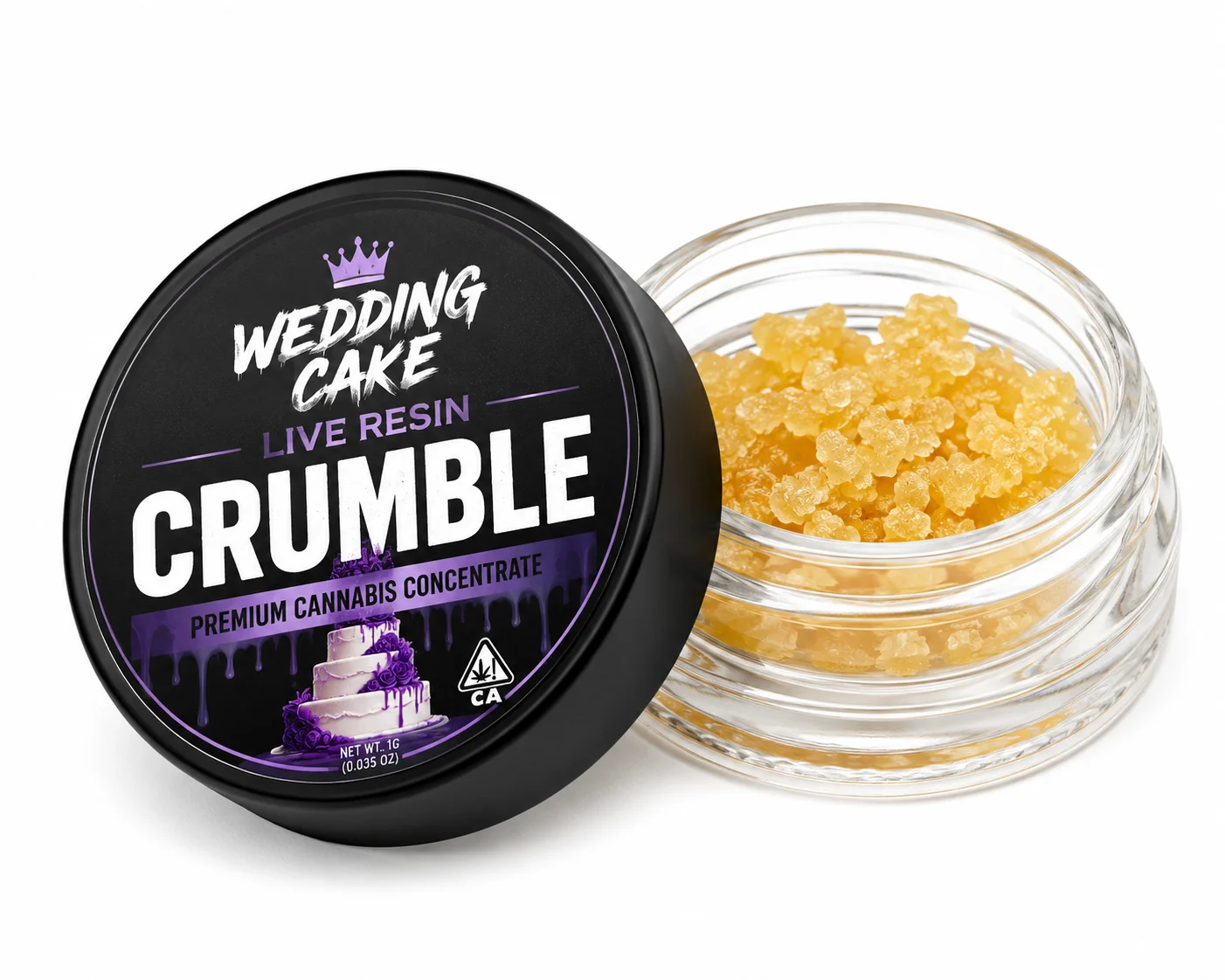
If you’ve ever picked up a jar of crumble live resin at a dispensary and wondered how something with that texture, and that smell, actually gets made, you’re not alone. It’s one of the most common questions people ask when they’re getting into live resin concentrates. So let’s break it down step by step, no jargon, no fluff.
Short answer: crumble live resin is made by flash-freezing fresh cannabis plants right after harvest (before they dry or cure), running that frozen plant material through a hydrocarbon extraction process, then purging out the solvent and whipping the final product until it turns into that dry, crumbly texture you see in the jar. That’s the whole thing in one sentence. Now let’s go through why each step matters and what actually happens at every stage.
If you’re shopping around and want a deeper breakdown of what to look for before you buy, this complete buyer’s guide covers a lot of the practical side. But for now, let’s stick to the “how it’s made” part, since that’s what you’re here for.
What Makes Live Resin Different From Regular Extracts
Before we get into the “how,” it helps to understand the “why.” Most cannabis concentrates start with dried and cured flower. You harvest the plant, hang it to dry for a week or two, then cure it in jars for another few weeks. That process is great for flower you’re going to smoke, because drying and curing mellow out the harshness and build flavor.
But drying and curing also cost you something. Cannabis plants are full of terpenes, the compounds responsible for smell and flavor, and terpenes are volatile. That means they evaporate easily. Every day the plant sits out to dry, you lose more of them. By the time flower is fully cured, a good chunk of the original terpene profile is gone.
Live resin skips that loss. Growers harvest the plant and freeze it immediately, usually within hours, sometimes right in the field or right after it comes down from the plant. That fast freeze locks the plant’s chemistry in place at the moment of harvest. The terpenes don’t have time to break down or evaporate. So when you eventually extract from that frozen material, you’re pulling out a much closer match to what the living plant actually smelled and tasted like.
That’s the whole point of live resin as a category. Crumble is just one of the textures you can end up with once you extract from that frozen starting material. Sauce, badder, and diamonds are others. We’ll get into why crumble ends up looking and feeling different from those a little later.
Step One: Harvest And Flash Freeze
Everything starts in the grow. Cultivators pick the exact right moment to harvest, usually based on trichome color under a microscope, since that tells them how ripe the plant is and what kind of effects and flavor it’s going to have.
Once the plant comes down, speed matters. The goal is to get it frozen as fast as possible, ideally within an hour or two, definitely within the same day. Some operations use walk-in freezers set well below zero. Others use dry ice or liquid nitrogen for an even faster freeze. The faster the freeze, the better the terpene and cannabinoid preservation, because you’re not giving anything time to degrade at room temperature.
The plant material gets frozen whole, still on the branch in a lot of cases, then broken down and bagged while still frozen. It stays frozen the entire time between harvest and extraction, sometimes for weeks, sometimes just a day or two, depending on the extractor’s schedule. Cold storage is expensive and takes up a lot of freezer space, so most companies try to extract fairly soon after harvest rather than sitting on frozen material for months.
This is also the step where quality control starts. If a grower rushes the freeze, or lets material sit at room temperature even for a few hours before freezing, you lose some of that “live” advantage before the extraction process even begins. That’s part of why live resin quality varies so much between brands. The extraction technique matters, but so does everything that happens before the plant ever reaches the extraction lab.
Step Two: Hydrocarbon Extraction
This is the part most people picture when they think about concentrate production. The frozen plant material goes into a closed-loop extraction system, and a solvent, usually butane, propane, or a blend of the two, gets pushed through it under pressure.
Here’s the basic idea. Butane and propane are great at dissolving cannabinoids and terpenes but bad at dissolving plant waxes, chlorophyll, and other stuff you don’t want in your final product. So when the solvent runs through the frozen plant material, it picks up the good stuff (THC, other cannabinoids, terpenes) and leaves most of the unwanted plant matter behind.
The solvent, now loaded with all those dissolved compounds, gets collected in a separate chamber. This liquid mixture is often called crude oil or crude extract at this stage. It’s still full of solvent and needs a lot more processing before it’s anything close to a finished product.
Working with frozen material instead of dried material changes how this extraction behaves. Frozen plant matter is more brittle and holds onto its terpene content differently than dried plant matter does. Extractors often run live resin extractions at colder temperatures throughout the whole process specifically to keep those terpenes intact. Every degree of extra heat is a chance to cook off flavor you can’t get back.
If you want to understand more about why extraction method changes the final product so much, this piece on what to know before you buy walks through some of those differences in plainer terms.
Step Three: Purging The Solvent
Once you’ve got that crude oil full of dissolved cannabinoids, terpenes, and leftover solvent, you can’t just leave it as is. Butane and propane aren’t safe to consume, so every trace of solvent has to come out before the product can legally be sold or safely used.
This step is called purging, and it usually happens in a vacuum oven. The crude oil gets placed in the oven, and technicians pull a vacuum (basically lowering the air pressure inside the chamber) while applying gentle heat. Lower pressure means solvents can evaporate at much lower temperatures than they normally would, which is important because you still don’t want to blast the product with high heat and destroy the terpenes you worked so hard to preserve.
Purging isn’t a quick step. It can take anywhere from several hours to a couple of days, depending on the equipment, the batch size, and the target consistency. Technicians check solvent levels throughout the process using lab testing, and legal markets require the final product to test under specific residual solvent limits before it can go to shelves.
This is also where the extractor starts deciding what final texture they’re aiming for. The temperature, vacuum level, and purge time all affect how the oil behaves as it loses solvent. Crumble comes from a specific combination of these variables, which brings us to the next step.
Step Four: Whipping And Agitation
Here’s where crumble actually becomes crumble. After the initial purge, the oil is still soft and pliable, kind of like warm taffy or thick honey. At this stage, extractors have a choice. They can leave it alone and let it set up as a slab (which becomes shatter if it’s glassy, or badder if it stays a bit softer), or they can actively work it.
For crumble, technicians whip or agitate the oil while it’s still warm, usually with a tool similar to a small mixer or by hand-working it with a spatula. This introduces air into the mixture and breaks up the molecular structure in a way that causes it to form small clusters instead of staying as one smooth mass. As the oil cools and finishes purging, those clusters harden into the dry, crumbly texture you recognize.
The exact texture depends on a few things. Moisture content in the starting material, how much the oil gets whipped, the purge temperature, and even humidity in the lab during processing all play a role. That’s why crumble from one brand can look noticeably different from crumble made by another, drier and more powdery versus slightly stickier and more clumped. Both can be good product. It just comes down to technique.
This whipping step is really the dividing line between crumble and other live resin textures. Sauce, for comparison, isn’t whipped at all. It’s left to separate naturally into a layer of crystallized THCA sitting in a pool of liquid terpenes. Badder gets whipped too, but usually at a slightly different temperature and moisture level, which keeps it softer and more like cake batter instead of fully dry and crumbly. Diamonds come from an entirely different process involving slow crystallization over days or weeks.
If you want to see how crumble stacks up against those other textures in more detail, this buyer’s guide breakdown goes through the differences pretty clearly.
Step Five: Lab Testing
Before any crumble live resin reaches a store shelf, it has to pass through lab testing. This isn’t optional in legal markets. Labs check for potency (THC, CBD, and other cannabinoid percentages), residual solvents (making sure the butane or propane purge actually worked), pesticides, heavy metals, and microbial contamination like mold or bacteria.
This step matters more for live resin than people usually realize. Because live resin starts from fresh frozen plant material instead of dried flower, there’s slightly more moisture involved early in the process, which can create more opportunity for mold if handling isn’t clean. Good extractors control for this carefully, but it’s part of why lab testing exists, to catch anything that slipped through.
The lab results usually get printed on what’s called a Certificate of Analysis, or COA. Reputable brands post these publicly or make them available through a QR code on the packaging. If a company selling crumble live resin can’t produce a COA, that’s a red flag worth paying attention to.
For a deeper look at what to check on a COA and other quality signals before buying, this guide on what buyers should know before they purchase is a good one to bookmark.
Why The Texture Actually Matters
Some people assume crumble is just shatter that broke apart, or sauce that dried out. That’s not accurate. Crumble is a texture that gets made on purpose, through that whipping and agitation step, and it comes with a few real advantages.
Crumble is easier to handle than sauce, which can be sticky and hard to dab cleanly. It’s also easier to break into consistent dab-sized pieces than shatter, which can shatter unpredictably (hence the name) into big shards or tiny dust depending on how brittle it is. For people who dab regularly, that consistency is a real quality-of-life improvement.
Crumble also tends to hold onto a strong terpene profile, since the process doesn’t require as much heat or manipulation after the initial purge as some other extraction methods do. That’s part of why live resin crumble specifically has built such a loyal following among people who care about flavor as much as potency.
There’s more detail on how texture affects the actual dabbing and smoking experience in this article about everything you should know before you buy, if you want to go further into that side of things.
Common Mistakes That Ruin A Batch
Making good crumble live resin is harder than it looks, and there are a handful of ways a batch can go wrong even when the starting material is great.
Freezing too slowly after harvest is one of the biggest issues. If the plant sits out too long before it gets frozen, terpenes start breaking down before extraction even starts, and no amount of skill later in the process can bring that flavor back.
Purging at too high a temperature is another common mistake. It’s tempting to speed up the purge by cranking the heat, since time is money in a commercial lab. But high heat during purging cooks off terpenes and can degrade cannabinoids, leaving you with a product that’s technically clean of solvent but flat and weak on flavor and effect.
Whipping at the wrong stage is a third issue. If the oil is whipped too early, while it’s still holding too much solvent or moisture, it won’t set up into that clean crumbly texture. It’ll stay gummy or turn into something closer to badder even if crumble was the goal. Timing this step takes real experience, not just following a recipe.
And finally, starting with lower-quality or improperly cured plant material (even though it’s frozen fresh) will show up in the final product no matter how good the extraction technique is. Garbage in, garbage out still applies here. A skilled extractor can only work with what the grower hands them.
If you want to know how to spot a well-made batch versus a rushed one when you’re shopping, this real buyer’s guide has some practical tips worth reading before your next purchase.
How To Tell Good Crumble From Bad Crumble
Once you understand how crumble live resin is made, spotting quality differences gets a lot easier. Here’s what to actually look for.
Color is a decent first clue, though not a perfect one. Good crumble is usually a light to medium golden color, sometimes with a slightly darker amber tint depending on the strain. Very dark or brownish crumble can sometimes point to oxidation or lower-quality starting material, though this isn’t a hard rule since strain genetics also affect color.
Texture should be dry but not powdery to the point of falling apart into dust the second you touch it. It should hold together when you break off a dab-sized piece, then crumble apart naturally rather than sticking to everything or refusing to break at all.
Smell is honestly one of the best indicators. Because live resin is made specifically to preserve terpenes, a good batch should smell strong and specific to the strain, not just generically “weedy.” If it barely smells like anything, something probably went wrong in the freezing, extraction, or purging steps.
And of course, check for lab results whenever they’re available. A COA showing clean residual solvent levels and accurate potency numbers tells you a lot more than color or smell alone ever could.
For a full walkthrough on evaluating a product before you buy it, whether online or in person, this guide covering what it is, how it’s made, and how to buy it right puts a lot of this into one place.
A Quick Recap Of The Whole Process
Let’s run through it one more time, start to finish, since it’s a lot of steps.
First, growers harvest the plant at peak ripeness and freeze it fast, usually within an hour or two, to lock in terpenes before they can break down. Second, that frozen material goes into a closed-loop hydrocarbon extraction system, where butane or propane pulls the cannabinoids and terpenes out while leaving most of the unwanted plant matter behind. Third, the resulting crude oil goes through a vacuum purge, using low pressure and gentle heat to remove every trace of leftover solvent. Fourth, while the oil is still warm and pliable, technicians whip and agitate it, which is the specific step that turns it into that dry, crumbly texture instead of shatter, badder, or sauce. Fifth, the finished product goes through lab testing to confirm potency, check for contaminants, and verify the solvent purge actually worked. And finally, it gets packaged and shipped out to dispensaries, where it ends up in a jar with your name on it.
Every step affects the final product. Rushed freezing hurts flavor. Sloppy extraction leaves behind unwanted compounds. A bad purge means leftover solvent or degraded terpenes. Poor whipping technique ruins the texture. And skipping lab testing means you’re buying blind. That’s why price differences between brands often come down to how carefully each of these steps gets handled, not just marketing.
Frequently Asked Questions
Is crumble live resin stronger than regular wax or shatter?
Not necessarily stronger in terms of raw THC percentage, since those can be similar across different concentrate types. But crumble live resin generally has a more intense and accurate terpene profile because of the fresh-frozen starting material, so the flavor and overall experience tend to feel more potent and more true to the strain.
Why does crumble sometimes look different between brands?
Because so much of the final texture depends on small variables during the whipping and purging steps, including temperature, humidity, and moisture content in the starting material. Slight differences in any of those can change whether the final product looks dry and powdery or a bit more clumped and sticky.
Does crumble live resin need to be refrigerated?
It’s not strictly required, but storing it in a cool, dark place (or in the fridge) helps preserve the terpenes longer. Heat and light both speed up terpene degradation, so a lot of dedicated dabbers keep their concentrates in a cool spot away from direct sunlight.
Can crumble live resin go bad?
It can lose potency and flavor over time, especially if it’s stored somewhere warm or exposed to air and light regularly. It won’t necessarily become unsafe, but older crumble will smell and taste noticeably weaker than a fresh batch.
Is crumble live resin the same as live rosin?
No, and this trips a lot of people up. Live resin uses solvent-based extraction (butane or propane), while live rosin is solventless, made using heat and pressure alone. Both start from fresh frozen plant material, which is where the “live” part of the name comes from, but the extraction method is completely different.
If you’ve still got questions after all that, this guide walking through the buying process from start to finish is worth a look, along with this breakdown of what buyers should know before purchasing and this rundown of what you actually need to know before you buy.
So that’s how crumble live resin is made, from the moment a plant gets cut down to the second it lands in a jar on a dispensary shelf. It’s a process that rewards speed, precision, and a light touch, and honestly, once you understand what goes into it, it’s a lot easier to appreciate why a well-made batch costs what it costs.