
If you’ve stood in front of a dispensary case and stared at jars labeled “crumble” and “live resin,” you’ve probably wondered if they’re even talking about different things. They can be. And sometimes they’re not, since a lot of live resin actually gets whipped into a crumble texture too. Confusing, right?
This guide breaks down crumble vs live resin in plain terms: what each one actually is, how they’re made, how they taste, and how to pick between them. No jargon you need a chemistry degree to follow. Just a clear answer.
The Quick Answer ⚡
Here’s the short version before we get into the details.
Crumble is a texture. It’s a dry, crumbly concentrate that breaks apart into small pieces instead of stretching or staying sticky.
Live resin is a process. It describes concentrate made from cannabis that was flash frozen right after harvest, instead of dried and cured first.
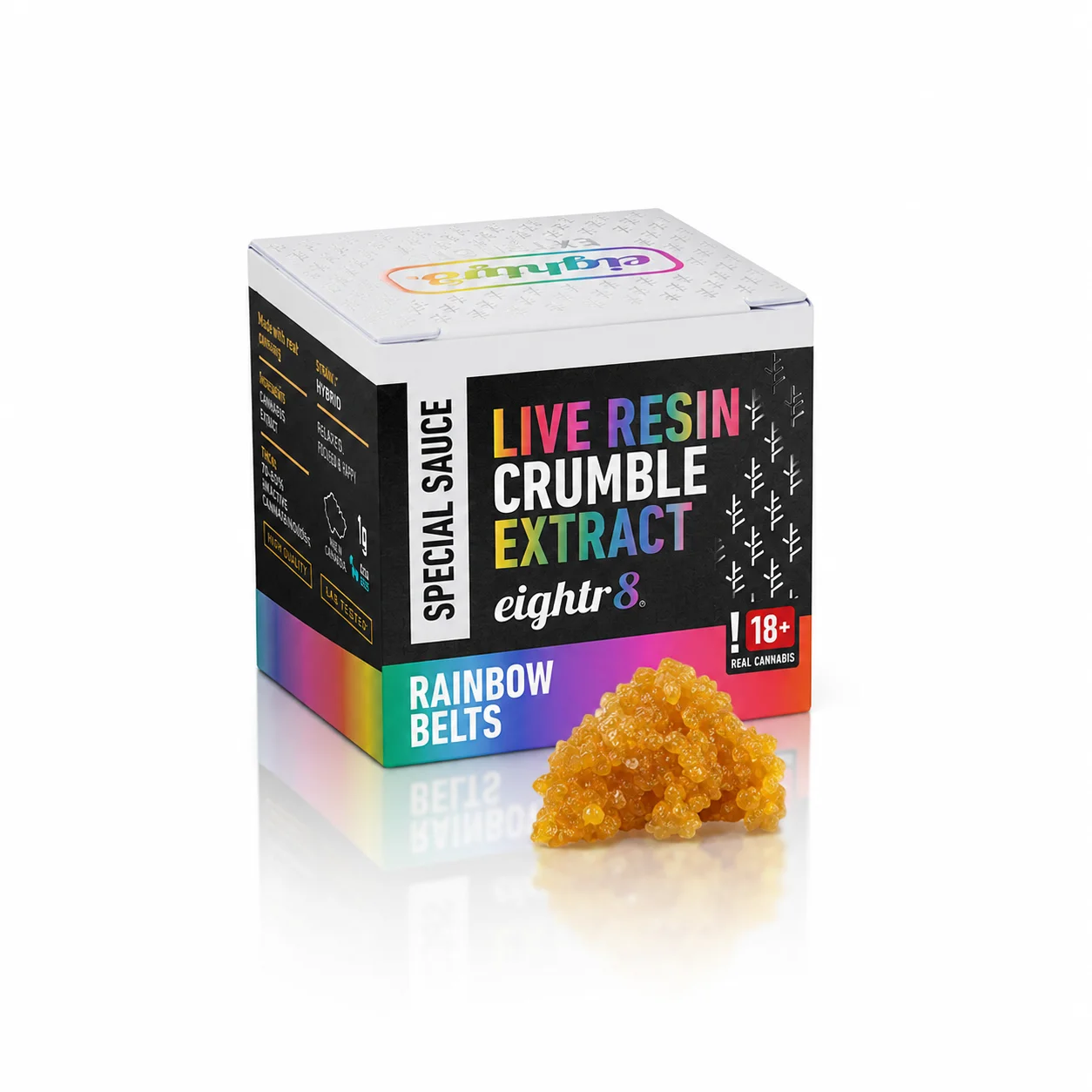
So here’s the thing that trips people up: crumble and live resin aren’t always opposites. A product can be both. “Live resin crumble” means a crumble-textured concentrate made from fresh frozen flower. What you’re really comparing, most of the time, is standard crumble (made from dried, cured flower) against live resin (which can come in several textures, crumble included).
Once you get that distinction, the rest of this guide will make a lot more sense.
Why This Comparison Confuses So Many People 🤷
Before we go further, it helps to understand why crumble vs live resin trips people up in the first place. Most concentrate categories get named after one specific thing: either how they look and feel (shatter, wax, badder, crumble) or how they’re made (live resin, live rosin, distillate). The problem is that dispensary menus and packaging don’t always make that distinction clear. You’ll see “crumble” sitting next to “live resin” like they’re two options on the same list, when really one is describing a shape and the other is describing a starting point.
It’s a little like walking into a bakery and seeing “sourdough” and “sliced” listed as two separate bread options. Sourdough describes how the bread was made. Sliced describes its final form. You could absolutely have sliced sourdough. The categories aren’t in competition, they’re just answering different questions. Crumble and live resin work the same way.
Once you separate “how was it made” from “what does it feel like,” the whole category makes a lot more sense, and you can start asking sharper questions when you’re actually shopping.
What Is Crumble? 🧱
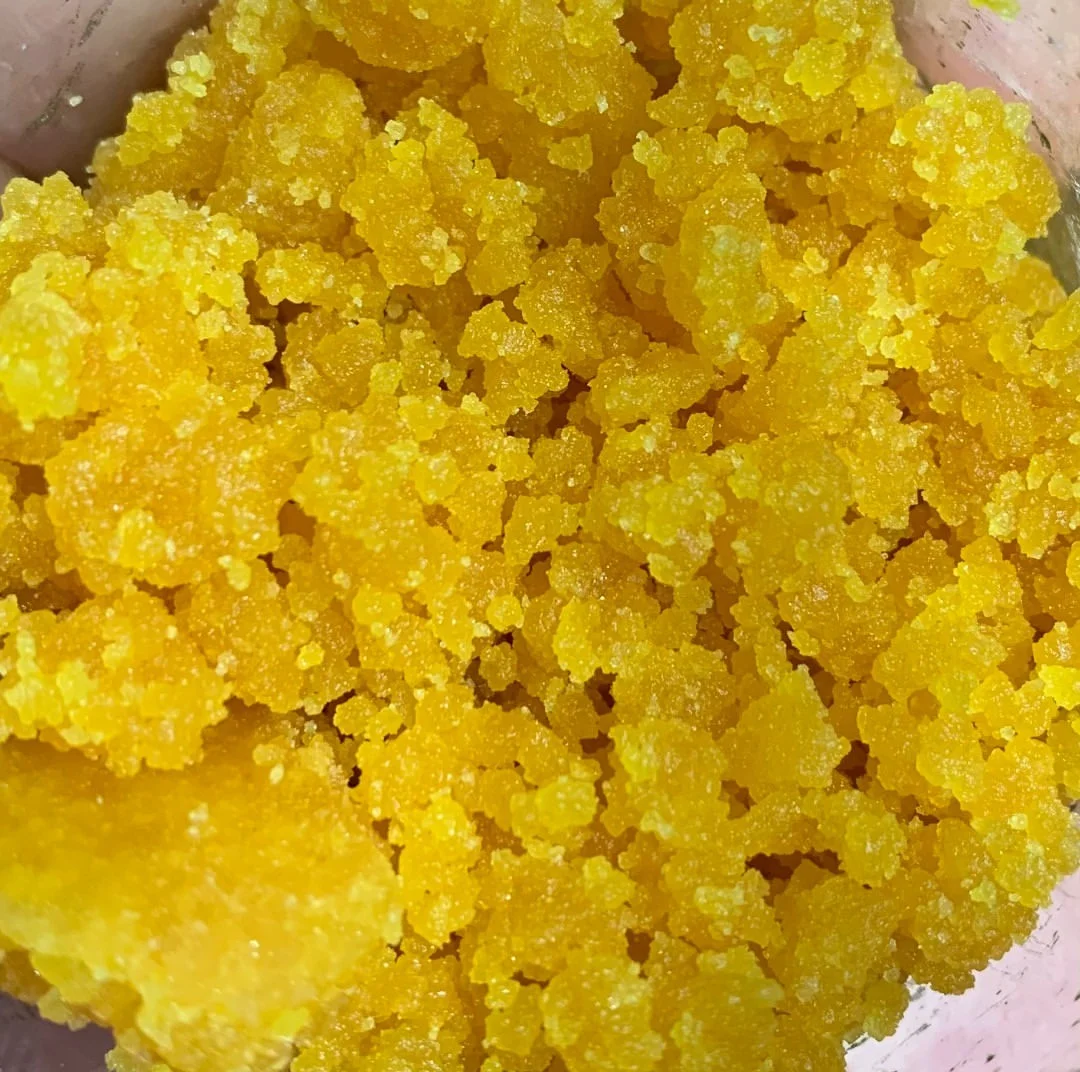
Crumble is one of several texture categories in the concentrate world, alongside shatter, wax, badder, and sauce. The name comes from exactly what it sounds like. It breaks apart into small, dry pieces rather than stretching like taffy or staying sticky like some other concentrates.
According to Weedmaps, crumble is typically made from dried and cured cannabis flower, using the same solvent-based extraction and whipping process used for other concentrate types, and the specific input material determines whether the final product counts as regular crumble or live resin crumble. When it’s made from buds specifically, it’s sometimes called “nug run,” and when it’s made from trim, it’s called “trim run.”
What actually creates the crumbly texture isn’t the strain or the starting material. It’s how the extract is handled during the final stage of processing. NorCal Holistics explains that crumble gets its dry, honeycomb-like texture because it holds less residual moisture than sauce or sugar-style concentrates, which also makes it more stable at room temperature than stickier extract types. That’s a big part of why people who don’t love dealing with sticky tools tend to gravitate toward crumble.
A few practical traits worth knowing:
- 🧊 Dry texture. It doesn’t stick to your fingers or tools the way wax or badder can.
- 📦 Easy to portion. Because it breaks apart cleanly, it’s simpler to measure out than a sticky concentrate.
- 🌡️ More stable at room temperature. Lower moisture content means it holds its shape better without turning into a puddle.
- 💰 Often more affordable. Crumble tends to sit on the lower end of the price spectrum compared to live resin, live rosin, or sauce, mainly because it’s usually made from dried flower rather than a more labor-intensive fresh frozen process.
That last point is worth sitting with for a second, because it’s one of the biggest practical differences in this whole comparison. Standard crumble made from cured flower is often one of the more budget-friendly concentrates on a shelf.
What Is Live Resin? ❄️
Live resin isn’t a texture. It’s a production method, and it’s named for what happens before extraction even starts.
Most cannabis concentrates start with flower that’s been dried and cured, a process that usually takes days to weeks. Live resin skips that step. The plant is flash frozen within hours of harvest, while it’s still fresh, and stays frozen all the way through extraction.
Fire Island describes live resin as an attempt to capture the plant’s flavor and aroma at its peak, harvesting flower and freezing it immediately so terpenes and cannabinoids don’t have time to degrade before extraction, which is why live resin products tend to carry a brighter, more “true to plant” flavor than concentrates made from dried material.
Here’s why that timing matters so much. Terpenes, the aromatic compounds behind cannabis flavor and smell, are volatile. They start breaking down as soon as a plant is cut, and the drying and curing process gives them a lot more time to fade. Freezing the plant fast short-circuits that loss.
A few things worth knowing about live resin specifically:
- 🍊 Stronger aroma and flavor. Since more of the original terpene content survives the process, live resin tends to smell and taste closer to the living plant.
- 🎨 Comes in multiple textures. Live resin isn’t one specific consistency. It can be whipped into crumble, left looser as sauce, or processed into badder, depending on how it’s handled after extraction.
- ⏱️ More time-intensive to produce. Coordinating a harvest with same-day freezing takes tighter logistics than working with flower that’s already dried and shelf-stable.
- 💵 Usually costs more. That extra coordination and the faster turnaround from plant to freezer typically show up in the price tag.
So when you see “live resin” on a label, that’s telling you about the starting material and the timing, not about what the final product will feel like in your hand.
How Terpenes Actually Work (And Why They’re the Whole Story) 🧬
Since so much of the crumble vs live resin conversation comes down to terpenes, it’s worth taking a minute to actually explain what they are and why they behave the way they do.
Terpenes are aromatic oils that cannabis plants produce in their trichomes, the tiny, crystal-like structures on the surface of the flower. They’re not unique to cannabis. Limonene, for example, is also what gives citrus peels their smell. Pinene shows up in pine needles. Myrcene is common in mangoes and lemongrass. Cannabis plants just happen to produce a wide, strain-specific mix of them, which is why two different strains can smell completely different even though they’re the same species of plant.
The problem is that terpenes are volatile. That means they evaporate or break down relatively easily, especially when exposed to heat, light, or time. The moment a cannabis plant is harvested, its terpene content starts to shift. Drying and curing, which is the standard path for most flower and most standard concentrates, takes days to weeks. Every day in that process is another chance for some of those original aromatic compounds to fade.
This is the entire mechanical reason live resin exists as a category. Freezing the plant fast doesn’t add anything new. It just interrupts a loss that would otherwise keep happening. Think of it like putting fresh berries in the freezer versus letting them sit on the counter. Freezing doesn’t make them taste better than a fresh berry eaten immediately, but it holds onto more of that fresh flavor than letting them sit out and slowly degrade would.
That’s also why terpene content varies so much even within the same strain. Growing conditions, harvest timing, and how fast a plant gets processed after being cut all affect the final result. A strain’s name tells you roughly what terpene family to expect. It doesn’t guarantee an identical experience from batch to batch or from producer to producer.
Crumble vs Live Resin: The Core Difference 🔑
Here’s where it gets specific. The real distinction in a crumble vs live resin comparison isn’t texture against process. It’s regular crumble (made from dried flower) against live resin (made from fresh frozen flower), where live resin itself might end up crumble-textured anyway.
| Standard Crumble | Live Resin | |
|---|---|---|
| Starting material | Dried and cured flower | Fresh, flash-frozen flower |
| Terpene content | Lower (lost during drying) | Higher (preserved by freezing) |
| Flavor | Milder, more “cooked” | Brighter, closer to fresh plant |
| Texture | Always dry and crumbly | Varies (crumble, sauce, badder) |
| Production time | Standard | Longer, more coordination needed |
| Typical price | Lower | Higher |
NorCal Holistics puts it simply: live resin is extracted from flash-frozen plants and tends to have a bright, fresh flavor, while cured resin (made the standard way) delivers a more traditional, matured terpene profile that’s closer to well-cured flower, and neither one is objectively better, since the difference mostly comes down to which flavor style you prefer.
That’s a fair way to frame the whole debate. This isn’t really a “which one wins” conversation. It’s a “which one matches what you’re after” conversation.
Flavor and Aroma: What Actually Changes 👃
This is the part most people care about the most, so let’s slow down here.
Live resin’s whole reason for existing is flavor preservation. Because the plant is frozen so quickly after harvest, more of its original terpene profile survives the trip from field to jar. That means live resin tends to carry sharper, more distinct notes, whatever those notes happen to be for a given strain (citrus, pine, fuel, berry, whatever the plant naturally produces).
Standard crumble, made from dried and cured flower, isn’t flavorless by any means. Curing itself is a flavor-shaping process, and a lot of people genuinely prefer the deeper, more settled character it produces. But some of the brighter, more volatile top notes that show up right after harvest do fade during drying, simply because those compounds are fragile and time works against them.
Botany Farms notes that live rosin (a related, solventless cousin of live resin) tends to carry more terpenes and more flavor than crumble specifically, while crumble can lean slightly more potent in raw THC content, which points to a broader pattern across concentrate types: methods built around fresh, frozen material tend to win on flavor, while some other methods can edge out slightly higher on cannabinoid concentration.
So if flavor accuracy is your main priority, live resin (in any texture) usually has the edge. If you’re less picky about capturing every top note and more focused on a straightforward, easy-to-handle product, standard crumble still holds up fine.
Texture: Why Crumble Isn’t Always What You Expect 🖐️
Since crumble is a texture and live resin is a process, it helps to understand what actually determines that dry, crumbly consistency in the first place.
Concentrate producers control texture mainly through two things: how much residual moisture and plant wax stays in the extract, and how the extract is agitated (whipped, stirred, left still) during the final stage of processing. Detroit Herbal Center explains that crumble comes from purged oils with slightly more moisture than shatter, agitated or heated in a way that creates a thicker, cheese-like body instead of a hard, glassy one, which is also why crumble can be trickier to handle by hand than shatter or wax, since it tends to lodge under fingernails rather than break cleanly.
Compare that to shatter, which is left mostly undisturbed while cooling, producing that glass-like, snap-in-half quality. Or badder, which gets whipped constantly while still warm, staying soft instead of hardening. Sauce is looser still, often showing visible crystals sitting in a terpene-rich liquid layer.
Live resin can end up as any of these textures. A live resin crumble goes through the same whipping process as standard crumble, just starting from fresh frozen material instead of dried flower. A live resin sauce skips the heavy whipping and stays looser, letting more of that liquid terpene content show. Same starting process (fresh frozen extraction), different finishing choices.
Extraction Process, Side by Side 🔬
Both crumble and live resin usually rely on solvent-based extraction, most commonly using butane or propane under controlled pressure and temperature. The processes overlap a lot. Here’s where they diverge.
Standard crumble path:
Harvest → Dry and cure (days to weeks) → Solvent extraction → Purification → Whip into crumble texture → Package
Live resin path:
Harvest → Flash freeze (within hours) → Solvent extraction (using frozen material) → Purification → Whip into crumble, sauce, or badder texture → Package
Notice the difference sits almost entirely at the front of the process. Everything after extraction can look nearly identical between the two. That’s exactly why “live resin crumble” exists as its own category. It’s live resin’s fresh frozen starting point, combined with crumble’s dry, whipped finish.
Potency: A Common Myth Worth Clearing Up 💭
A lot of people assume live resin automatically means stronger, and crumble automatically means weaker, or the reverse. Neither assumption holds up well.
THC and other cannabinoid content depends mostly on the plant itself and how the extraction and purification steps are handled, not on whether the flower was dried first or frozen first. Detroit Herbal Center notes that crumble can test anywhere from roughly 60% to 90% THC depending on the batch, a range that’s genuinely wide and depends heavily on the specific plant material and process used. Botany Farms makes a similar point about live rosin sometimes testing slightly lower in raw potency than wax-style concentrates, even though it tends to win on flavor.
The takeaway: don’t pick between crumble and live resin based on an assumption about strength. If potency matters to you, check the actual lab results on the specific batch you’re looking at, since that number moves around a lot more within each category than it does between them.
Storage: What Each One Needs 🗄️
Storage habits matter for both, but live resin tends to be a little more sensitive, simply because it’s carrying more delicate terpene content that took extra effort to preserve in the first place.
For both crumble and live resin:
- 🌑 Keep it out of direct sunlight. Light breaks down cannabinoids and terpenes over time.
- 🌡️ Store somewhere cool and stable. Heat softens texture and speeds up terpene loss.
- 🔒 Reseal the container tightly after each use to limit air exposure.
- 📦 Keep it upright so it doesn’t shift or leak inside its container.
Crumble’s lower moisture content makes it a bit more forgiving at room temperature, since it’s less prone to melting into a mess the way sauce or badder can. Live resin, especially in looser textures like sauce, benefits more from consistent cool storage, since its whole value proposition (preserved terpenes) is exactly what’s at risk if it sits somewhere warm for too long.
Refrigeration is a mixed bag for both. Some people refrigerate concentrates to slow terpene loss, but repeated temperature swings from moving a container in and out of the fridge can introduce moisture and mess with texture. If you do refrigerate, try to keep it in there consistently rather than going back and forth.
Price: Why Live Resin Usually Costs More 💵
If you’ve noticed live resin sitting at a higher price point than standard crumble on the same shelf, that’s not random. A few real cost drivers explain it.
Fresh frozen extraction requires tighter coordination between growing and processing. Flower has to move from harvest to freezer fast, which limits how flexible a production schedule can be. Standard crumble, made from dried flower, can be processed on a much more relaxed timeline, since dried flower is shelf-stable and doesn’t have the same narrow freshness window.
There’s also a yield consideration. Fresh frozen flower carries more moisture than dried flower, which can affect extraction efficiency and require more careful handling to hit a clean final product. All of that extra care and coordination tends to get reflected in the price.
None of this means standard crumble is a lesser product. It just means you’re paying, in part, for a different set of production choices, not a straightforward upgrade from one to the other.
How to Read a Concentrate Label 🏷️
Once you understand the crumble vs live resin distinction, reading a label gets a lot easier. Here’s what to actually look for.
Look for the production method first. Words like “live resin,” “live rosin,” or “fresh frozen” tell you about the starting material. If none of those words appear, you’re most likely looking at a standard, cured-flower product.
Then look for the texture name. Crumble, badder, shatter, wax, sauce. This tells you what to expect when you open the container, separate from how it was made.
Check for a batch number. A specific batch identifier means the product can be traced back to its production run, which matters if you ever want to look up lab results or compare a batch you liked against a future purchase.
Look for lab testing information. A Certificate of Analysis, often shortened to COA, shows cannabinoid content, terpene content, and screening for things like residual solvent and contaminants. Not every product will have this readily available, but it’s worth asking for when it matters to you.
Don’t rely on price alone. As covered above, live resin tends to cost more, but price differences also reflect brand, region, and packaging, not just production method. Two live resin products from different producers can be priced very differently.
Putting these pieces together, a label reading “Live Resin Crumble, Batch 0472” is telling you a lot in a short phrase: fresh frozen starting material, dry whipped texture, and a specific, traceable production run. That’s a useful habit to build regardless of which category you end up buying.
A Few Common Mistakes Worth Avoiding ⚠️
A handful of assumptions trip people up pretty regularly in the crumble vs live resin conversation. Here are a few worth flagging directly.
Assuming “live resin” always means a specific texture. It doesn’t. Live resin can be crumble, sauce, badder, or something else. The word describes the process, not the feel.
Assuming higher price always means better quality. Price mostly reflects production complexity and brand positioning, not a guaranteed quality difference. A well-made standard crumble can beat a poorly made live resin product, and the reverse is just as true.
Assuming potency and flavor move together. They don’t reliably. A concentrate can test high in THC and still taste relatively flat, or test more moderate and taste incredibly vivid. These are separate variables, driven by separate parts of the plant’s chemistry.
Judging a batch only by its name. The strain name tells you a general flavor lane. It doesn’t guarantee an identical experience across every producer or every harvest. Batch-specific details (COA, appearance, aroma) tell you more than the name alone ever will.
Avoiding crumble because it sounds less “premium.” Crumble often gets treated like the budget option next to live resin or live rosin, but that reputation is about production cost, not inherent quality. A well-made crumble is a completely legitimate concentrate on its own terms, not a downgrade from something else.
Which One Should You Choose? 🤔
This really comes down to what you’re optimizing for. Here’s a simple way to think about it.
Go with live resin if:
- 🍍 You want the most accurate, strain-true flavor and aroma possible.
- 🧪 You’re curious about a strain’s full terpene expression, not just its cannabinoid content.
- 💵 Price is a secondary concern compared to flavor quality.
Go with standard crumble if:
- 💰 You want a more budget-friendly option.
- 🖐️ You prefer an easy-to-handle, dry texture over something stickier.
- 🧃 A slightly milder, more settled flavor profile doesn’t bother you.
Go with live resin crumble specifically if:
- You want both. Fresh frozen flavor preservation, in a dry, easy-to-portion texture. It’s a genuine middle ground, not a compromise.
There’s no wrong answer here. This is a preference call, not a quality ranking, and plenty of experienced concentrate users keep both types on hand depending on mood, occasion, or which strain they’re chasing that day.
Related Concentrate Types Worth Knowing 📚
Since crumble and live resin don’t exist in a vacuum, here’s a quick rundown of a few related terms you’ll run into while shopping.
Shatter: Glass-like and brittle, left mostly undisturbed while cooling. Known for being one of the purer, cleaner-looking extract types.
Badder (or budder): Soft and whipped, closer to cake frosting or actual butter in texture. Stays pliable instead of hardening.
Sauce: A looser consistency, often with visible crystals sitting in a terpene-rich liquid. Usually made using the live resin process, since the liquid terpene content is the whole point.
Wax: A stickier, opaque concentrate, generally made using CO2 or butane extraction from cured material rather than fresh frozen flower.
Live rosin: Uses heat and pressure instead of a chemical solvent to extract cannabinoids and terpenes from fresh frozen material. A solventless cousin of live resin, and often considered even more flavor-forward, though sometimes slightly lower in raw potency.
Knowing these terms makes shopping a lot less confusing, since a lot of these categories overlap and get mixed together on menus and packaging.
Frequently Asked Questions ❓
Is crumble the same thing as live resin? Not exactly. Crumble is a texture. Live resin is a production method based on using fresh frozen flower instead of dried and cured flower. A product can be both at once, which is where “live resin crumble” comes from.
Which one has more terpenes, crumble or live resin? Live resin generally preserves more terpenes, since the plant is frozen quickly after harvest instead of losing aroma compounds during a days-long drying and curing process.
Is live resin stronger than crumble? Not necessarily. THC and cannabinoid content depends on the specific plant and process, not on whether it started as dried or fresh frozen material. Check the lab results for the specific batch you’re considering instead of assuming based on category.
Why is live resin more expensive than regular crumble? Mainly because of the tighter coordination and faster turnaround required to freeze flower quickly after harvest, along with the extra care needed to process fresh frozen material cleanly.
Can live resin be crumbly? Yes. Live resin can be whipped into a crumble texture the same way standard extract can. The starting material (fresh frozen vs. dried) and the final texture (crumble, sauce, badder) are two separate choices in the production process.
Is live rosin the same as live resin? No, though they’re related. Live resin uses a chemical solvent, usually butane or propane, to extract cannabinoids and terpenes from fresh frozen flower. Live rosin uses heat and pressure instead of a solvent, applied to that same kind of fresh frozen material. Both aim to preserve terpene content, but they get there through different extraction methods, and live rosin is generally considered solventless while live resin is not.
Does the strain matter more than the concentrate type? In a lot of ways, yes. A strain with a naturally bold, complex terpene profile will usually stand out more in live resin form than a milder strain would, simply because there’s more aromatic complexity to preserve in the first place. That said, the production method still sets the ceiling for how much of that natural complexity survives into the final product.
Does crumble or live resin last longer in storage? Crumble’s lower moisture content makes it a bit more stable at room temperature. Live resin can be more sensitive to heat and light, since its main value is preserved terpene content, which is exactly what degrades fastest under poor storage conditions.
Is one better for beginners? Standard crumble is often a simpler, more affordable entry point, and its dry texture is easier to handle than stickier concentrates. Live resin isn’t harder to use, but it does come at a higher price point, which matters if you’re still figuring out what you like.
What does “cured resin crumble” mean? It’s another way of describing standard crumble, emphasizing that it comes from cured (dried) flower rather than fresh frozen material, to distinguish it clearly from live resin crumble on a menu or label.
The Bottom Line 🧾
Crumble vs live resin isn’t really a fair fight, because they’re not competing on the same axis. Crumble describes a texture. Live resin describes a process. The real comparison worth making is standard, cured-flower crumble against fresh frozen live resin, and from there, whether you want that live resin in a crumbly texture or something looser like sauce.
If flavor accuracy matters most to you, lean toward live resin. If budget and easy handling matter more, standard crumble holds up well. And if you want a bit of both, live resin crumble splits the difference. None of these choices is wrong. It just depends on what you’re actually looking for the next time you’re standing in front of that dispensary case, trying to figure out what all these jars actually mean.
The next time you see both terms on the same menu, you’ll know exactly what question each one is answering, and that alone puts you ahead of most people browsing the case next to you.
Sources 🔗
- Weedmaps, “Live Resin Crumble”
- Botany Farms, “Live Rosin vs Crumble: Which One Is Right For You?”
- NorCal Holistics, “What Makes MidsFactory Cured Resin Crumble Different from Other Concentrates?”
- Detroit Herbal Center, “What Is the Difference Between Wax, Live Resin, Shatter and Crumble?”
- Fire Island, “Concentrates Spotlight: Crumble, Live Resin, Sugar Wax”
For adult use only, where legal. Follow all local and state regulations regarding cannabis purchase and consumption.