
If you’ve spent any time near a dispensary counter or scrolling through a concentrate menu, you’ve probably noticed how many crumble live resin flavors are out there now. Picking one used to mean asking a budtender and hoping for the best. These days, there’s enough terpene data, competition results, and consumer feedback floating around that you can actually make an informed choice.
This guide ranks the best crumble live resin flavors people are reaching for right now, and it explains what actually separates a good flavor from a forgettable one. We’ll also get into the benefits of crumble live resin as a format, since a lot of that reputation is earned, not just marketing talk. 🍃
Flavor in cannabis has become a much bigger part of the buying decision than it used to be. For a long time, THC percentage was the number everyone looked at first. That’s shifted. More shoppers now compare terpene profiles the way they’d compare tasting notes on coffee or wine, and crumble live resin sits right at the center of that shift, since it’s one of the formats built specifically to protect flavor through the extraction process.
What Is Crumble Live Resin, Quickly 🧊
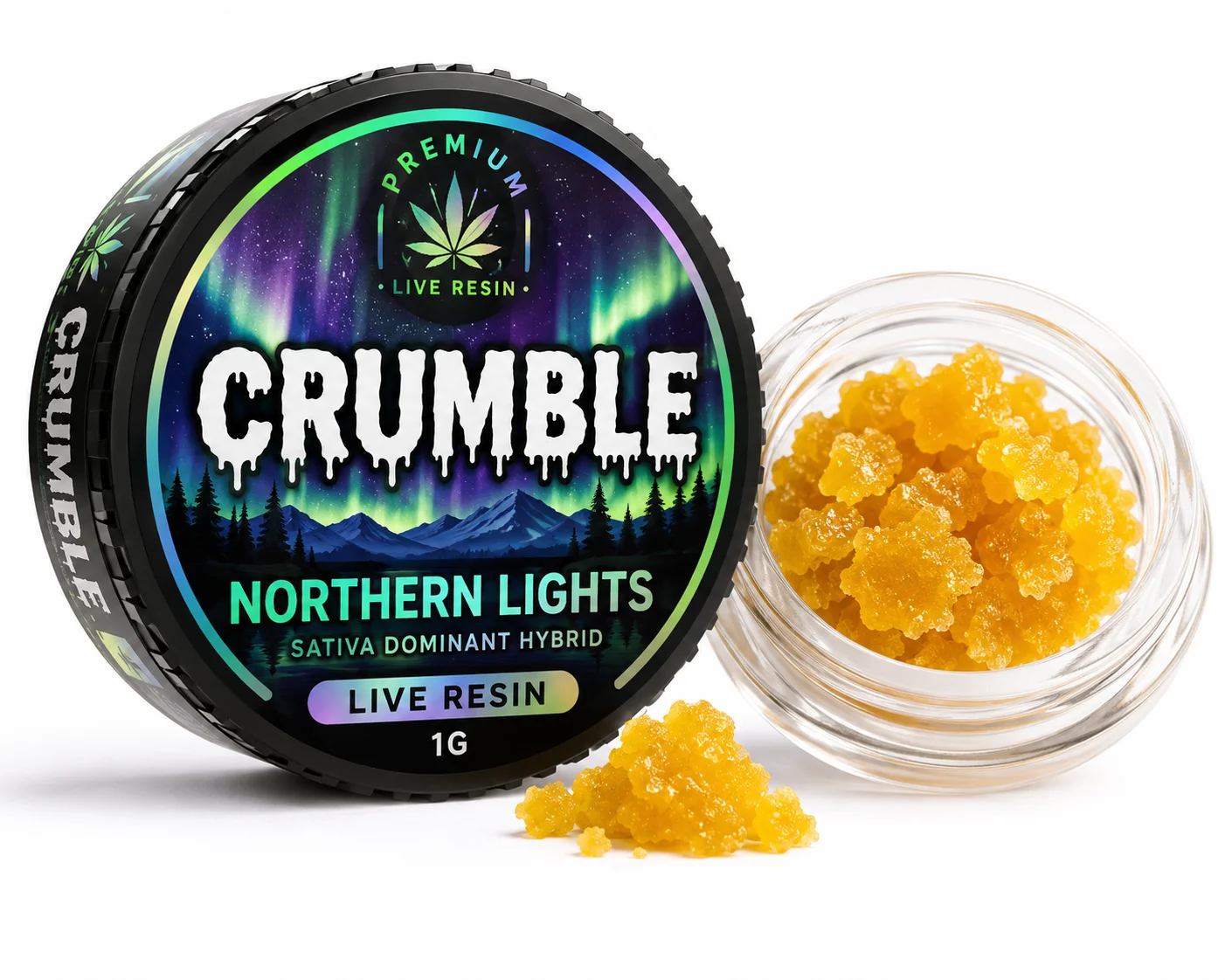
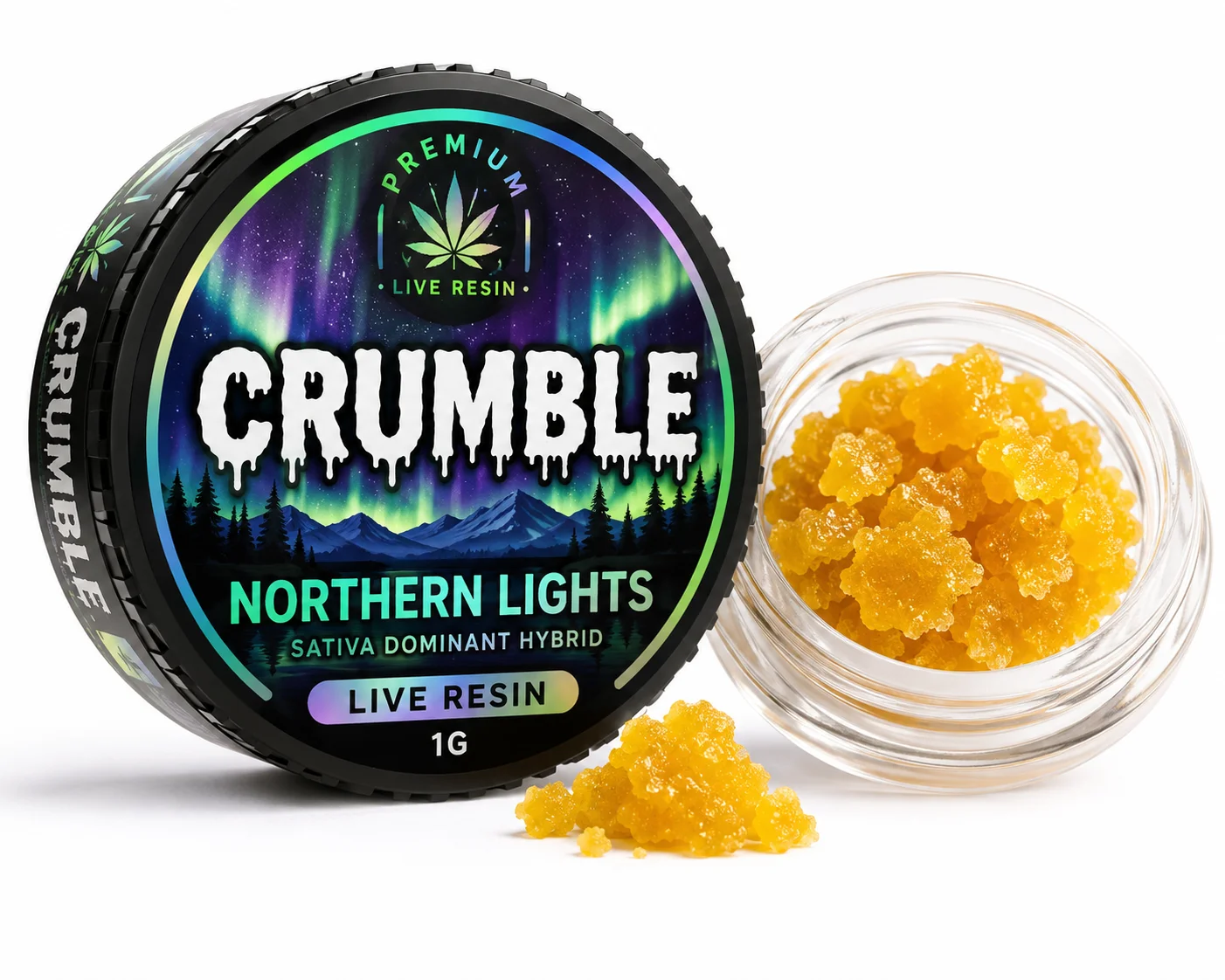
Two things are going on in that name. “Crumble” is the texture: dry, brittle, and easy to break apart, which comes from how the extract is whipped during the final stage of processing. “Live resin” is the process: the cannabis flower is flash frozen right after harvest instead of being dried and cured first, which is the standard path for most concentrates.
That freezing step is the whole reason people care about live resin in the first place. Terpenes, the aromatic oils that give a strain its smell and taste, start breaking down the moment a plant is cut. Drying and curing can take days to weeks, and CannaClear notes that cannabis flower can lose as much as 60% of its terpene content during that stretch. Freezing the plant fast interrupts that loss, so more of the original aroma survives all the way to extraction.
Live resin itself isn’t brand new anymore, but it’s younger than a lot of people assume. Leafly traces the format’s origins back to a small group of growers and extractors in Colorado around 2011 to 2013. What started as a niche product for terpene-focused enthusiasts has since become one of the more common categories on a dispensary shelf, and crumble is one of a handful of textures that live resin gets shaped into once it’s extracted.
How Crumble Live Resin Actually Gets Made 🏭
It helps to know the basic path from plant to jar before ranking flavors, since the process is what makes flavor accuracy possible in the first place.
Harvest → Flash freeze → Extraction → Purification → Whipping into crumble → Packaging
The flower is picked and frozen within hours, well before any drying starts. From there, a solvent (usually butane or propane) pulls cannabinoids and terpenes out of the frozen material together. Purification removes leftover solvent along with plant waxes, leaving a cleaner extract behind. The final stage is what determines texture: whipping the purified extract while it’s cooling breaks it into the small, dry pieces that give crumble its name, rather than letting it set into a glass-like shatter or leaving it looser like a sauce.
Cloud Cover Cannabis notes that flash freezing also tends to preserve cannabinoid content at the point of harvest, which is one reason live formats can sometimes test slightly higher in potency than a cured resin made from the same genetics. That’s a side effect of the process, not the main point of it. The main point, again, is flavor.
The Real Benefits of Crumble Live Resin 🌟
“Benefits” gets thrown around loosely in cannabis marketing, so let’s be specific about what crumble live resin actually delivers, without drifting into health claims nobody can back up on a product label.
Stronger, More Accurate Flavor 🍇
This is the headline benefit, and it’s the easiest one to verify yourself. Because the plant is frozen before drying, live resin retains a broader range of terpenes than concentrates made from cured flower. Leafly notes that in preserving trichomes and terpenes, live resin retains the flavor profile of the original cannabis plant, keeping cannabinoids intact along with strong potency. That’s a fancy way of saying: it tastes more like the actual plant, not a flattened version of it.
A Texture That’s Easy to Handle 🖐️
Crumble sits in its own lane, texture-wise. Cloud Cover Cannabis describes crumble as having a crumbly texture that makes it easy to mix into a joint or break over a bowl, compared to the creamier, butter-like consistency of badder or the crystalline structure of sauce and diamonds. If you don’t want something sticky on your fingers or a dab tool, crumble is one of the more forgiving textures to work with.
More Shelf Stability Than Some Other Live Formats 📦
Not every live concentrate holds up the same way over time. Because crumble carries less residual moisture than sauce or sugar-style extracts, it tends to hold up better at room temperature, a point NorCal Holistics makes when comparing crumble to glass-like shatter, saucy live resin, and sticky wax. That’s a practical benefit if you’re not planning to use a whole batch in one sitting.
A Closer Connection to the Original Strain 🌱
Because fewer terpenes are lost along the way, live resin tends to carry a stronger, more specific “strain identity” than distillate or standard cured concentrates. The American Reporters put it plainly: if the goal is a concentrate with more aromatic depth and a real sense of strain identity, live resin often has the advantage over shatter, wax, and crumble made from cured flower. In other words, a good live resin crumble tastes like the strain it’s named after, not a generic “concentrate” flavor.
Full-Spectrum Extraction, Not Just Isolated THC 🔬
Distillate strips cannabis down to mostly isolated cannabinoids, then sometimes adds terpenes back in afterward. Live resin crumble skips that reconstruction. NorCal Holistics points out that cured resin crumble, and live resin by extension, preserves more of the plant’s original compounds from the start, giving a more cohesive profile rather than a reconstructed one. If you’d rather have something closer to whole-plant extraction than a rebuilt flavor, that’s a real practical difference.
None of this means crumble live resin is automatically “better” for everyone. Shatter, wax, and other cured concentrates still have loyal fans, often because people like a specific texture or a format they already know how to use. But if flavor accuracy and strain identity are what you care about, crumble live resin has a real, documented edge, not just a marketing one.
Crumble vs. Badder vs. Sauce, Briefly 🧱
Since crumble is only one of several live resin textures, it’s worth knowing how it stacks up against the others you’ll see on a menu.
Cloud Cover Cannabis breaks it down simply: badder has a creamy, butter-like consistency, crumble is dry and crumbly, and sauce or diamonds present a crystalline structure sitting in a terpene-rich liquid. Each comes from the same basic fresh frozen source material, and the difference is entirely in how the extract is handled after purification. If you want something you can pinch and sprinkle without much mess, crumble tends to be the easiest of the three to work with.
How We Ranked These Flavors 📊
A few things went into this list: how consistently a strain’s terpene profile translates into extract form, how it’s performed in recent competitions and market data, and how distinct the flavor actually is compared to strains in a similar category. We leaned on strain guides, extraction breakdowns, and 2026 market roundups rather than guessing, and we’re linking sources throughout so you can dig deeper on anything that catches your eye.
It’s worth being upfront about the limits of a ranking like this too. Terpene expression varies by grower, by harvest, and by how carefully a specific batch was extracted, so a strain that ranks near the top here can still show up as a disappointing jar if the sourcing or storage wasn’t handled well. Think of this list as a guide to which strains are worth seeking out, not a guarantee that every single jar labeled with that name will taste identical.
The Best Crumble Live Resin Flavors, Ranked 🥇
1. Zkittlez 🍬
Zkittlez keeps landing at the top of live concentrate rankings for a simple reason: it’s one of the most reliably fruity, candy-forward profiles out there. Weedmaps describes its flavor as tropical candy with mixed berries and citrus zest, and notes that in pressed formats, the candy sweetness comes through brighter and more layered as the terpenes settle. In crumble form specifically, that same layered sweetness holds up well, since crumble’s drier processing doesn’t mute top notes the way some wetter textures can.
2. Tiger’s Blood 🐯
A newer name on a lot of 2026 lists, Tiger’s Blood is winning people over with a bold, fruit-forward profile that doesn’t fade into one-note sweetness. Weedmaps calls it bold and fruit-forward with noticeable depth and intensity, and points out that fruit-heavy strains extracted from fresh frozen material tend to keep a clear separation between bright top notes and a richer base, rather than blending into mush. That layered structure is exactly what a good crumble is supposed to preserve.
3. Pineapple Express 🍍
A familiar name, and it’s stayed on shelves for a reason. Its tropical, citrus-forward flavor is distinctive enough that even newer consumers can pick it out, and it’s shown up consistently in 2026 product roundups. On Pattison’s hardware testing found that a Pineapple Express live resin cart kept identical flavor from the first draw to the sixtieth, with zero clogs or leaking along the way, a good sign of how well its terpene profile holds up through repeated use. In crumble form, expect the same pineapple-and-citrus lead with a pine finish underneath.
4. Chemdawg 💨
If Zkittlez and Tiger’s Blood represent the fruity end of the spectrum, Chemdawg is the anchor on the other end: sharp, diesel-forward, and unmistakable. The Royal Queen Seeds blog notes that three terpenes dominate its profile, caryophyllene, myrcene, and limonene, with caryophyllene showing up as the most abundant of the three. Chemdawg is also genetically significant, since Strainpedia describes it as the genetic foundation behind both Sour Diesel and OG Kush. If you like fuel and funk more than fruit, this is the crumble flavor to look for.
5. Gelato 41 🍨
Gelato strains bring a creamier, dessert-like sweetness that reads differently from fruit-forward profiles like Zkittlez or Tiger’s Blood. It’s shown up repeatedly on 2026 top-strain lists, including as one of the flagship strains in Friendly Brand’s “True Terpene Profile” lineup, alongside Truffle Mintz and Fritter Licker, per a roundup from VECEE highlighting Truffle Mintz, Fritter Licker, and Gelato 41 as their top strains. In crumble, look for a sweet, slightly earthy profile that leans more dessert than tropical fruit.
6. Strawberry Cheesecake 🍓
This one earns its spot by combining two flavor categories that don’t always blend well: bright fruit and soft, creamy richness. Weedmaps describes how the contrast between the two helps the profile stay balanced rather than tipping too far into either direction, noting that Strawberry Cheesecake combines fruit and cream in a way that often translates cleanly into extract form. If you want something sweeter and less sharp than a straight citrus or diesel profile, this is worth trying.
7. Sour Diesel ⛽
A legacy strain that’s stayed relevant because its sour, fuel-forward aroma is instantly recognizable. It shares genetic roots with Chemdawg, and its limonene-driven profile gives it a sharper, more citrus-tinged edge than Chemdawg’s heavier diesel lean. On Pattison’s terpene breakdown places Sour Diesel among the limonene-driven sativas, alongside Durban Poison and Maui Wowie. If Chemdawg is the deep end of the fuel pool, Sour Diesel is the brighter, sharper end of it.
8. Blueberry Cookies 🫐
For people who want something heavier and more dessert-adjacent without going full gelato, Blueberry Cookies fills that gap. On Pattison’s terpene and cannabinoid breakdown groups it among the myrcene-forward indicas, alongside King Louis XIII and Slurricane. Expect a musky, fruit-and-herb combination rather than straight sweetness.
9. Tropicana Cookies 🍊
If you want citrus without the fuel undertone that comes with Sour Diesel or Chemdawg, Tropicana Cookies is worth a look. One vape brand roundup specifically called out its vapor as preserving the sour citrus pop of strains like Tropicana Cookies. In crumble form, that bright citrus character tends to come through clearly, since crumble’s drier processing doesn’t dull sharp top notes.
10. Blue Zushi 🍇
A newer cultivar that’s picked up momentum fast between 2024 and 2026. It blends modern candy terpenes with a subtle gassy backbone underneath, which Weedmaps describes as delivering crisp flavor clarity and a more clear-headed, functional experience in extract form. If you like the sweetness of strains like Zkittlez but want a little more edge underneath, this is a good next strain to try.
11. Wedding Crasher 🍇🍰
A cross of Wedding Cake and Purple Punch genetics, Wedding Crasher shows up in current vape and extract roundups for its fruity grape flavor, a trait it inherits directly from its parent strains. VECEE’s buying guide lists it as one of the standout fruity profiles in its current lineup breakdown. In crumble, expect a grape-forward sweetness with a soft, cake-like undertone rather than anything sharp or citrus-heavy.
12. Truffle Mintz 🍫
On the earthier end of the dessert category, Truffle Mintz brings a cool, herbal mint note layered over something richer and more savory, closer to dark chocolate or actual truffle than candy. VECEE names it alongside Fritter Licker and Gelato 41 as one of the flagship strains in a “True Terpene Profile” lineup built specifically around unmanipulated, strain-true extraction. If Gelato is dessert-sweet, Truffle Mintz is dessert-savory, and it’s worth trying if you want something a little more complex than straight sugar.
Fruity vs. Gas vs. Dessert: Picking Your Lane 🧭
Looking at this list, most crumble live resin flavors fall into one of three broad lanes. It helps to know which lane you’re in before you start comparing specific strains.
Fruity and tropical 🍍🍓: Zkittlez, Tiger’s Blood, Pineapple Express, Tropicana Cookies, and Strawberry Cheesecake all sit here. These profiles lean bright, sweet, and easy to pick out, which makes them a solid entry point if you’re newer to concentrates. They also tend to be the most forgiving flavors to start with, since there’s rarely a sharp or overwhelming note that catches someone off guard.
Fuel and gas ⛽: Chemdawg and Sour Diesel represent the sharper, diesel-forward end of the spectrum. Weedmaps notes that legacy profiles like OG, Chem, and PIFF are re-entering the conversation as reworked genetics optimized for terpene retention, appealing to consumers who want a familiar sensory anchor amid an increasingly fruity market. If you’ve been in the concentrate world a while, this is often the lane experienced dabbers gravitate back toward, partly out of nostalgia and partly because the flavor is just harder to confuse with anything else.
Dessert and creamy 🍨: Gelato 41, Blueberry Cookies, and Truffle Mintz lean into sweetness that reads more like dessert than fresh fruit. These tend to be a middle ground for people who want sweetness without the sharpness of a straight citrus or tropical profile, and they’re often the flavors people land on once they’ve already tried a few fruity strains and want something a little heavier.
Most people end up rotating between two lanes rather than sticking to just one, especially once they’ve tried a few strains from each category and figured out which flavors actually hold their attention. It’s a little like how coffee drinkers eventually land on a rotation between a bright single-origin roast and something darker and more roasted, rather than committing to only one style forever.
What to Actually Check Before Buying 🔍
Ranking flavors is one thing. Buying a specific jar is another. A few habits make a real difference:
- Check the batch-specific lab report (COA). Plastic Surgery Key’s buying guide calls a missing, traceable Certificate of Analysis the single biggest red flag in a live resin purchase. That advice applies just as much to crumble jars as it does to carts.
- Look at appearance. A good live resin crumble should look golden, dry, and slightly glossy from terpene content. If a jar looks unusually dull or wet in a way that doesn’t match the format, something’s off.
- Ask about the extraction date. Freshness fades over time no matter how well a product is stored, so a more recent batch generally means more of the original terpene content is still intact.
- Match the strain to your flavor lane. If you know you gravitate toward fruity, gas, or dessert profiles, use that as a filter before you get distracted by whatever’s trending that week.
- Buy from a source that shares strain-specific information. The American Reporters points out that storage, consistency, and handling matter more with live concentrates than with cured ones, since the category is prized specifically for freshness. A seller who can’t tell you the strain, harvest date, or batch number is asking you to buy blind.
- Don’t assume higher price always means better flavor. Small batch production and careful extraction cost more to run, which often shows up in price, but the only real way to confirm quality is the COA and your own experience with a specific batch, not the number on the price tag alone.
A Few Terms Worth Knowing 📚
Concentrate menus throw around a lot of vocabulary that doesn’t always get explained. Here’s a quick glossary covering the terms used throughout this guide.
Terpene: An aromatic oil produced by the cannabis plant, responsible for its smell and flavor. Different strains carry different terpene combinations, which is why two strains with similar THC levels can taste completely different.
Trichome: The tiny, crystal-like structures on the surface of cannabis flower where terpenes and cannabinoids are produced and stored.
Flash freeze: Freezing cannabis flower very quickly after harvest, usually within hours, before it has a chance to dry or lose terpene content.
Live resin: A concentrate made from fresh frozen cannabis flower rather than dried and cured flower.
Cured resin: A concentrate made from flower that’s been dried and cured the standard way before extraction. Includes wax, shatter, and some crumble.
Crumble: A dry, brittle concentrate texture made by whipping the extract during the final stage of processing.
Badder: A softer, creamier texture, whipped while warmer than crumble to keep it from hardening.
Sauce: A looser consistency with visible crystals suspended in a terpene-rich liquid.
Distillate: A highly refined cannabinoid extract that’s typically stripped of terpenes during processing, sometimes with terpenes reintroduced afterward.
Certificate of Analysis (COA): A lab report showing test results for a specific batch, including cannabinoid content, terpene content, and screening for contaminants.
Frequently Asked Questions ❓
What’s the difference between crumble live resin and other live resin textures? Texture comes down to how the extract is handled after extraction. Crumble is whipped into a dry, brittle consistency, while badder is whipped into something creamier, and sauce is left looser with visible crystals in a terpene-rich liquid. All three can come from the same fresh frozen source material.
Is crumble live resin stronger than other concentrates? Not automatically. Cannabinoid content depends on the specific plant and batch, not on the extraction method or texture by itself. Live resin is mainly known for preserving flavor and aroma more effectively than dried-and-cured concentrates, not for guaranteeing higher potency across the board.
Why do fruity flavors dominate so many “best of” lists right now? Fruit-forward strains tend to extract cleanly into live resin because the process preserves both the bright top notes and the heavier base compounds underneath, which keeps the flavor from collapsing into a single note. That’s part of why strains like Zkittlez and Tiger’s Blood keep showing up near the top of current rankings.
Are gas and diesel strains falling out of favor? Not really. They’ve stepped back from the spotlight as fruity profiles trended, but legacy gas and Chem-family strains are seeing renewed interest specifically because they offer something the fruity wave doesn’t: a familiar, heavier sensory anchor for people who’ve been dabbing for a while.
What should I look for if I want the most accurate strain flavor? Look for fresh frozen sourcing, a recent extraction date, and a batch-specific COA you can actually check. Appearance matters too. A golden, dry, slightly glossy crumble is generally a good sign the terpene content held up through processing.
Does crumble live resin have added flavoring? It shouldn’t. A properly made crumble live resin gets its flavor entirely from the terpenes naturally present in the source flower. If a product tastes artificially sweet or one-dimensional, that’s worth questioning.
How long does the flavor in crumble live resin last? Terpenes fade over time regardless of format, so how you store it matters. Keeping it cool, sealed, and out of direct light slows that fade and helps a batch hold onto its original flavor for longer.
Does live resin crumble test higher in potency than distillate? Not usually. Live resin rarely tests higher in total cannabinoids than distillate, since distillate is specifically refined to concentrate cannabinoids as much as possible. What live resin offers instead is a fuller terpene profile, which is a flavor and aroma advantage rather than a raw potency one.
Why does this list lean so heavily on fruity strains? Fruity, fruit-forward strains tend to extract especially well into live resin because the process preserves both the bright top notes and the heavier compounds underneath, so the flavor doesn’t collapse into something flat. That’s a big part of why they dominate current rankings, though gas and dessert profiles remain strong options for people who want something different.
Is crumble the best texture for beginners? It’s one of the easier ones to handle physically, since it doesn’t stick to fingers or tools the way sauce or badder can. Whether it’s the “best” for a beginner really comes down to personal preference once you’ve tried a couple of textures side by side.
Final Thoughts 🌿
Ranking flavor is always going to be a little subjective. What lands as “the best” for you depends on whether you gravitate toward fruit, fuel, or dessert profiles, and how much you value strain-true accuracy over familiarity. What’s not subjective is the format itself. Crumble live resin, made from fresh frozen flower and processed into a dry, easy-to-handle texture, has real, documented advantages in flavor accuracy and strain identity over a lot of other concentrate options.
If you’re picking a starting point, Zkittlez, Tiger’s Blood, and Pineapple Express are safe, crowd-pleasing bets on the fruity end. Chemdawg and Sour Diesel cover the fuel lane. Gelato 41, Blueberry Cookies, and Truffle Mintz split the difference with something creamier. Try one from each lane, and you’ll have a much better sense of what you actually like, rather than just going off whatever’s popular that month.
The bigger takeaway is this: a strain name only tells you so much. The batch in front of you, how recently it was extracted, and how it’s been stored all shape whether that name lives up to its reputation. Use the rankings here as a starting map, not a final answer, and let your own experience with a specific jar fill in the rest.
Sources 📚
- Weedmaps: Top live resin flavors to try in 2026
- Weedmaps: Top live rosin strains to try in 2026
- On Pattison: Best Live Resin Carts Worth Trying in 2026
- VECEE: Best Live Resin Vape Brands in the US, 2026 Buying Guide
- Plastic Surgery Key: Best Live Resin Carts of 2026
- Zen Leaf: Live Resin vs. Cured Resin
- Leafly: What is Live Resin? Benefits & How to Use
- CannaClear: What Is Live Resin? Benefits & How To Use
- Cloud Cover Cannabis: Cannabis Concentrates, Differences Explained
- NorCal Holistics: What Makes MidsFactory Cured Resin Crumble Different
- The American Reporters: The Benefits of Using Live Resin Dabs Over Traditional Concentrates
- Royal Queen Seeds: Chemdawg Strain, History, Flavor, Effects, and More
- Strainpedia: Chemdawg Strain
For adult use only, where legal. Follow all local and state regulations regarding cannabis purchase and consumption.