
If you’ve stood in front of a dispensary case looking at two jars, one dry and crumbly, one wet and crystal-looking, and wondered which one to grab, you’re not alone. Crumble and live resin sugar are two of the most common concentrate textures out there, and they can come from the exact same plant. The difference isn’t really about quality. It’s about texture, handling, and how much of the plant’s original terpene content ends up in your jar.
This guide breaks down crumble vs live resin sugar in plain terms: what each one is, how it’s made, how it looks and smells, and which one fits your habits better. 🧾
Quick Answer 🔍
Short version, if you’re in a hurry:
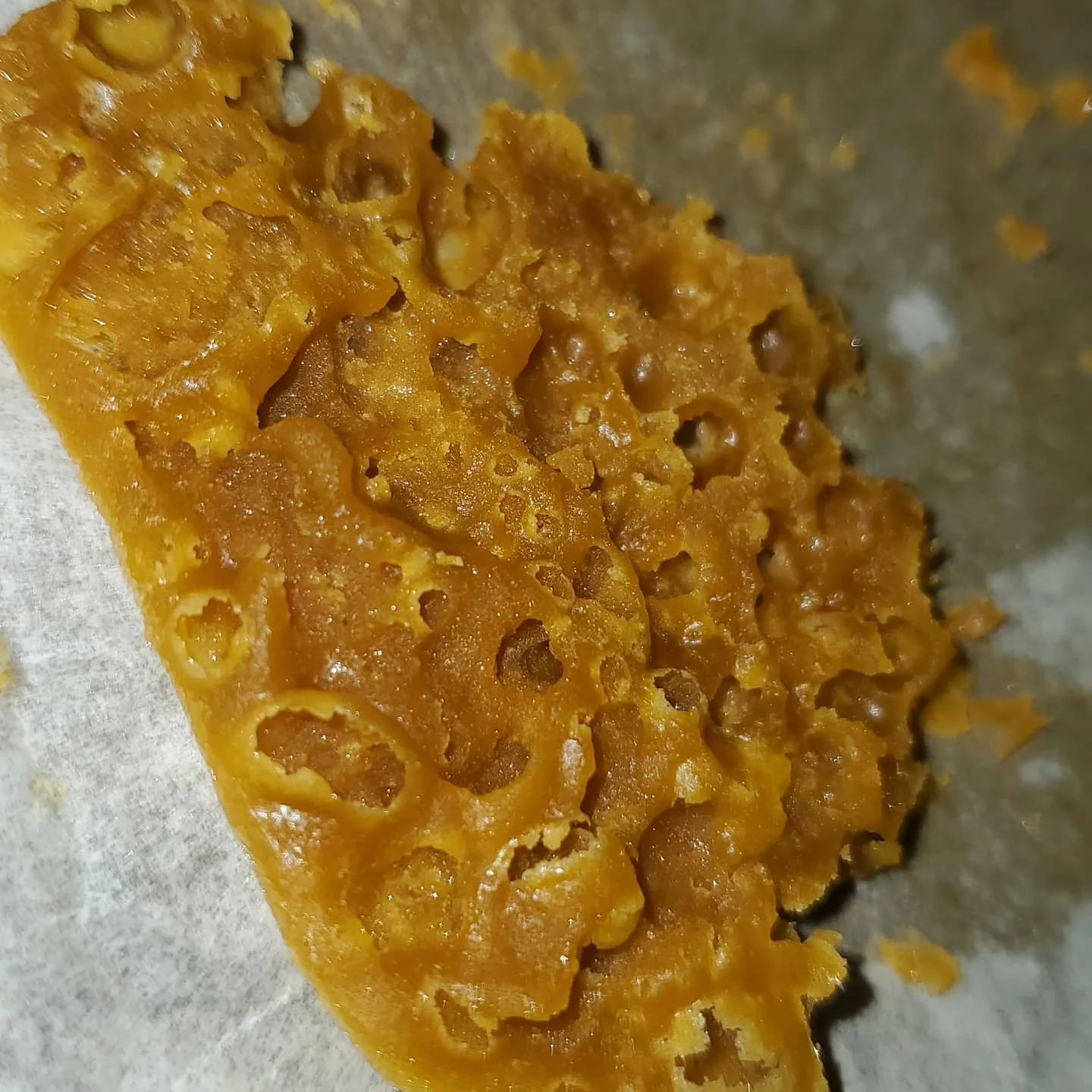
- Crumble is dry, brittle, and easy to handle. It’s made by purging the extract at lower heat for a longer stretch, which pulls out more moisture and leaves a dry, honeycomb-like texture.
- Live resin sugar is wet, grainy, and crystalline, closer to damp sugar or fine gravel. It’s made faster and at a higher temperature than crumble, which leaves more terpene-rich liquid clinging to the THCA crystals.
Both can be made from live resin, meaning fresh frozen flower. “Live” describes the starting material, not the texture. So you can have crumble made from live resin, and sugar made from live resin, and they’ll still look and handle completely differently. 🌿
What “Live Resin” Actually Means (And Why It’s Not a Texture) 🧊
This mix-up trips a lot of people up, so let’s clear it first. Live resin isn’t a texture. It’s a production method. It means the cannabis flower was flash frozen shortly after harvest instead of dried and cured the standard way, then extracted from that frozen state.
Freezing the plant fast matters because terpenes, the aromatic oils behind flavor and smell, start breaking down the moment a plant is cut. Drying and curing takes days to weeks, and that whole window gives terpenes more time to fade. Freezing skips most of that loss. The extraction itself, running a solvent through frozen flower at very low temperatures, dissolves the membranes around the trichomes that hold onto THC and terpenes, then separates that extract from the rest of the plant material (source: FIELD).
Once you’ve got live resin extract, the final texture depends on what happens after extraction: how it’s purged, how long it’s exposed to heat, and whether it’s agitated or left alone. That’s where crumble, sugar, badder, and sauce all branch off from the same starting point. This is exactly why you’ll sometimes see “live resin” used almost like a catch-all category on a dispensary menu, with crumble, sugar, sauce, and badder all listed underneath it as sub-types rather than separate products. 🧬
It’s worth adding one more wrinkle here: not everything labeled “crumble” or “sugar” started as live resin. Plenty of crumble and sugar on the market is made from standard cured resin, meaning dried and cured flower rather than fresh frozen. The texture name alone won’t tell you which one you’re holding. If the aroma and terpene accuracy matter to you, check the label or the COA for “live resin,” “fresh frozen,” or similar language, not just the texture name on the jar.
What Is Crumble? 🧱
Crumble is exactly what it sounds like: a dry, crumbly texture that breaks apart into small pieces instead of stretching or staying sticky. Color usually runs from light yellow to dark amber, and the texture itself has been compared to a dry sea sponge or aerated honeycomb (source: Herb.co).
Here’s what gives crumble its texture. After extraction, the concentrate goes through a purge in a vacuum oven, and for crumble specifically, that purge happens at a lower temperature over a longer stretch of time than it does for wetter textures (source: Toker’s Guide via TFRecipes). That extended, gentler heat pulls more moisture out of the extract, which is what leaves it dry and aerated instead of sticky or grainy.
A few practical things worth knowing about crumble:
- 🧤 Easy to handle. It doesn’t stick to fingers or tools the way sauce or badder does, which makes it simple to portion. You can break off a piece with clean hands and not end up with a sticky residue everywhere.
- 🔥 Works well outside a dab rig. Because it’s dry and crumbles apart cleanly, it’s popular for topping a bowl or mixing into a joint, in addition to dabbing.
- 🍯 Slightly less terpene-heavy than wetter textures. The extended purge that gives crumble its dry texture can also cost it a bit of aroma compared to sauce or sugar, since some volatile terpenes get pulled out along with the moisture (source: Green Theory DC).
- 💪 Potency runs high. Most crumble concentrates test somewhere in the 60% to 90% THC range, well above flower (source: Green Theory DC).
- 🧊 Reasonably shelf-stable. Because so much moisture has already been purged out, crumble holds up better than wetter textures if storage conditions aren’t perfect.
Crumble is often held up as one of the more beginner-friendly textures for exactly this reason. It’s not overly sticky, it’s simple to portion, and it burns evenly whether you’re dabbing it or adding it to flower (source: Green Theory DC). If you’ve ever dealt with a concentrate that gummed up your grinder or stuck to a dab tool no matter how careful you were, crumble is the texture built to avoid exactly that headache.
There’s a small trade-off worth naming honestly. That same dryness that makes crumble easy to handle is also, in a sense, evidence of what’s been removed. Moisture and some of the more delicate terpenes leave together during that extended purge. So while crumble is convenient, it’s rarely the texture people reach for when flavor intensity is the single most important thing.
What Is Live Resin Sugar? 🍬
Live resin sugar looks the way it sounds: granular, crystalline, and a little wet, like damp brown sugar or fine, packed sand. Color typically ranges from golden to amber depending on the strain and batch (source: Mood).
The texture comes from a different process than crumble. Sugar forms when THCA (the raw, non-active form of THC) starts crystallizing during or shortly after extraction and purging. What you end up with is a mix of solid THCA crystals sitting inside a terpene-rich liquid, sometimes called sauce (source: Hyperwolf). Compared to crumble, sugar is processed more quickly and at a higher temperature, which leaves more of that liquid terpene content intact instead of purging it away (source: The Gift Givers DC).
A few things worth knowing about live resin sugar specifically:
- 💦 Wetter and stickier than crumble. It won’t hold together the same way. You’ll usually need a dab tool rather than your fingers.
- 🍍 Strong, strain-true aroma. Because more terpene-rich liquid survives the process, sugar tends to smell louder and more specific to the strain than crumble does.
- 🔬 Handled with a scoop, not a scrape. Most guides recommend scooping from the center of the jar, where the crystals and the surrounding sauce meet, rather than trying to pull off a clean piece (source: Hyperwolf).
- ❄️ True live resin sugar starts from fresh frozen flower. You’ll sometimes see “live sugar” marketed on products that didn’t actually use fresh frozen starting material, so it’s worth checking the label or lab report if that matters to you (source: Mood).
- 🌈 More visual texture variation. Because sugar is a mix of solid crystals and liquid sauce, the ratio between the two can vary noticeably from batch to batch, even within the same strain.
The name itself is a pretty accurate description once you’ve seen it in person. If you’ve ever scooped wet brown sugar out of a bag that’s absorbed a little humidity, that’s close to the texture and handling experience. It holds a rough shape when you scoop it, but it won’t crumble apart into neat little pieces the way crumble does.
One more thing worth flagging: because sugar carries more liquid terpene content, it’s also the texture most likely to change noticeably if storage conditions aren’t right. A jar of sugar left in a warm car for an afternoon will look and smell different by evening. Crumble, by comparison, is far more forgiving of that kind of slip-up.
How Each One Is Made: A Side-by-Side Look ⚗️
Both textures usually start the same way: fresh frozen flower goes through solvent-based extraction (commonly butane, propane, or CO2), which pulls terpenes and cannabinoids out of the plant. From there, the paths split.
Crumble’s process:
Fresh Frozen Flower → Extraction → Low-Temperature, Extended Vacuum Purge → Dry, Crumbly Texture
The long, low-heat purge is the whole story here. It drives out more residual moisture and plant waxes, which is exactly what gives crumble its dry, aerated structure (source: NorCal Holistics).
Live resin sugar’s process:
Fresh Frozen Flower → Extraction → Faster, Higher-Temperature Purge → THCA Crystallization → Wet, Granular Texture
Because the purge moves faster and runs hotter, more liquid terpene content sticks around, and THCA crystals form within that liquid instead of the whole batch drying out evenly (source: The Gift Givers DC).
Neither process is more “correct” than the other. They’re just two different sets of choices, made by an extractor, about what final texture they want to end up with. The plant material and the extraction method can be identical going in. It’s the purging stage, mainly time and temperature, that decides whether you end up with crumble or sugar. 🌡️
Texture and Appearance: What You’ll Actually Notice 👀
Side by side, here’s what separates the two in your hand:
| Crumble | Live Resin Sugar | |
|---|---|---|
| Feel | Dry, brittle, breaks apart cleanly | Wet, grainy, sticks to tools |
| Look | Honeycomb-like, aerated | Granular crystals in syrupy liquid |
| Color | Light yellow to dark amber | Golden to amber |
| Handling | Easy to portion by hand | Needs a scoop or dab tool |
| Moisture | Low | Higher |
If you’ve ever handled wet sand at the beach and then handled dry sand a few feet up the shore, that’s roughly the tactile difference. Crumble behaves like the dry sand. Sugar behaves like the wet sand that still holds its shape when you scoop it. 🏖️
Terpene and Flavor Differences 🍋
This is where the two textures genuinely diverge, not just in feel but in experience.
Because sugar’s purge is shorter and hotter, more of the plant’s original terpene-rich liquid survives the process. That generally translates to a louder, more specific aroma, especially in a live resin sugar made from a strain with a distinctive smell (source: Hyperwolf).
Crumble’s longer, gentler purge is gentler on the extract overall, but the extended time under any heat, even low heat, still costs it some of the more delicate, volatile terpenes along the way. General industry guidance puts crumble slightly behind sauce and sugar-style concentrates in terpene retention for this reason (source: Green Theory DC).
None of this means crumble tastes bad. It means if flavor accuracy and aroma intensity are your top priority, sugar (especially live resin sugar) usually has the edge. If you care more about handling and consistency than squeezing out the last bit of aroma, crumble still delivers a strong, recognizable flavor without asking you to deal with a sticky jar. 🍇
It helps to think about this the way you’d think about cooking a vegetable. Steam it briefly and it keeps a bright, fresh flavor. Roast it low and slow for a long time and it develops a different character: still good, but changed by the process. Sugar is closer to the quick-steamed version of a strain’s flavor. Crumble is closer to the long, low-and-slow version. Neither is wrong, but they’re not interchangeable if flavor accuracy is what you’re after.
Potency: Is One Actually Stronger? 💪
Not by design. Potency comes down to the plant and the specific batch, not the final texture. That said, general ranges reported across concentrate guides put crumble around 60% to 90% THC (source: Green Theory DC), which is roughly in the same neighborhood most solvent-based concentrates land in.
Sugar’s potency depends heavily on how much of that terpene-rich liquid stuck around during processing, since a very liquid-heavy sugar can actually test lower in THC percentage than a drier concentrate, simply because terpenes take up space that cannabinoids would otherwise occupy. This is the same reason a very terp-heavy sauce concentrate often tests lower in raw THC than a drier shatter or crumble, even though it may feel more intense to use because of how much aroma and flavor comes through.
This is worth sitting with for a second, because it runs against a common assumption. A lot of people equate “wetter and more aromatic” with “stronger,” and that’s not really how it works. THC percentage and terpene percentage are, in a sense, competing for the same space in the extract. A concentrate that’s been purged hard to remove every trace of moisture and terpene liquid will often show a higher raw THC number than one that kept more of its aroma intact, even if the second one delivers a more noticeable flavor and smell experience.
The takeaway: don’t pick a texture based on an assumption about potency. Check the actual lab report (COA) for the batch you’re holding, and compare cannabinoid and terpene numbers side by side rather than trusting texture alone to tell you anything about strength.
How to Spot Quality in Either Texture 🔎
Whether you’re looking at crumble or sugar, a few of the same quality markers apply across both.
Color. Both should land somewhere in the light gold to amber range. Very dark brown or dull coloring can be a sign of older material, a rougher extraction, or a strain naturally lower in terpene content.
Smell. A fresh, specific aroma (something you can actually connect back to the strain name) is a better sign than a generic “weed smell” or anything that reads as chemical or solvent-like.
Texture consistency. Crumble should crumble, not clump into a wet mass. Sugar should hold together loosely when scooped, not run like liquid or feel completely dry and hard.
Batch information. Reputable products list a batch number and, ideally, a COA you can check for cannabinoid content, terpene content, and residual solvent testing. This applies just as much to sugar and crumble as it does to any other concentrate.
None of these checks require special equipment. They’re mostly about paying attention the same way you would with any product you’re buying more than once: noticing what a good batch looks and smells like, and comparing new purchases against that memory.
How to Use Each One 🛠️
Both crumble and live resin sugar are typically used the same general ways other cannabis concentrates are: with a dab rig, a concentrate-rated vaporizer, or mixed into flower. Which method works best really comes down to the texture in your hand.
Crumble’s dry structure makes it simple to break off a small piece and handle it directly, which is part of why it’s often recommended to people newer to concentrates. Sugar’s wetter, stickier texture usually calls for a dab tool instead of your fingers, since it won’t hold a clean shape the way crumble does.
Beyond that, exactly how you consume any cannabis concentrate, including specific temperatures, tools, and amounts, should come from your local dispensary staff and the product’s own packaging guidance rather than a general blog post, since the right approach depends on your own tolerance, your equipment, and local regulations. 🧑⚕️
Storage and Shelf Life ❄️
This is one area where the two textures behave differently enough to matter.
Crumble is naturally lower in moisture, which makes it fairly stable at room temperature as long as it’s kept sealed, cool, and out of direct light (source: Green Theory DC). Because it’s already been purged for longer, it doesn’t need refrigeration to stay usable, though heat and light still degrade it over time the same as any concentrate.
Live resin sugar is more sensitive. Its higher moisture and terpene-liquid content means it dulls faster at room temperature, sometimes within weeks if it’s not kept cool (source: Mood). Most guides recommend refrigeration in an airtight, opaque glass container to keep it fresh for longer, letting it warm back up to room temperature before opening to avoid condensation (source: Plastic Ranger). Freezing is more debated. Some sources recommend it for extending shelf life (source: A Therapeutic Alternative), while others warn that freezing can cause the terpene sauce to separate from the crystals in sugar specifically, changing the texture (source: Triangle Hemp Wellness). If you’re unsure, a stable fridge temperature is the safer middle ground for sugar, while crumble does fine in a cool, dark cabinet.
Across both textures, the enemies are the same: heat, light, air, and moisture. An airtight glass container, kept cool and dark, is the simplest way to protect either one. Under good conditions, both textures can hold their potency and flavor for roughly six months to a year, sometimes longer (source: Herb.co).
Price and Availability 💵
Neither texture is consistently more expensive than the other. Price tends to track the extraction method (live resin vs. standard cured extraction), the strain, and the brand’s production scale more than it tracks crumble vs. sugar specifically. That said, live resin sugar is often positioned as a slightly more premium product on dispensary shelves, partly because of the extra care needed in its production and storage, and partly because its stronger aroma reads as a more “connoisseur” experience to a lot of shoppers.
Crumble, by contrast, often shows up as a more accessible, everyday option, priced to be approachable for people who want a strong concentrate without paying a premium for maximum terpene retention. Availability for both varies a lot by state and by dispensary, so the more useful comparison is usually strain to strain rather than texture to texture. 🏷️
Crumble vs Live Resin Sugar: Which One Should You Choose? 🤔
Here’s a simple way to think about it:
Pick crumble if:
- You want something easy to handle without a dab tool
- You’re newer to concentrates and want a forgiving texture
- You plan to mix it into flower or top a bowl
- You want a shelf-stable product that doesn’t need refrigeration
Pick live resin sugar if:
- Flavor and aroma accuracy are your top priority
- You don’t mind using a dab tool
- You’re comfortable storing it properly (cool, dark, sealed, likely refrigerated)
- You want the closest experience to the strain’s original terpene profile
Neither one is objectively better. They’re built for different priorities, and a lot of regular concentrate users end up keeping both on hand for different moods and different methods. 🌗
Frequently Asked Questions ❓
Is crumble stronger than live resin sugar? Not automatically. Potency depends on the specific plant and batch, not the texture. Crumble generally tests in the 60% to 90% THC range, but a specific sugar batch could test higher or lower depending on how much terpene-rich liquid it retained. Always check the COA for the batch you’re using.
Can crumble be made from live resin? Yes. “Live” refers to the starting material (fresh frozen flower), not the final texture. Crumble made from live resin will generally carry more aroma than crumble made from standard dried and cured flower, even though the texture itself looks the same.
Why is live resin sugar wetter than crumble? Because it’s purged faster and at a higher temperature, which leaves more terpene-rich liquid in the final product. Crumble goes through a longer, lower-temperature purge that removes more moisture, leaving a dry, aerated texture instead.
Does live resin sugar need to be refrigerated? It’s not strictly required, but most guides recommend it. Sugar’s higher moisture content means it loses aroma faster at room temperature than crumble does, so refrigeration in an airtight container helps it stay fresh longer.
Which one has better flavor? Live resin sugar generally carries a stronger, more strain-accurate aroma, since more of the original terpene content survives its shorter, gentler processing window. Crumble still has real flavor, just usually a bit less intense than sugar or sauce.
Is crumble easier to use than sugar? For most people, yes. Crumble’s dry texture makes it simple to break off and portion without a dab tool. Sugar’s wetter, stickier texture usually needs a scoop or dab tool to handle cleanly.
How long do crumble and live resin sugar last? Both can hold their potency and flavor for roughly six months to a year with proper storage: airtight, cool, and away from light. Sugar tends to fade faster than crumble if it’s left at room temperature instead of refrigerated.
Is one more expensive than the other? Not consistently. Price depends more on the strain, the brand, and whether it’s live resin versus standard extraction, rather than on crumble vs. sugar specifically. Live resin sugar is sometimes priced as a premium option due to its more delicate production and storage needs.
Can I mix crumble and live resin sugar together? Some people do combine different concentrate textures to blend potency and flavor profiles. If you’re going to do that, use clean tools for each to avoid cross-contaminating flavors or textures between products.
The Short Version 🧾
Crumble and live resin sugar can come from the exact same plant and the exact same extraction method. What separates them is what happens after extraction: how long the concentrate is purged and at what temperature. That single difference in processing decides whether you end up with a dry, easy-to-handle crumble or a wetter, more aromatic sugar.
If you want low-maintenance and easy to handle, go crumble. If you want the loudest, most strain-true flavor and don’t mind a little extra care in storage, go live resin sugar. Either way, checking the batch’s lab report tells you more about what’s actually in the jar than the texture name ever will. 🌟
Sources 📚
- FIELD: Live Resin 101
- Herb.co: Cannabis Sugar vs. Crumble
- Herb.co: How Long Does Live Resin Last?
- Green Theory DC: Cannabis Wax Concentrates Explained
- NorCal Holistics: MidsFactory Cured Resin Crumble
- Hyperwolf: Sugar vs Badder
- Toker’s Guide: Live Resin Badder, Crumble, and Sugar
- Mood: What Is Live Resin Sugar
- Mood: Dab Storage and Longevity
- Plastic Ranger: How To Use Live Resin Sugar Safely
- A Therapeutic Alternative: Live Resin Consistency, Storage, and Shelf Life
- Triangle Hemp Wellness: Live Resin Sugar Guide
For adult use only, where legal. Follow all local and state regulations regarding cannabis purchase and consumption.
