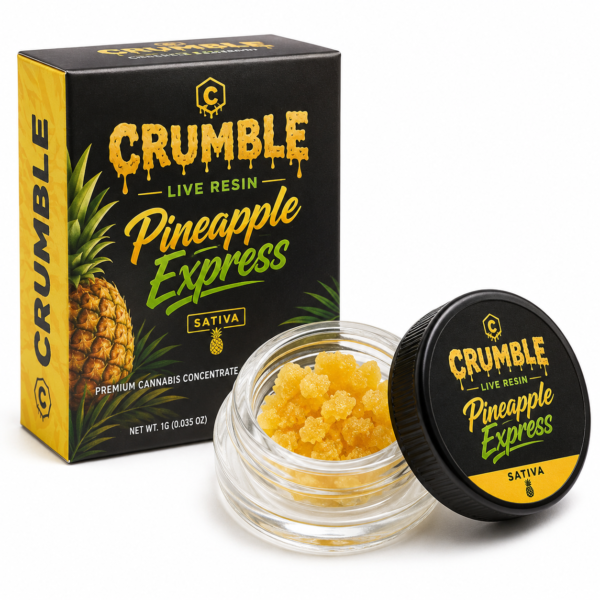
Crumble Live Resin – Pineapple Express 🍍
Fresh tropical flavor. Rich terpene profile. Premium live resin made from freshly frozen cannabis.
✓ Tropical pineapple aroma ✓ Citrus sweetness ✓ High terpene preservation ✓ Premium fresh frozen extraction ✓ Small batch quality
If you’ve ever wanted a concentrate that actually smells like the strain it’s named after, this is the one to check out. Crumble Live Resin Pineapple Express is made from fresh frozen Pineapple Express flower, so you get the real tropical, citrus, and pine character of the plant instead of a flat, generic cannabis smell. Below, we’ll walk through what this product actually is, how it’s made, what it looks and smells like, and how to store it so it stays fresh. No fluff, just the details.
Product Overview 📖
Crumble Live Resin Pineapple Express is a cannabis concentrate built from one specific idea: freeze the plant before it has a chance to lose its aroma. Most concentrates start with dried and cured flower. That’s a fine process, and it’s been the standard for a long time. But drying and curing take days or weeks, and terpenes (the aromatic oils that give cannabis its smell and taste) start fading the moment the plant is cut. By the time dried flower gets turned into a concentrate, a good amount of that original aroma is already gone.
Live resin skips that gap. The Pineapple Express flower used here is flash frozen within hours of harvest, before any drying starts. That frozen material goes through extraction while the terpenes are still close to their original state. The result is a concentrate that smells and tastes closer to the living plant than most dried-and-cured products can manage.
Pineapple Express itself is a strain people already know. It’s a cross of Trainwreck and Hawaiian genetics, which is where its tropical, fruit-forward character comes from, and it’s held a spot on dispensary shelves for years because of its bright aroma and easygoing daytime reputation. Turning that strain into a live resin crumble means you get the tropical pineapple, citrus, and pine notes people already associate with Pineapple Express, but in a more concentrated form.
What sets this specific product apart isn’t a secret formula. It’s the process: fresh frozen source material, careful low-temperature extraction, and small batch production, all aimed at keeping the final product as close as possible to the original plant. That’s the whole pitch, and it’s one we can actually back up with details instead of vague marketing language.
What Is Crumble Live Resin? 🧊
Let’s break this down into its two parts, because both words are doing real work here.
Crumble describes the texture. When you touch it, it breaks apart into small, dry pieces instead of stretching like taffy or staying sticky like some other concentrates. Picture the difference between a dry, aged cheese and a soft, spreadable one. Crumble sits on the dry, brittle end of that spectrum. This texture comes from how the extract is handled during the final stage of processing, when it’s whipped or agitated as it cools.
Live resin describes the process, not the texture. Instead of drying and curing the flower first, which is the normal path for most concentrates, the plant is flash frozen right after harvest. That single change matters a lot, and we’ll get into exactly why in the next section.
Put the two together and you get a dry, crumbly concentrate made from flower that was frozen instead of dried. That’s Crumble Live Resin in one sentence. Everything else on this page is just detail on top of that basic idea.
One thing worth clearing up: “live resin” refers to the extraction method, not to potency or to any specific effect. Two live resin products can have very different cannabinoid levels depending on the plant and the batch. What live resin actually promises is aroma and flavor that’s closer to the original plant, because fewer terpenes were lost along the way.

Why Fresh Frozen Extraction Matters 🌡️
Here’s the problem fresh frozen extraction is built to solve, laid out plainly.
Cannabis flower is full of terpenes. These are the aromatic oils responsible for a strain’s smell and flavor. Pineapple, citrus, pine, all of that comes from terpenes sitting in the plant’s trichomes (the tiny, crystal-like structures on the surface of the flower). The problem is that terpenes are fragile. Some of them start breaking down or evaporating the moment the plant is cut. Drying and curing, which is the standard process for most cannabis products, takes days to weeks, and that whole stretch of time gives terpenes more chances to fade.
By the time a batch of dried flower gets extracted into a concentrate, it’s already lost a chunk of its original aroma. That’s not a flaw in the process. It’s just a tradeoff that comes with drying. Dried flower has its own advantages, like shelf stability, easier handling, and a longer track record, but aroma preservation isn’t one of them.
Flash freezing sidesteps that loss almost entirely. The plant goes from the field straight into deep freeze, usually within a few hours of harvest. That locks the terpene content in place before it has time to degrade. When extraction happens later using that frozen material, there’s simply more of the original aroma profile still there to pull out.
This is the entire case for fresh frozen extraction, and it’s a simple one: fewer steps between the living plant and the final product means fewer chances for something fragile to be lost along the way. It’s not a claim about the product being “better” in some abstract sense. It’s a specific, testable difference in how much of the original terpene content survives the process.
That’s also why live resin products, including this one, tend to carry a stronger and more accurate aroma than a lot of dried-and-cured concentrates. The plant simply had less time to change before it was locked into a frozen state.
Why Pineapple Express Is Still So Popular 🎬
Pineapple Express picked up its widespread name recognition from the 2008 Seth Rogen and James Franco movie of the same name, but the strain itself predates the film. It’s a cross of two well-known parent strains: Trainwreck, a sharp, resinous, cerebral hybrid, and Hawaiian, a sweet, tropical sativa landrace. That pairing is where Pineapple Express gets its bright, fruit-forward character.
Genetically, it’s typically described as roughly 60% sativa and 40% indica, which places it on the sativa-leaning side of the hybrid spectrum. That balance shows up in how people describe the experience: energetic and uplifting on the sativa side, with a milder body component from the indica genetics that doesn’t tip into heavy sedation.
None of that changes the fact that most of what keeps Pineapple Express on shelves today is simpler than genetics charts: people like how it smells and tastes. The tropical pineapple, citrus, and pine combination is distinctive enough that even newer cannabis consumers can pick it out, and that kind of recognizable, crowd-pleasing profile is exactly what keeps a strain in steady demand for years instead of fading out after a trend cycle.
It also helps that Pineapple Express has a reputation as a functional daytime option rather than something that knocks you out. Whether that matches your own experience depends on a lot of factors, like batch, tolerance, and format, but it’s part of why the name carries the weight it does at a dispensary counter.

Crumble vs. Other Concentrate Textures 🧱
If you’ve spent any time browsing a concentrate menu, you’ve probably run into a handful of texture names: shatter, badder, sauce, live rosin, and crumble. They all start from cannabis, but the final texture depends on how the extract is handled after it’s pulled from the plant. Knowing the difference helps you understand exactly what you’re getting with this product.
Shatter is thin, glass-like, and brittle. It’s left mostly undisturbed as it cools, which is what gives it that clear, snap-in-half quality.
Badder (sometimes called budder) is soft and whipped, closer to cake frosting in texture. It’s agitated constantly while warm, which keeps it from hardening into a solid sheet.
Sauce is a looser, more liquid consistency, often with visible crystals sitting in a terpene-rich liquid. It tends to carry a very strong aroma because so much of the terpene content stays in liquid form rather than getting whipped into a solid.
Live rosin is made using pressure and heat instead of a chemical solvent. It’s a different extraction method entirely, though it’s often made from the same kind of fresh frozen material as live resin.
Crumble, the texture you’re getting here, sits somewhere between shatter and badder. It’s whipped enough to break its structure into small, dry pieces, but not agitated to the point of becoming soft and creamy like badder. That gives it an easy-to-handle, dry texture that doesn’t stick to your fingers the way sauce or badder can.
None of these textures is automatically “better” than another. They’re different results from different processing choices, and which one you prefer usually comes down to personal handling preference more than anything else.
The Craft of Small Batch Production 🏺
Small batch production means this product isn’t made in huge, mixed-together runs. Instead, specific harvests of Pineapple Express flower are processed in smaller groups, which makes it easier to track a batch from plant to package and easier to catch any inconsistency before it reaches a shelf.
There’s a tradeoff here worth being upfront about. Small batch production takes more time and more attention than large scale processing. It’s slower, and it usually means the final product is available in more limited quantities. What you get in exchange is a tighter connection between a specific harvest and a specific jar, along with an extraction process that isn’t rushed to keep up with a massive production line.
This also ties back into the fresh frozen approach. Freezing flower quickly after harvest only works well when the operation is set up to move fast and handle smaller volumes carefully. Trying to fresh freeze and process enormous quantities all at once tends to introduce delays that work against the entire point of the method. Small batch production and fresh frozen extraction go hand in hand for that reason.
Reading a Certificate of Analysis 🔍
If you want to go a step further than trusting a label, ask to see the Certificate of Analysis, often just called a COA, for the specific batch you’re looking at. This is the lab report that comes from third party testing, and it’s the most direct way to check whether a batch matches what the packaging claims.
A useful COA typically includes:
- 🧪 Cannabinoid content, including THC and CBD levels for that specific batch
- 🌿 A terpene panel, showing which terpenes are present and in what relative amounts
- ⚠️ Residual solvent testing, confirming that extraction solvents were properly purged
- 🦠 Screening for contaminants like pesticides, heavy metals, and microbial growth
- 🔢 A batch number that matches the one printed on your container
Checking a COA against the batch number on your product is the single best way to confirm you’re getting what the label says. It’s also a good habit any time you’re buying a concentrate, not just this one. A brand that’s willing to make this information easy to find is generally a brand that has less to hide.
What Makes This Product Different 🏆
Plenty of listings for Pineapple Express live resin just say the strain name and leave it there. This page exists to actually walk you through the details: how it’s made, what it looks and smells like, what’s in the terpene profile, and how to store it properly. We’re not going to load this page up with vague claims about potency or effects, because those vary by batch and by person, and because that’s not what live resin extraction is really about in the first place.
What we can tell you, in specific and checkable terms, is the extraction method, the source material, the general terpene profile associated with this strain, and the physical qualities (color, texture, aroma) you should expect to see when you open the container. That’s the goal here: give you enough real information to judge the product for yourself.
Why Choose Pineapple Express? 🤔
Tropical Flavor Profile 🍍🥭
Pineapple Express earns its name honestly. The dominant note is pineapple, sweet with a bit of tang, backed up by mango and general citrus sweetness. Underneath that fruit-forward top layer, there’s a light herbal note that keeps the flavor from tipping into straight candy territory. If you’ve had this strain in flower form before, this concentrate is built to carry that same basic profile, just in a more concentrated form, since it’s made from the same fresh frozen source material.
Aroma 👃
Cracking open the container, here’s roughly what you’re working with, broken into layers:
- Fresh pineapple right up front
- A citrus peel brightness close behind it
- General tropical fruit sweetness filling in the middle
- A light pine note underneath
- A subtle earthy finish at the back
These notes don’t sit apart from each other. They blend together into one aroma, which is a big part of what separates a well-made live resin from a flatter, more generic-smelling concentrate. The layering is also a decent way to judge quality for yourself. If you can pick out the pineapple, the citrus, and the pine separately, that’s usually a good sign the terpene content held up through processing.
Appearance 👀
Quality crumble live resin has a handful of visual markers worth knowing before you buy or use it:
- A golden color, sometimes running toward amber depending on the batch
- A visible shine that comes from terpene content sitting on the surface of the extract
- A dry, crumbly texture that breaks apart cleanly instead of stretching or staying sticky
- A clean, consistent look, without a lot of visible plant material or dark specks
If a batch looks dull, overly dark brown, or wet rather than dry and crumbly, that’s usually a sign of a rougher extraction process or older material that’s already lost some of its terpene content. This product is made and checked with the goal of hitting that clean, golden, crumbly standard every batch.
Extraction Process 🔬
Here’s the basic path this product takes from plant to jar:
Harvest → Flash Frozen → Terpene Preservation → Live Resin Extraction → Purification → Packaging
The flower is cut and frozen quickly, before drying or curing begins. That frozen material then goes through an extraction process, which typically uses a solvent, commonly butane or propane, under controlled temperature and pressure to pull the cannabinoids and terpenes out of the plant material. After extraction, the concentrate goes through a purification stage, which removes leftover solvent along with plant waxes and lipids that would otherwise leave the final product cloudy or harsh. In the last stage, the purified extract is whipped or agitated as it’s brought to the right temperature, which is what produces crumble’s dry, brittle texture instead of the glass-like texture of shatter or the thick, saucy texture of some other live resin products.
The Extraction Journey, Step by Step 🗺️
🌿 Fresh Flower The Pineapple Express plants are grown and harvested at peak maturity, when terpene and cannabinoid content is at its highest.
⬇️
❄️ Flash Frozen Flower is frozen within hours of harvest, before any drying begins. This is the step that separates live resin from most other concentrate types.
⬇️
⚗️ Premium Extraction Frozen material is processed under controlled conditions to pull out cannabinoids and terpenes together, rather than letting them separate or degrade.
⬇️
🧪 Terpene Preservation Careful, low temperature control during extraction keeps fragile aroma compounds intact instead of letting heat break them down.
⬇️
✨ Golden Live Resin The extract goes through purification to remove solvent and plant waxes, then gets whipped into a golden, crumbly texture.
⬇️
🍍 Fresh Aroma The finished product carries the tropical, citrus, and pine character of the original living plant, not a flattened or generic version of it.
Terpene Breakdown 🧬
Terpenes are the aromatic compounds behind a strain’s smell and flavor, and they’re worth understanding if you’re trying to figure out whether a specific batch matches what you’re looking for. Pineapple Express is generally associated with a handful of terpenes that show up again and again across grower notes and lab reports, though exact percentages vary from batch to batch and even from one testing lab to another. Rather than hand you a specific number that might not hold up for every batch, here’s what these terpenes typically contribute to the aroma:
| Terpene | Typical Aroma Contribution |
|---|---|
| Myrcene | Tropical fruit, earthy base note |
| Limonene | Citrus, bright uplifting quality |
| Caryophyllene | Pepper, spice, wood |
| Pinene | Pine, fresh wood, crisp edge |
| Ocimene | Sweet herbs, light floral quality |
If you gravitate toward citrus-forward concentrates, limonene is the terpene doing most of that work. If you tend to prefer something woodier and more peppery, look to caryophyllene and pinene. Pineapple Express generally brings a mix of several of these at once, which is part of why the strain reads as “tropical” rather than purely fruity or purely earthy on its own. Myrcene often shows up as a base note, giving the profile some depth and a slightly musky undertone beneath the brighter fruit and citrus.
It’s worth repeating: terpene content is not fixed. It depends on the specific plant, the growing conditions, the harvest timing, and how carefully the extraction process protects those compounds. That’s exactly why the fresh frozen method matters as much as it does. It’s one of the few variables that consistently helps preserve more of a strain’s natural terpene content, batch after batch.
Flavor Wheel 🎡
Here’s a simple way to picture the flavor, broken into layers the way you’d taste them:
Primary 🍍 Pineapple
Secondary 🍊 Citrus 🍋 Lemon zest
Background 🌲 Pine 🌿 Herbal
Finish 🍬 Sweet tropical candy
You’ll notice the pineapple first, since it’s the dominant note. Citrus and lemon zest fill in right behind it, adding brightness. Underneath all of that, there’s a pine and herbal backbone that keeps the flavor from feeling one-dimensional. And the finish tends to lean sweet, closer to tropical candy than anything artificial or overly sharp.
Product Specifications 📋
| Spec | Detail |
|---|---|
| Product Name | Crumble Live Resin – Pineapple Express |
| Category | Cannabis Concentrate |
| Consistency | Crumble |
| Extraction Method | Live Resin (Fresh Frozen) |
| Source Material | Fresh Frozen Pineapple Express Flower |
| Flavor Family | Tropical, Citrus, Pine |
| Aroma | Pineapple, Citrus, Earthy Finish |
| Texture | Dry, Crumbly, Golden |
| Packaging | Sealed, Airtight Container |
| Storage Recommendation | Cool, Dark, Sealed |
How Premium Live Resin Is Made 🏭
It helps to walk through the full path this product takes before it reaches you, since every step exists for a specific reason and isn’t just there to sound impressive.
Harvest → Immediate Freezing → Extraction → Purification → Terpene Preservation → Quality Testing
The plant is harvested and frozen right away, typically within hours, before any drying begins. That frozen flower moves into extraction, where a solvent pulls the cannabinoids and terpenes out of the plant material while it’s still in that fresh, unaltered state. Purification follows extraction. This step removes leftover solvent along with plant lipids and waxes, which is what keeps the final product clean instead of cloudy or harsh tasting. Temperature control matters through the entire process, not just at one stage. Keeping things cool is the main mechanism behind terpene preservation, since heat is what breaks these compounds down. Finally, before anything is packaged, the product goes through quality testing to check for things like residual solvent and to confirm the batch meets the standard it’s supposed to.
We won’t make claims here about potency or specific effects, since those genuinely vary by batch, by tolerance, and by the individual using the product. What we can tell you, in concrete terms, is exactly how the product is made and what steps go into protecting the aroma and flavor of the original plant through that process.
Storage Guide 🗄️
Once you open this product, a few simple habits go a long way toward keeping it fresh:
- 🌡️ Keep it cool. Heat is the single biggest threat to terpene content. A cool, stable temperature slows down the natural fading process.
- 📦 Store it upright. This keeps the concentrate from spreading or leaking inside its container, which helps it hold its shape and texture.
- 🌑 Avoid direct sunlight. Light exposure degrades both cannabinoids and terpenes over time, even through a clear container.
- 🔒 Reseal tightly after every use. Air exposure is another way terpenes escape. A tight seal limits that.
- ❄️ Refrigeration is optional, depending on the manufacturer’s specific recommendation for this product. Some people find that refrigeration helps hold onto texture and aroma longer, especially in warmer climates, though frequent temperature swings from moving a container in and out of the fridge can work against you.
None of this is complicated. The short version: keep it cool, dark, sealed, and handle it as little as possible once it’s out of the container. Small habits here make a real difference over weeks and months.
Why Fresh Frozen Matters (Worth Repeating) 🔁
Dry flower loses volatile terpenes as it cures. That’s simply how the standard drying process works, and it’s true of nearly every cannabis product that starts from dried flower rather than fresh frozen material. Freezing the plant immediately after harvest interrupts that loss and holds onto more of the original aroma compounds before they have a chance to fade.
That’s the entire case for fresh frozen extraction, laid out as plainly as we can put it. It’s not a bigger promise than that, and it doesn’t need to be. It’s a straightforward tradeoff: extra steps taken early in the process, in exchange for protecting something that would otherwise degrade before it ever reached you.
Pineapple Express Flavor Notes 🎨
Breaking the overall flavor down into simple categories:
Fruit 🍍🥭🍊 Pineapple, mango, citrus
Sweet 🍬🧃 Candy, tropical juice
Herbal 🌲🌿 Pine, fresh herbs
Earthy 🌍🌶️ Mild spice, forest floor
If you’re comparing this product to others on a shelf, this is the general flavor lane Pineapple Express sits in: bright and fruity up front, grounded by pine and a touch of spice underneath, finishing sweet rather than sharp or bitter.
A Few Terms Worth Knowing 📚
Cannabis packaging is full of terms that don’t always get explained. Here’s a short glossary covering the words used throughout this page.
Terpene: An aromatic oil produced by the cannabis plant. Terpenes are responsible for smell and flavor, and they’re found in trichomes alongside cannabinoids.
Trichome: The tiny, crystal-like structures on the surface of cannabis flower. This is where most of the plant’s terpenes and cannabinoids are produced and stored.
Cannabinoid: A chemical compound found in cannabis, including THC and CBD. Cannabinoids are separate from terpenes, though both are extracted together during processing.
Flash freeze: The process of freezing cannabis flower very quickly, usually within hours of harvest, before it has a chance to dry or degrade.
Live resin: A concentrate made from fresh frozen cannabis flower rather than dried and cured flower. The term describes the source material and process, not the final texture.
Crumble: A dry, brittle concentrate texture that breaks apart into small pieces. It’s created by whipping or agitating the extract during the final stage of processing.
Purification: The step in concentrate production that removes leftover solvent, plant waxes, and lipids from the extract, leaving a cleaner final product.
Phenotype: A specific expression of a strain’s genetics. Two plants grown from the same strain can still turn out slightly different depending on phenotype, growing conditions, and other factors.
Certificate of Analysis (COA): A lab report showing test results for a specific batch, including cannabinoid content, terpene content, and screening for contaminants.
Knowing these terms makes it a lot easier to compare products across different brands, since a lot of concentrate marketing leans on this vocabulary without ever explaining it.
Sourcing and Sustainability 🌱
The fresh frozen approach depends on tight coordination between growing and processing. Flower has to be frozen within a narrow window after harvest, which means the growing operation and the extraction facility need to work closely together rather than operating on separate timelines. That kind of coordination tends to favor smaller, more deliberate supply chains over large scale, spread-out operations.
This isn’t a claim about organic certification or any specific farming practice, since that varies by grower and by region. What we can say is that the fresh frozen method itself pushes toward more careful, closely managed sourcing, simply because the process doesn’t work well any other way. Flower that sits around too long before freezing loses the exact advantage that makes live resin worth choosing in the first place.
Frequently Asked Questions ❓
What makes Pineapple Express live resin unique? It’s made from fresh frozen Pineapple Express flower instead of dried and cured flower. That process holds onto more of the plant’s original terpene content, which is why it tends to smell and taste closer to the living plant than a lot of other concentrates on the shelf.
How is live resin different from cured resin? Cured resin, sometimes just called concentrate, comes from flower that’s been dried and cured the standard way before extraction. Live resin skips that step and freezes the plant right after harvest instead. The biggest practical difference shows up in aroma and flavor, since freezing preserves more of the original terpene content than drying and curing does.
Why is fresh frozen extraction used? Because terpenes start breaking down as soon as the plant is cut, and the drying process speeds that up further. Freezing the flower right away slows that loss down, so more of the plant’s original smell and taste makes it into the final product.
What gives Pineapple Express its tropical aroma? A combination of terpenes, mainly myrcene, limonene, caryophyllene, and pinene, all working together rather than any single compound acting alone. Myrcene and limonene are largely responsible for the fruity and citrus notes, while caryophyllene and pinene add the spice and pine character underneath.
How should live resin be stored? Keep it cool, sealed tightly, and out of direct light. Store the container upright. Refrigeration is optional and depends on the specific manufacturer’s guidance, though it can help preserve aroma and texture in warmer climates.
What is crumble consistency? Crumble is a dry, brittle texture that breaks apart into small pieces rather than stretching or staying sticky. It’s the result of how the extract is whipped or agitated during the final stage of processing, as opposed to being left to set into a harder, glass-like shatter or a thicker, saucier texture.
What does Pineapple Express smell like? Pineapple and citrus up front, with mango and general tropical fruit sweetness filling in behind it, backed by pine and a light earthy finish at the back.
Why are terpenes important for flavor? Terpenes are the aromatic oils in the cannabis plant, and they’re responsible for the specific smell and taste of a given strain. Without them, cannabis extracts would mostly taste and smell like generic plant matter, with far less distinction between one strain and another.
What color should quality live resin be? Generally golden to amber, with a visible shine coming from the terpene content on the surface. A dull, flat, or overly dark brown color can be a sign of a rougher extraction process or older material that’s already lost some of its terpene content.
How is live resin packaged? In an airtight, sealed container built to protect the product from air, light, and moisture until it’s opened.
Does live resin have more THC than other concentrates? Not automatically. Cannabinoid content depends on the specific plant and batch, not on the extraction method by itself. Live resin is mainly known for preserving flavor and aroma more effectively than some other methods, not for guaranteeing higher potency.
Can I use crumble the same way I’d use other cannabis concentrates? Generally, yes, though exactly how you use any concentrate should follow the guidance of your local dispensary staff and whatever local laws and regulations apply where you are.
What’s the shelf life of live resin like this one? Terpenes fade over time no matter how carefully a product is stored, since that’s simply the nature of these compounds. Proper storage (cool, dark, sealed, handled as little as possible) slows that fade considerably and helps the product hold onto its original aroma and texture for longer.
Why does color or texture vary slightly between batches? Small batch production means some natural variation from one batch to the next is normal and expected. Differences in harvest timing, specific plant material, and small variables in the extraction process can all lead to slight differences in color or texture, even within the same strain.
Is Pineapple Express always the same experience for everyone? Not exactly. Genetics set the general lane a strain sits in, but batch quality, the specific plant phenotype, and how the product was processed all play a role in the final result. That’s part of why looking at the details of a specific batch matters more than just going off the strain name alone.
Is this product tested before it’s sold? Where applicable, batches go through third party laboratory testing as part of the quality process, alongside the internal quality checks that happen during purification and before packaging.
What should I look for to judge if a batch is fresh? A golden to amber color, a visible shine, and a dry texture that breaks apart cleanly are all good signs. A strong, layered aroma, meaning pineapple, citrus, and pine that are all distinguishable rather than blurred together, is another good indicator that the terpene content held up through processing and storage.
What’s the difference between live resin and live rosin? Live resin is made using a chemical solvent, commonly butane or propane, to pull cannabinoids and terpenes out of fresh frozen flower. Live rosin uses heat and pressure instead of a solvent, applied to the same kind of fresh frozen material. Both methods aim to preserve the plant’s original aroma, but they get there through different processes.
Why is small batch production mentioned so often with live resin? Because the fresh frozen method depends on speed and close coordination between harvest and extraction. That kind of careful timing is harder to manage at a massive scale, so live resin producers, including the one behind this product, tend to work in smaller, more closely managed batches.
Does this product contain any additives or added flavoring? No. The flavor and aroma come entirely from the terpenes naturally present in the Pineapple Express flower used to make it. Nothing is added afterward to boost smell or taste.
How can I tell if a live resin product has gone stale? A flattened, weaker aroma is usually the first sign. If a batch that used to smell strongly of pineapple and citrus starts smelling more muted or generic, that’s typically a sign the terpene content has faded, often from improper storage, exposure to light, or simply time.
Is Pineapple Express a good starting point if I’m newer to concentrates? Its recognizable, crowd-pleasing flavor profile makes it an easy strain to get familiar with, since the pineapple and citrus notes are distinctive and easy to pick out compared to some more subtle strains. As with any concentrate, pace yourself and follow guidance from your local dispensary staff.
A Short History of Live Resin as a Category 🕰️
Live resin as a concentrate category is younger than a lot of people assume. For years, nearly every cannabis concentrate started from dried and cured flower, simply because that was the standard path from harvest to finished product. Fresh frozen extraction came later, developed specifically to address the terpene loss that comes with drying.
Early live resin products were mostly popular with a smaller group of enthusiasts who cared a lot about aroma and flavor accuracy. Over time, as more processors adopted fresh frozen methods and more dispensaries started stocking live resin alongside standard concentrates, the category grew into something most cannabis shoppers now recognize by name.
Pineapple Express entering the live resin space follows that same pattern. The strain built its reputation through flower, largely on the strength of its tropical, fruit-forward smell. Once live resin processing became more widely available, it was a natural fit, since the whole method is built around preserving exactly the kind of aroma that made Pineapple Express popular in the first place.
Packaging and Freshness 📦
The container this product ships in is built to do one job well: keep air, light, and moisture away from the concentrate until you’re ready to use it. That means an airtight seal, and typically a container material chosen specifically because it doesn’t interact with the concentrate or let outside light degrade it over time.
A few things worth checking when you first open a new container:
- The seal should feel intact and airtight, not loose or already broken.
- The batch number printed on the packaging should be legible and should match what shows up on any lab report you’re checking.
- The concentrate itself should look golden and dry, matching the appearance described earlier on this page.
If anything about the packaging looks tampered with or the batch number is missing or unreadable, that’s worth flagging to whoever you purchased it from before use.
Who This Product Is For 🎯
This product is built for people who care about getting an accurate, strain-true experience out of their concentrate, rather than just picking whatever’s cheapest or most available. If you’ve tried Pineapple Express in flower form and liked its tropical, citrus-forward smell, this is meant to carry that same character into a concentrate format.
It’s also a solid fit if you’re someone who pays attention to how a product is made, not just what it’s called. Between the fresh frozen sourcing, the small batch production, and the availability of lab testing information, there’s more here to actually evaluate than you’d get from a plain, unlabeled jar.
That said, every consumer’s preferences are different, and strain names alone don’t guarantee a specific experience. Batch quality, personal tolerance, and your own past experience with similar products all play a role. If you’re ever unsure whether this is the right choice, your local dispensary staff can help you compare it against other options based on what you’re specifically looking for.
Trust Signals ✅
Here’s what we can actually stand behind, in specific terms rather than vague marketing language:
- 🧊 Fresh frozen source material, not dried and cured flower
- 🏺 Small batch production
- 🧪 Third party laboratory testing, where applicable
- 📦 Clear packaging information on every container
- 🔢 Batch identification so you can trace a specific product back to its production run
- 🔍 Manufacturing transparency about the extraction method and process used
We’d rather tell you plainly what we can actually confirm about this product than pile on language that sounds nice but doesn’t point to anything specific. If a claim isn’t something we can back up with a real process or a real test, it doesn’t belong on this page.
Comparing Batches Over Time 📈
If you buy this product more than once, you might notice small differences between batches, and that’s worth understanding rather than being confused by. Cannabis is an agricultural product. Weather during the growing season, the exact timing of harvest, and even small shifts in how a specific plant develops can all nudge a batch’s terpene profile slightly one way or another.
A batch harvested a little earlier might read brighter and more citrus-forward. One harvested slightly later might lean a bit more toward the earthy, pine side of the profile. Neither is wrong. They’re just natural variation, the same way two batches of coffee beans from the same farm can taste slightly different depending on the growing season.
This is another reason batch numbers and lab testing matter. If you find a batch you really like, noting its batch number gives you something concrete to look for or compare against next time, rather than relying on memory alone or assuming every jar labeled “Pineapple Express” will taste identical.
A Straightforward Summary 🧾
Here’s the short version of everything on this page, if you’re skimming:
- This is a live resin crumble made from fresh frozen Pineapple Express flower.
- Fresh freezing happens within hours of harvest, before drying begins, which is the main reason this product carries a stronger, more accurate aroma than standard dried-and-cured concentrates.
- The flavor profile leans tropical and citrus-forward, with pineapple in the lead, backed by mango, citrus, pine, and a light earthy finish.
- The texture is dry and crumbly, a result of how the extract is agitated during the final stage of processing.
- Production happens in small batches, with batch identification and third party lab testing available where applicable.
- Proper storage (cool, dark, sealed) helps the product hold onto its aroma and texture for longer after opening.
If that lines up with what you’re looking for, this is a solid, well-documented option worth trying.
Finding Your Flavor 🧭
Not sure if Pineapple Express is the right pick for you? Here’s a quick way to sort it out based on what flavors you already gravitate toward:
- Prefer tropical fruit? → Pineapple Express 🍍
- Enjoy candy-like sweetness? → Candy Gas 🍬
- Like citrus-forward profiles? → Lemon Cherry Gelato 🍋
- Want fuel-like, pungent aromas? → Sour Diesel ⛽
If tropical fruit and citrus are what you’re after, Pineapple Express is a solid, well-established starting point, and one that’s stayed popular for a reason.
Related Products 🔗
- Crumble Live Resin – Candy Gas
- Crumble Live Resin – Rainbow Belts
- Crumble Live Resin – Sour Diesel
- Crumble Live Resin – Northern Lights
- Crumble Live Resin – Zkittlez
- Crumble Live Resin – Lemon Cherry Gelato
A Quick Note Before You Go 📝
This page is meant to give you real, specific information instead of just a headline and a price tag. Fresh frozen extraction, batch-specific quality, and an honest look at the terpene profile all matter more than a flashy label ever will. If you’ve got questions that aren’t covered above, your local dispensary staff can walk you through the current batch’s lab results and help you decide whether this is the right pick for what you’re looking for.
Thanks for reading through the details instead of just skimming a price tag. A page this long only makes sense if it’s actually useful, and we’d rather you walk away knowing exactly what’s in the jar (the extraction method, the source material, the terpene profile, and the practical storage tips) than walk away with a bunch of marketing words and no real information. That’s the whole idea behind Crumble Live Resin Pineapple Express: a product that’s straightforward about what it is and how it’s made, backed by a strain that’s earned its popularity the honest way.
For adult use only, where legal. Follow all local and state regulations regarding cannabis purchase and consumption.


Reviews
There are no reviews yet.